

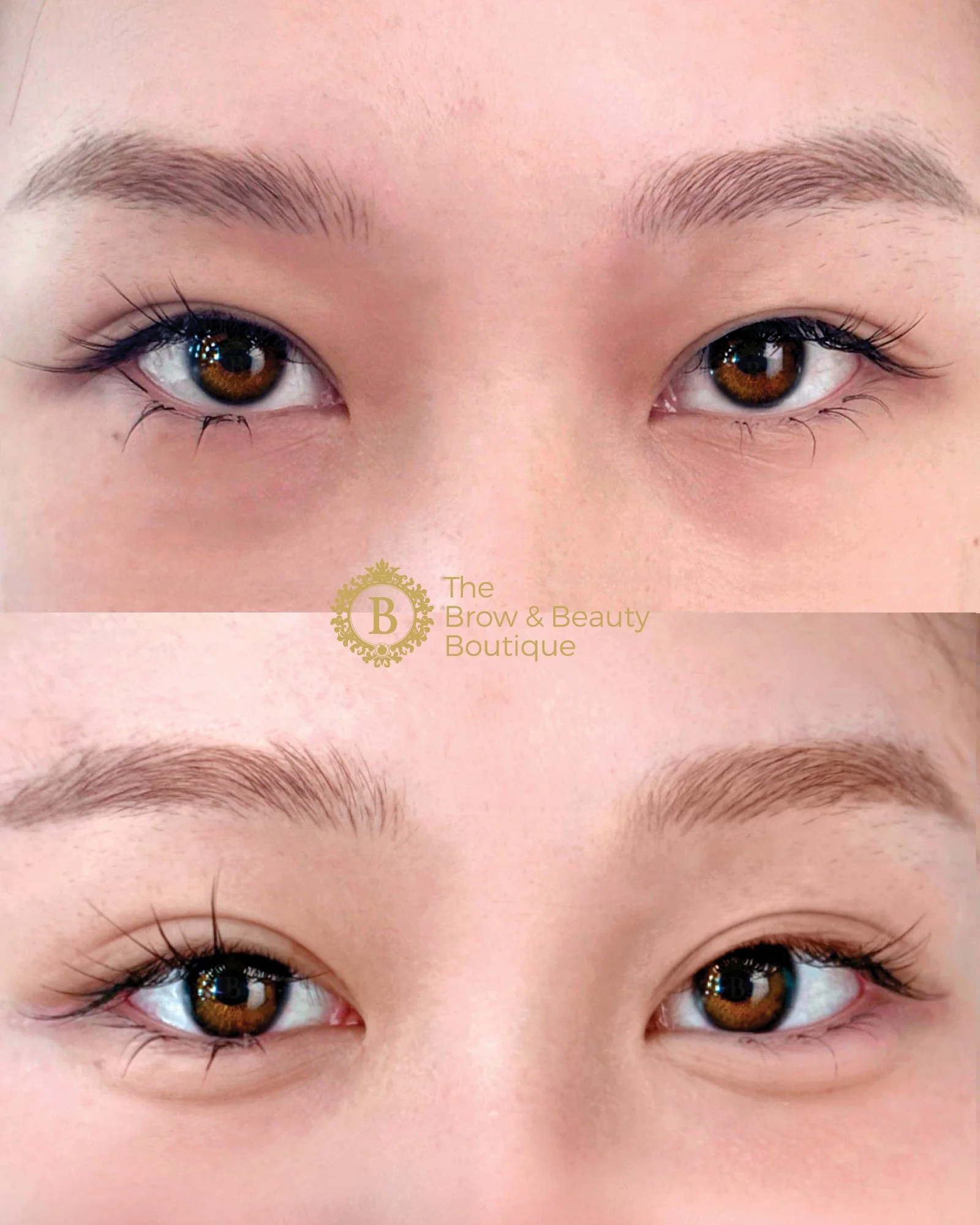
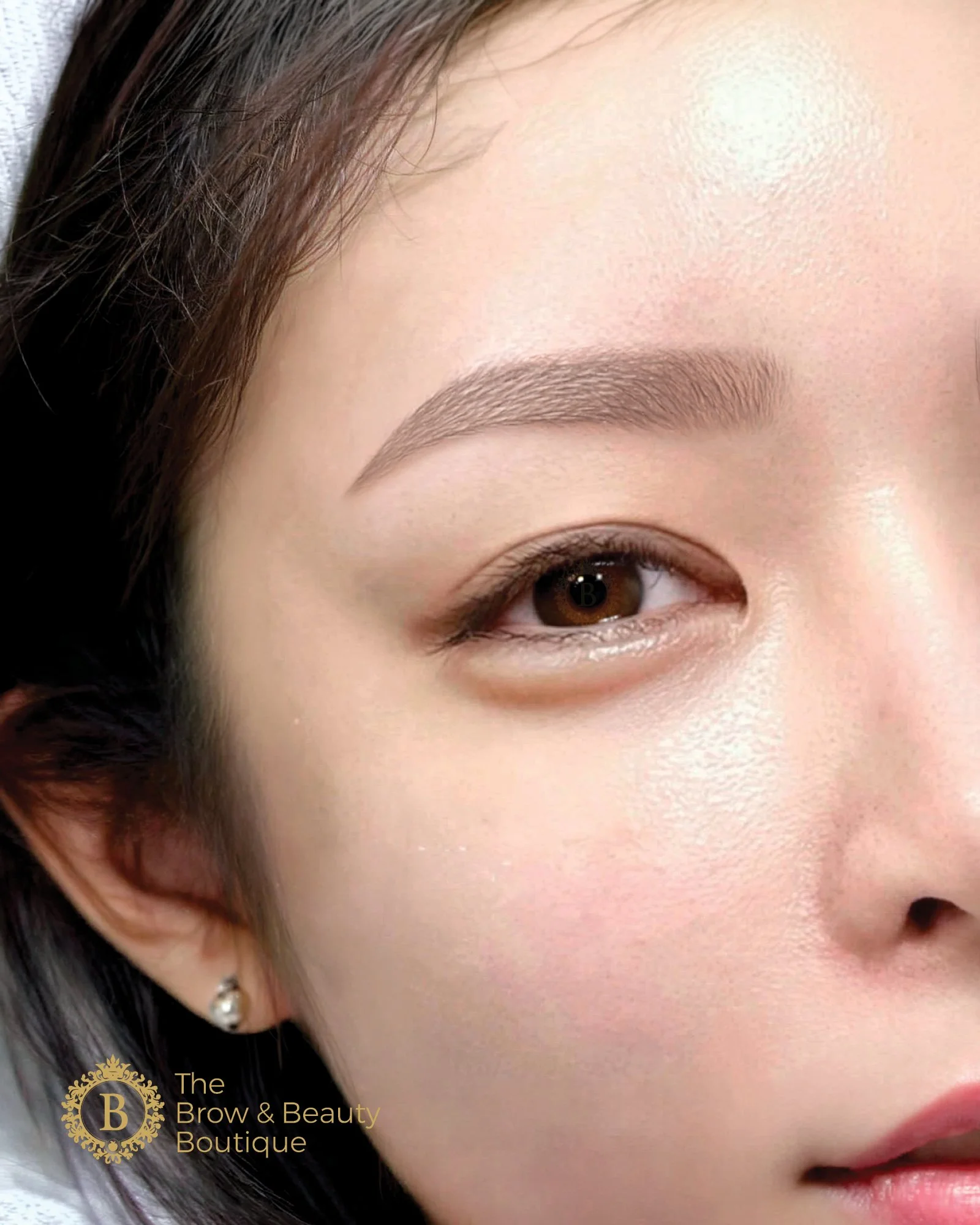
Why does the same beauty treatment look different on two people?
Facial structure, existing hair, eye shape and skin characteristics determine how cosmetic shading is perceived. Fluffy Nano Brows and Aegyo-Sal Shading are therefore best assessed as individual design decisions, not fixed templates. An appealing reference image can express a preference, but it cannot replace personalised mapping.
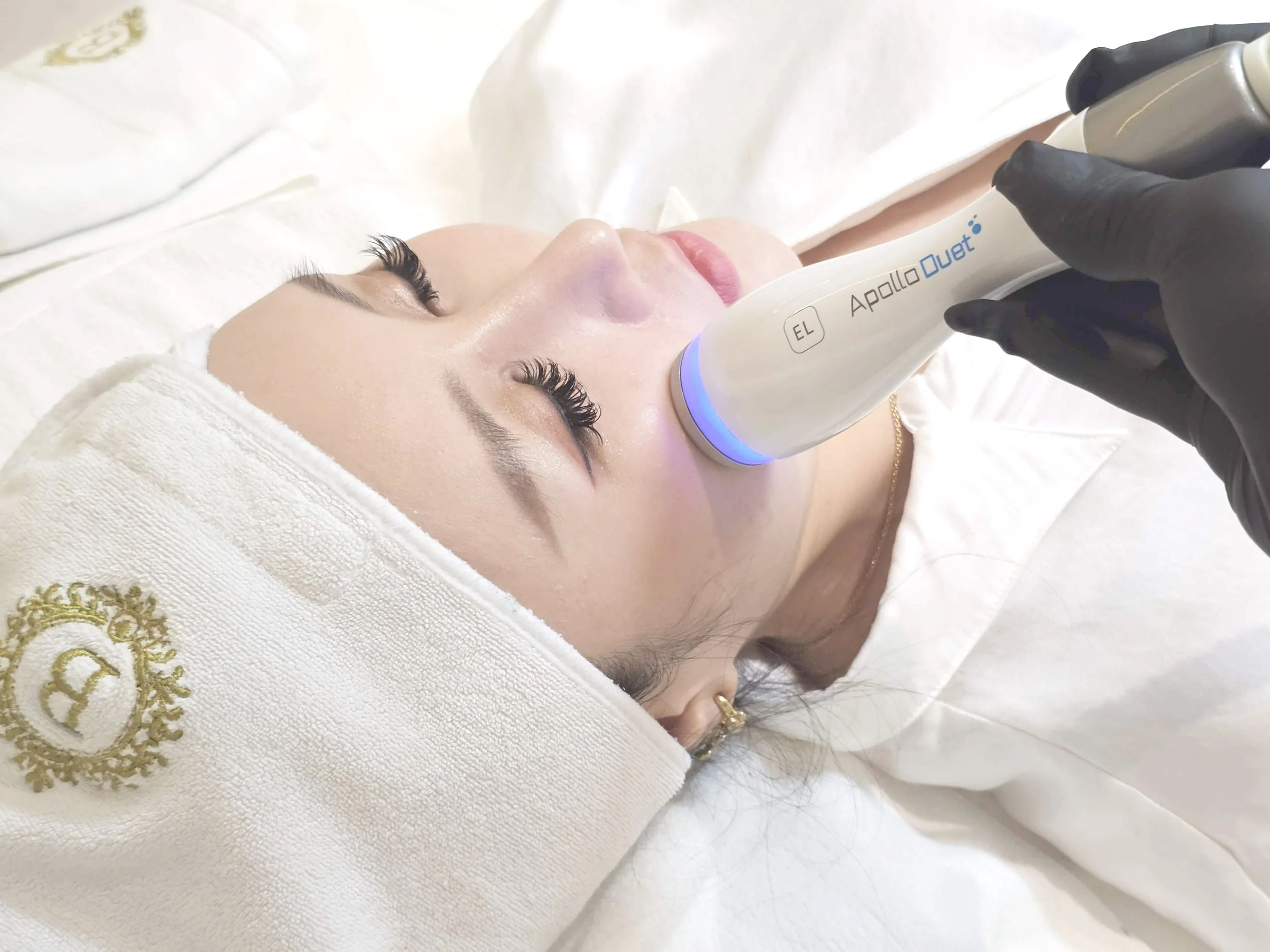
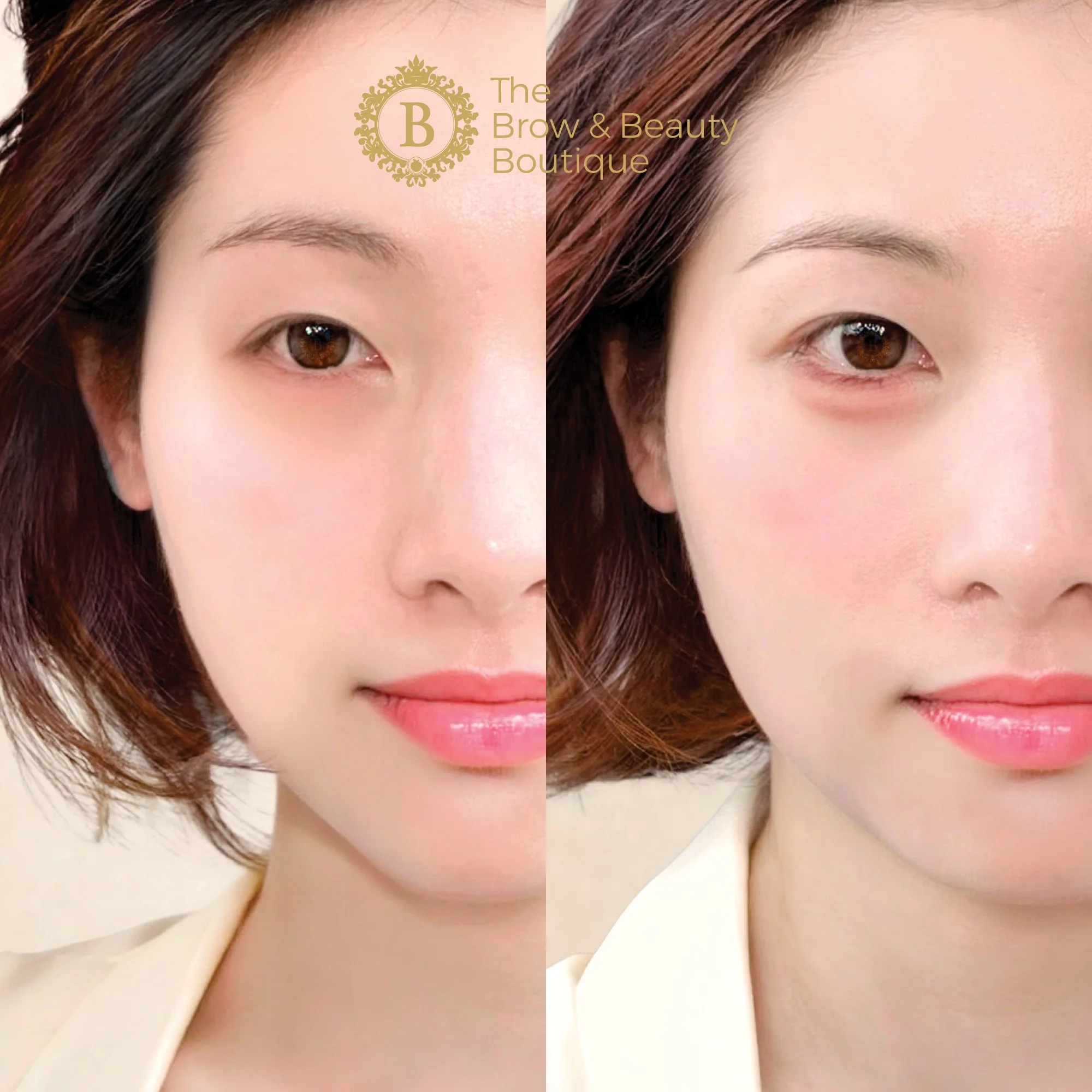
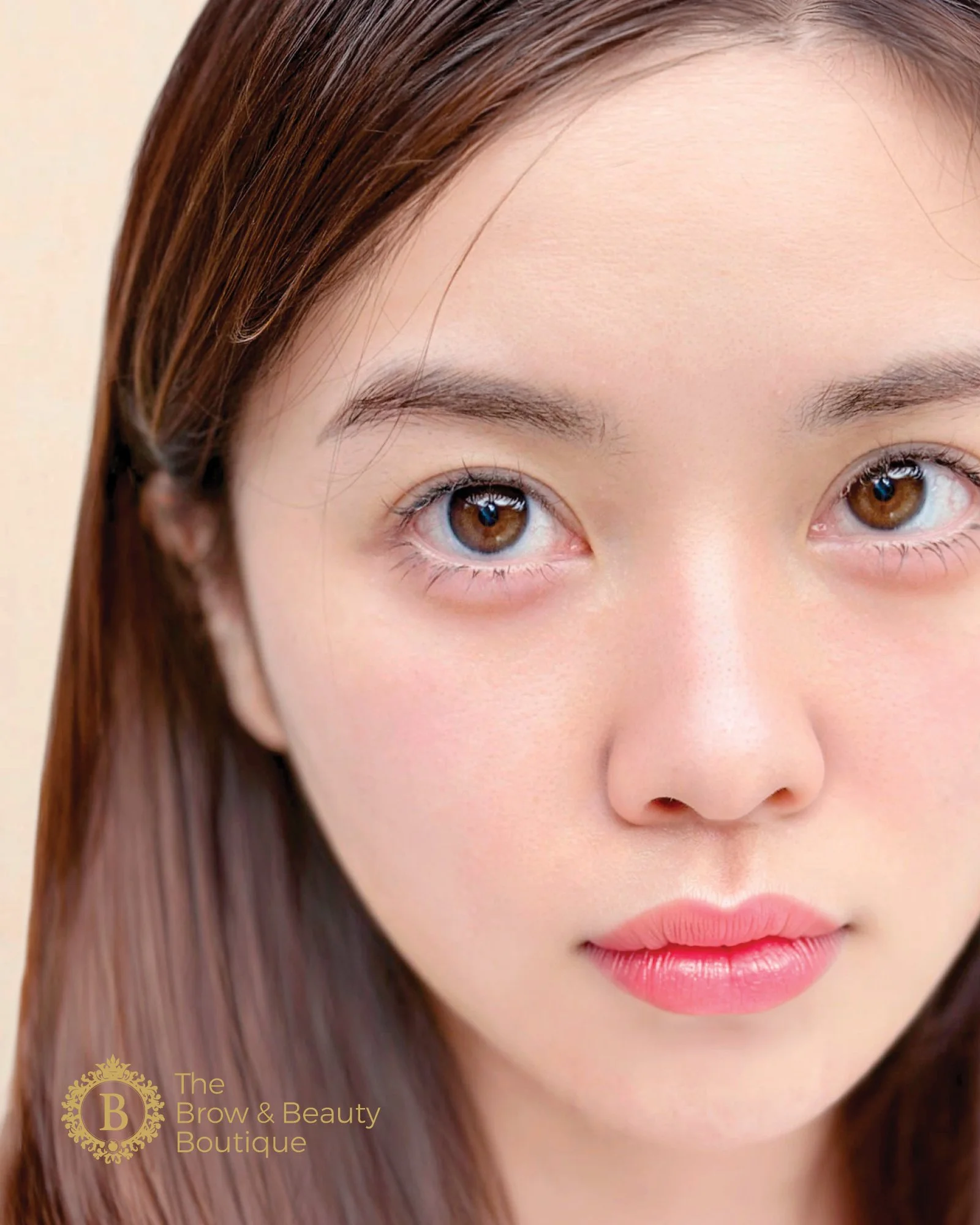
A broad brow may look graceful on one face and overwhelming on another. Likewise, an under-eye contour that looks soft beneath a prominent lower lid can appear too dark when transferred unchanged onto a different shape. The Brow & Beauty Boutique presents Fluffy Nano Brows as individually mapped brow enhancement and Aegyo-Sal Shading as a similarly customised under-eye design.
Face shape is a starting point, not a strict rule
Bone structure and brow placement
The brow sits above the orbital area and interacts visually with the forehead, temples and upper eyelid. Artists may consider the client's brow bone, visible lid space, brow length and the proportion between the inner brow and tail. A rounded face does not require one universal arch, nor does a longer face always need a flat brow. Natural hair growth and the client's expression matter equally.
Fluffy Nano Brows uses hair-like strokes placed where they contribute to realistic texture. This means a sparse tail, an irregular front or an area with existing strong growth can each be treated differently. The healthiest-looking design is often the one that works with the brow, keeping pigment to an appropriate visual weight.
Eye anatomy and the illusion of aegyo-sal
Where soft contouring belongs
Aegyo-sal styling concerns the area immediately below the lower lashes. Its appearance changes with smiling, eyelid position and the transition into the cheek. Under-eye hollows, prominent fat pads, pigmentation and puffiness are separate anatomical or skin concerns; cosmetic shading should not be described as correcting those conditions.
For someone with naturally visible aegyo-sal, subtle colour may emphasise what is already present. Someone with less visible contour might prefer an understated illusion rather than a bold, artificially drawn crescent. Where the skin is irritated, swollen or otherwise unsuitable, the correct response may be to delay or decline treatment.
Symmetry without forcing identical lines
Most faces have a slight difference between left and right. One eyebrow may begin higher; the lower-eye contour may also vary. Exact measured equality does not always look equal to an observer. The artist's task is to produce an aesthetically balanced appearance while respecting natural asymmetry, rather than erasing every difference with pigment.
Why planning both areas together changes the design conversation
Brow height, brow thickness and lower-eye shading all compete for visual attention. If the upper frame is already strong, very light under-eye definition may be enough. If brows are sparse, the artist may first establish a believable brow shape so the lower-eye contour is not asked to carry the whole expression.
There is no necessity to match both areas by darkness. The question is how each treatment contributes to a coherent face under different lighting and expressions. For this reason, reference images should include ordinary daylight photographs as well as polished beauty looks.
Review the approach to facial mapping for Fluffy Nano Brows and the under-eye design process for Aegyo-Sal Shading. A consultation can establish whether both areas need enhancement.
Skin and existing pigment also influence the decision
Skin biology matters even when the focus is visual design. Oily or textured brow skin may retain hair-stroke detail differently from drier skin. The under-eye area is delicate, and a history of sensitivity deserves care. Ask about previous cosmetic tattoos, skincare treatments, allergies and anything that affects healing. These details do not automatically rule out a treatment, but they should inform suitability.
Old eyebrow pigment is especially relevant. A new stroke pattern cannot be assessed as though the underlying colour were absent. If existing colour is too saturated or poorly placed, the artist may need to discuss separate corrective options rather than simply adding a new design on top.
A simple facial-proportion checklist
Questions worth bringing to the appointment
Consider which eyebrow you usually correct with makeup, whether you prefer straight or gently arched brows, how your lower-eye area changes when you smile and whether you routinely use under-eye contour makeup. Explain what you do not want as clearly as what you do want. “I want to look like myself without drawing my brows” is more useful than an image alone.
Will the combination physically lift the eyes? No. These are cosmetic pigment techniques, not procedures that alter muscles, skin laxity or orbital structure.
Can the artist copy my favourite photograph? It can guide style, but the most appropriate design may differ because anatomy and natural features differ.
Does customised mean stronger treatment? Not necessarily. Sometimes customisation means placing fewer strokes or selecting the softer under-eye option.
Choose judgement over a fixed beauty formula
The boutique's background and treatment philosophy emphasise personalised beauty work. For these two services, the practical value of that approach is straightforward: observe before drawing, map before treating and explain limitations before committing.
Explore the detailed Fluffy Nano Brows service guide and book an assessment. To ask about older pigment or under-eye sensitivity first, use the boutique's contact information.