
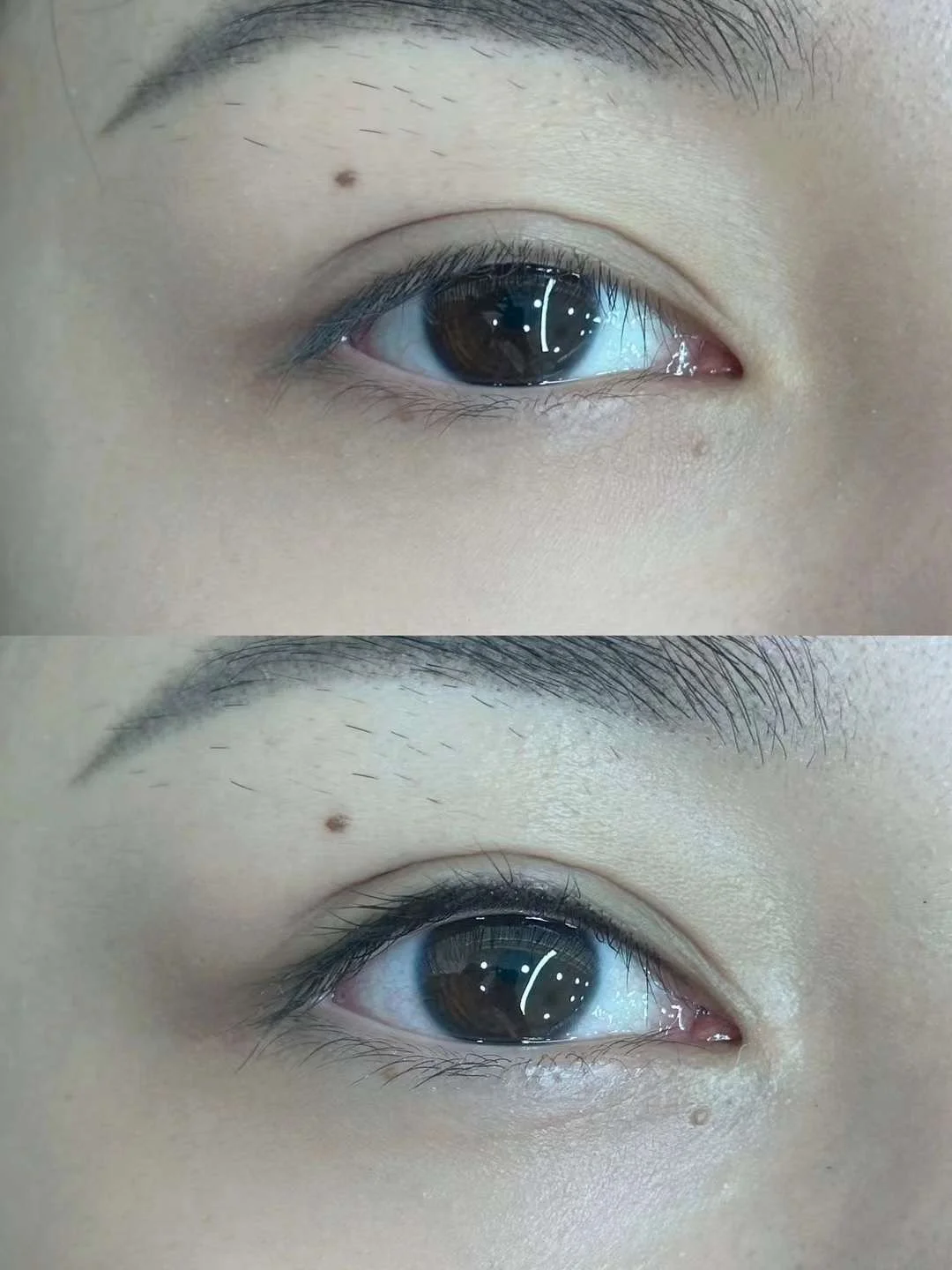
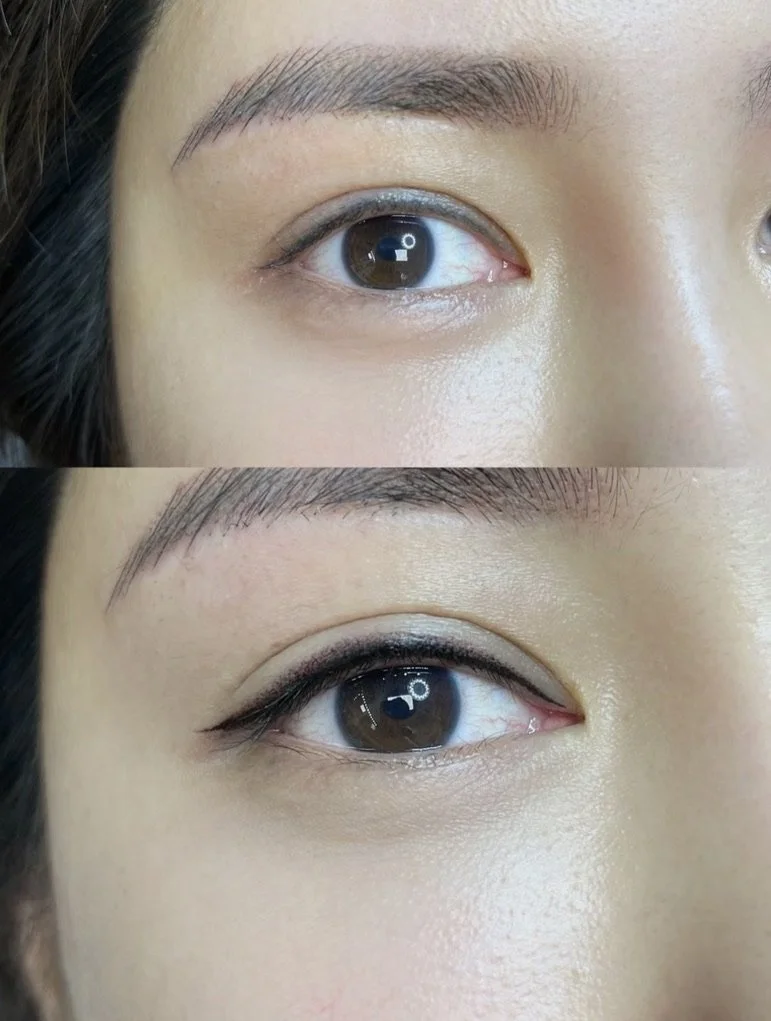

Stable, natural-looking eyeliner embroidery is not achieved by pigment alone. It is achieved by preparing the eyelid tissue so that pigment can behave predictably over time. When eyeliner has previously spread, blurred, or lost clarity, the most important step before any refinement is controlled correction. This process restores stability to the periocular region and creates the conditions required for long-term success.
At The Brow & Beauty Boutique, controlled eyeliner correction is treated as a preparatory phase, not a detour. It is the foundation that allows modern eyeliner embroidery to remain crisp, balanced, and visually stable as the skin continues to age and move.
Why Uncorrected Eyeliner Compromises Future Embroidery
The eyelid is one of the most biologically active areas of the face. Its thin skin, constant muscular movement, and proximity to ocular structures mean that pigment behaviour here is far less forgiving than in other areas. When previous eyeliner has migrated, diffused, or become overly dense, the tissue environment is already unstable.
Attempting eyeliner embroidery on top of unresolved diffusion introduces several risks. Existing pigment can interfere with colour perception, distort edge definition, and increase overall density. This often leads to heavier lines, accelerated migration, and loss of clarity within a few years.
In professional terms, this is not an embroidery problem. It is a tissue readiness problem. Controlled correction resolves this by addressing pigment behaviour first, allowing the eyelid to return to a more neutral baseline.
What “Controlled Correction” Actually Means
Controlled correction is not aggressive removal and it is not immediate re-tattooing. It is a measured, medical-led approach that focuses on stabilising pigment within the periocular region.
This process typically involves assessing pigment depth, spread pattern, and density variation across the eyelid margin. Excess or migrated pigment is then reduced gradually using conservative techniques that prioritise barrier integrity and ocular safety. Importantly, the tissue is given time to recover between stages so that specialists can observe how the pigment responds.
This approach is detailed further in the clinic’s overview of professional eyeliner colour correction in Singapore, which explains why correction is sequenced incrementally rather than performed in a single session.
How Controlled Correction Stabilises the Eyelid
Controlled correction prepares the eyelid in three key ways.
First, it reduces density overload. Excess pigment contributes to blurred edges and visual heaviness. By lightening this gradually, the eyelid regains clearer visual boundaries.
Second, it improves edge predictability. Diffusion artefacts often cause eyeliner to appear wider than intended. Correction helps re-establish a defined margin, which is essential for precise embroidery placement later.
Third, it allows the tissue to demonstrate its healing behaviour. Every eyelid responds differently. Observing how the skin recovers between correction stages provides critical information about how it will handle new pigment in the future.
Without this stabilisation phase, even the most technically advanced embroidery techniques are working against compromised conditions.
A Necessary Pause Before Refinement
Before considering eyeliner embroidery, it is essential to determine whether the eyelid is ready to support new pigment safely.
A structured consultation allows your specialist to assess pigment behaviour, tissue response, and whether controlled correction is required before refinement.
Book an eyeliner correction consultation to receive guidance based on anatomy and long-term outcome planning rather than cosmetic urgency.
Why Stable Tissue Produces Better Embroidery Results
When the eyelid has been stabilised through controlled correction, eyeliner embroidery becomes significantly more predictable. Pigment can be placed more superficially, with lighter saturation and greater control over line thickness. This reduces the likelihood of future migration and allows the eyeliner to age more naturally with the skin.
Modern embroidery techniques are designed for clarity, not coverage. They rely on clean tissue conditions to maintain their definition. When correction has already addressed residual diffusion and density issues, embroidery becomes a refinement rather than a repair.
Clients considering this phase can explore the clinic’s eyeliner embroidery services in Singapore, which outlines how contemporary methods differ from older, heavier approaches.
Choosing the Right Embroidery Style After Correction
Once the eyelid environment is stable, embroidery options are selected based on anatomy, lifestyle, and long-term wearability rather than trends. Subtle approaches are often preferred after correction, as they place less stress on the tissue over time.
For some, baby eyeliner offers gentle lash-line enhancement without excessive density. Others may opt for classic eyeliner, which provides structure while remaining controlled and balanced.
These options are only considered once correction goals have been met. Attempting them prematurely undermines their longevity.
Supporting the Eyelid Between Correction and Embroidery
Preparation does not end with pigment management. Periocular skin health plays a meaningful role in how well the eyelid tolerates both correction and embroidery. Supporting hydration, circulation, and barrier integrity can improve comfort and healing quality between stages.
Many clients incorporate the La Dermalogique Eye Spa – Iris Clarity treatment during their correction journey. This supportive care focuses on calming the eye area and maintaining tissue resilience without interfering with pigment protocols.
Preparation Is the Key to Stability
Stable eyeliner embroidery is not achieved by skipping steps. It is achieved by preparing the eyelid properly through controlled correction, thoughtful sequencing, and respect for periocular biology.
When correction is performed first, embroidery becomes lighter, clearer, and more durable over time. This is what allows results to remain natural rather than deteriorate.
Schedule your professional eyeliner correction consultation to begin a process designed for stability, safety & long-term clarity.