BABY HAIRLINE EMBROIDERY
Softer & Fuller Hairline.
Smaller Forehead.
Balanced Facial Features.

- High or larger-looking foreheads
- Receding or uneven hairlines
- Sparse temples and hairline edges
- Asymmetrical hair growth
- A softer, fuller-looking hairline
Final pricing depends on the treatment area and density required. Contact us for a commitment-free consultation and personalised quotation.
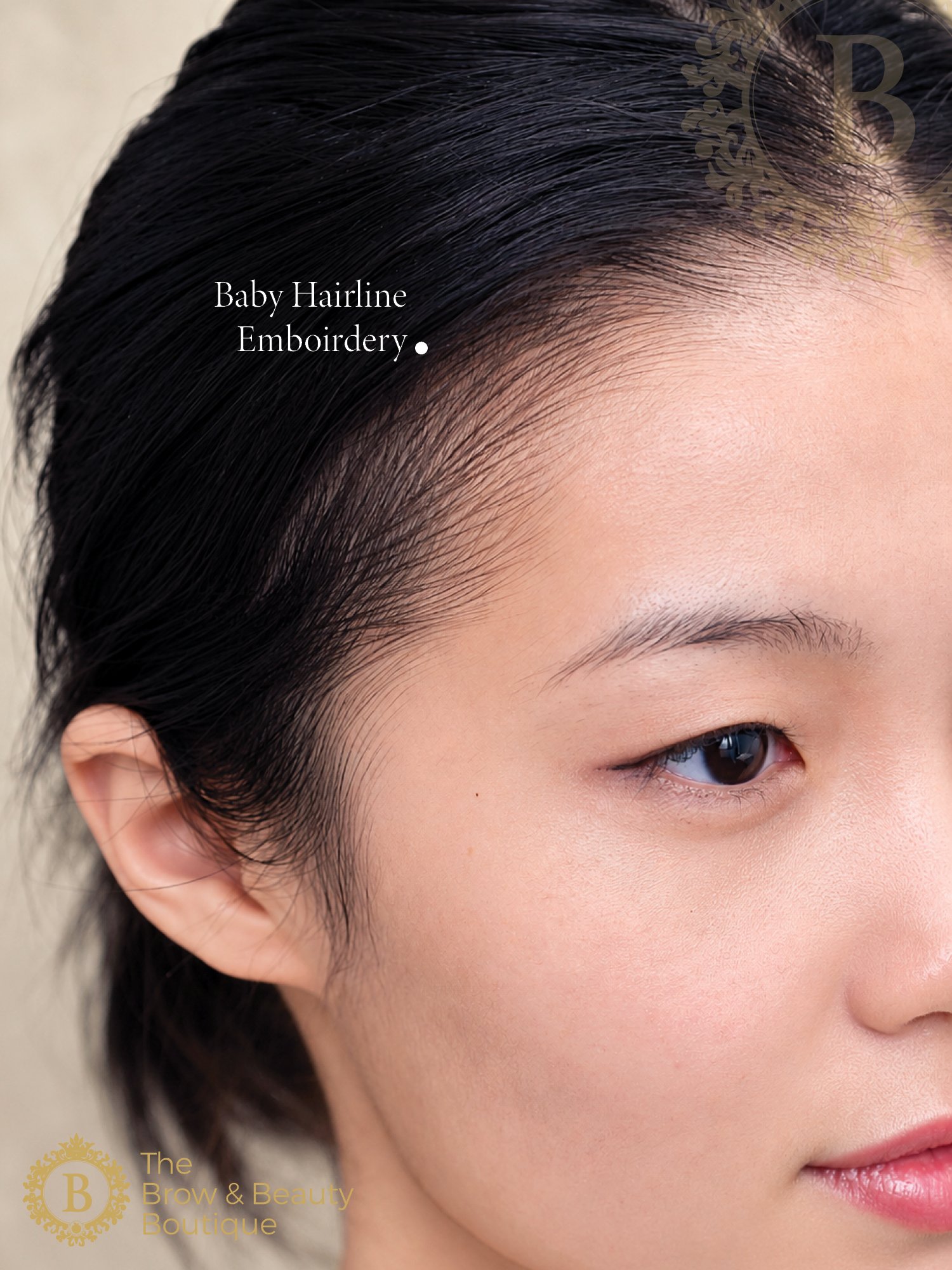
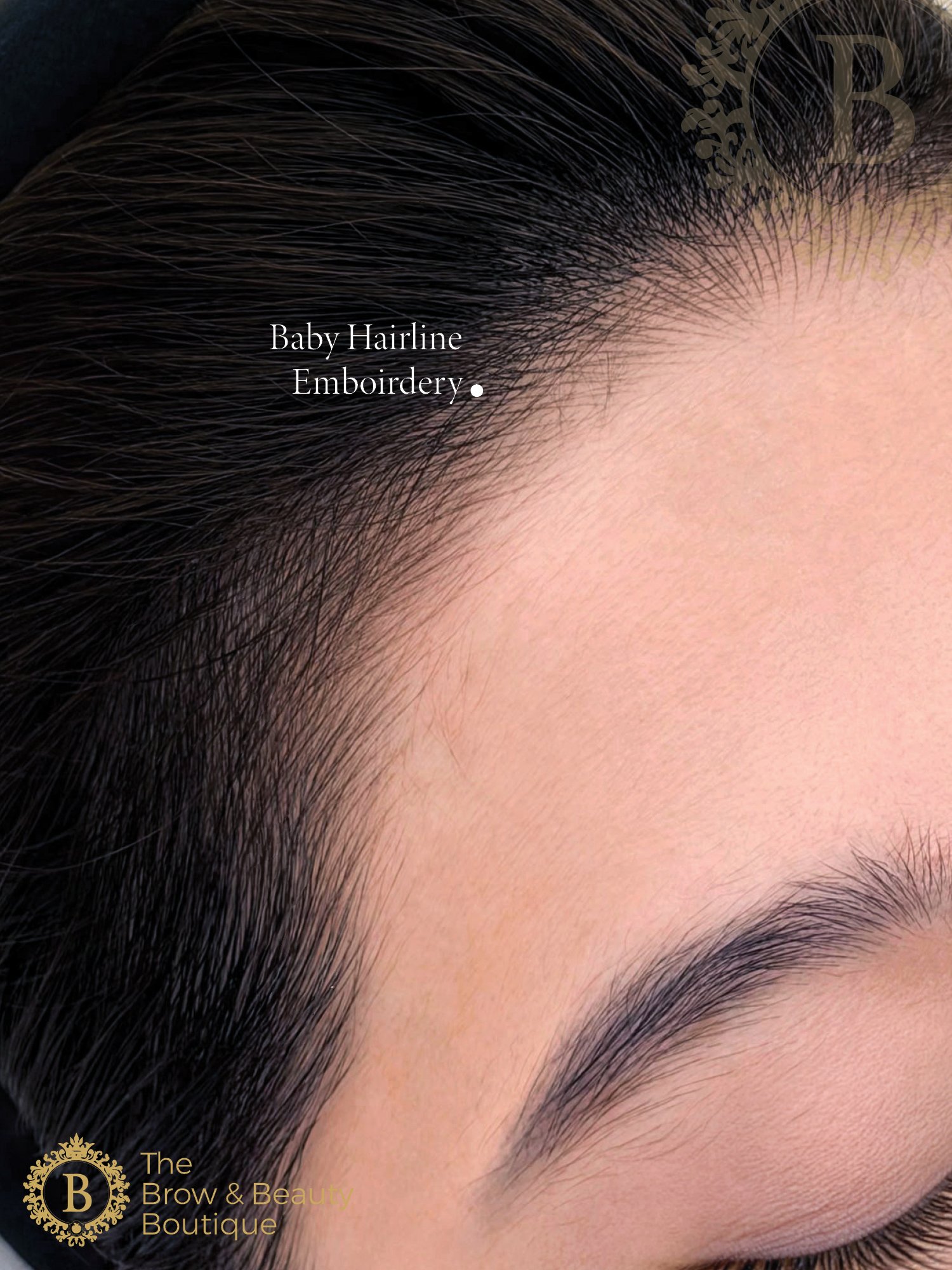
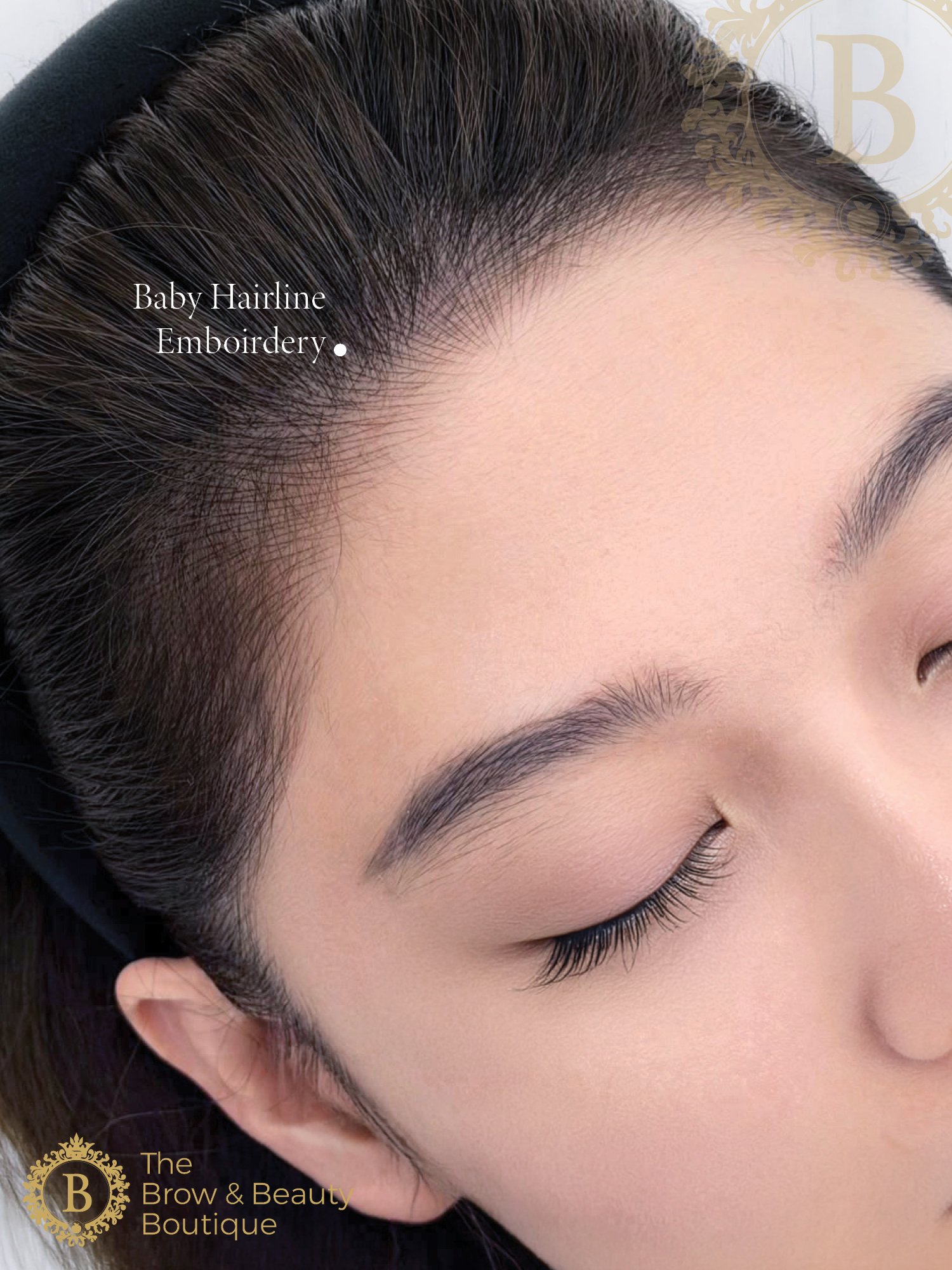
Book a Commitment-Free ConsultationBaby Hairline Embroidery creates ultra-fine, individual hair-like strokes that mimic the direction, flow and irregularity of natural baby hairs.
Each hairline is designed around your facial proportions, existing hair growth and desired shape — subtly filling sparse areas and creating a softer, more balanced frame for the face.
The result? A naturally fuller-looking hairline that blends seamlessly with your existing hair.
What Baby Hairline Embroidery Can Improve
Soften the appearance of a high forehead
Fill sparse temples and edges
Balance an uneven hairline
Create the appearance of greater density
Improve facial framing and proportions
The goal is never a perfectly drawn hairline. It’s a soft, naturally imperfect finish that looks like real baby hair.
This version is much stronger for the page you're building. In particular, I’d keep that last line — “The goal is never a perfectly drawn hairline” communicates the aesthetic philosophy very efficiently.
The Technique
What Is Baby Hairline Embroidery?
Baby Hairline Embroidery uses fine, semi-permanent hair-like strokes to create the appearance of natural baby hairs along the hairline. It can fill sparse areas, soften a high forehead and improve the way the hairline frames the face.

Fine strokes mimic natural baby hairs for a soft, realistic finish.
Designed around your natural hair growth, face shape and proportions.
Strategic hairline placement can make the forehead appear softer and less prominent.
Refined framing can create a more harmonious relationship between the forehead, brows and lower face.
Helps disguise sparse temples, receding edges and uneven hair growth.
Strokes transition into your existing hairline without a harsh or solid border.
Baby Hairline Embroidery is a cosmetic enhancement and does not stimulate new hair growth or physically alter facial structure. Its effect comes from changing the visual framing, density and proportions of the hairline. Final healed results vary depending on skin type, natural hair density, healing response and pigment retention.
Our Baby Hairline Results
Before and after photos
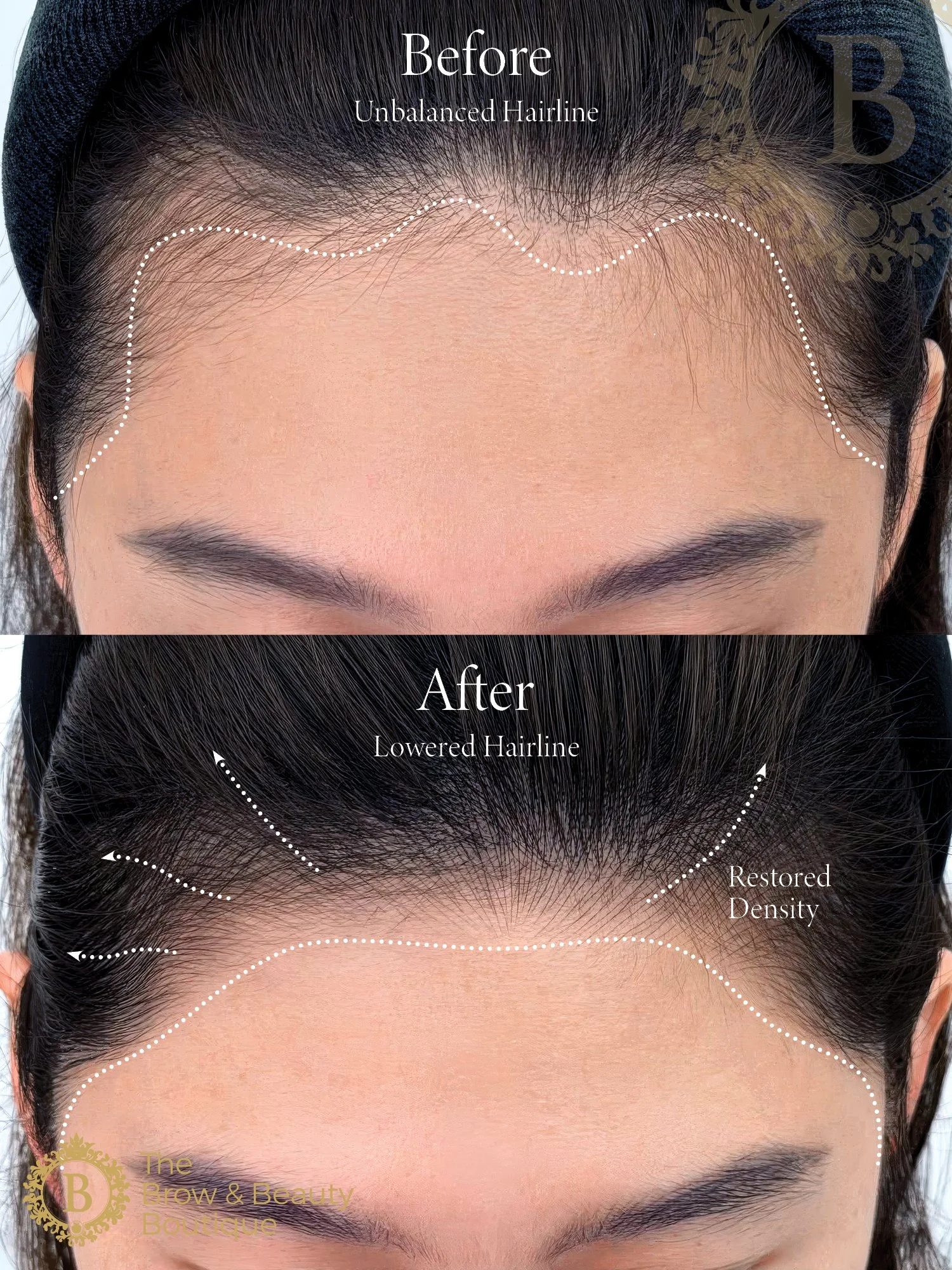
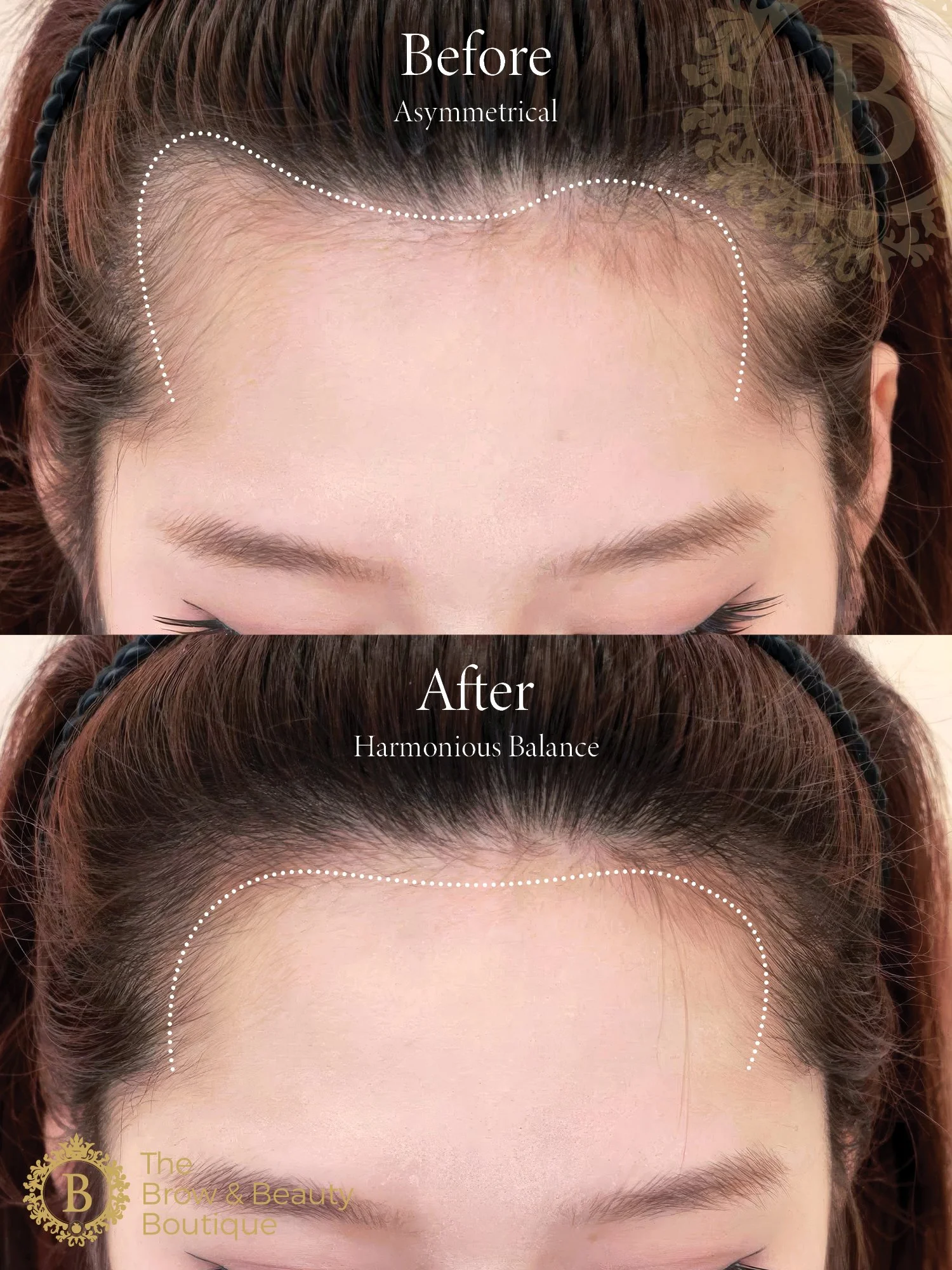
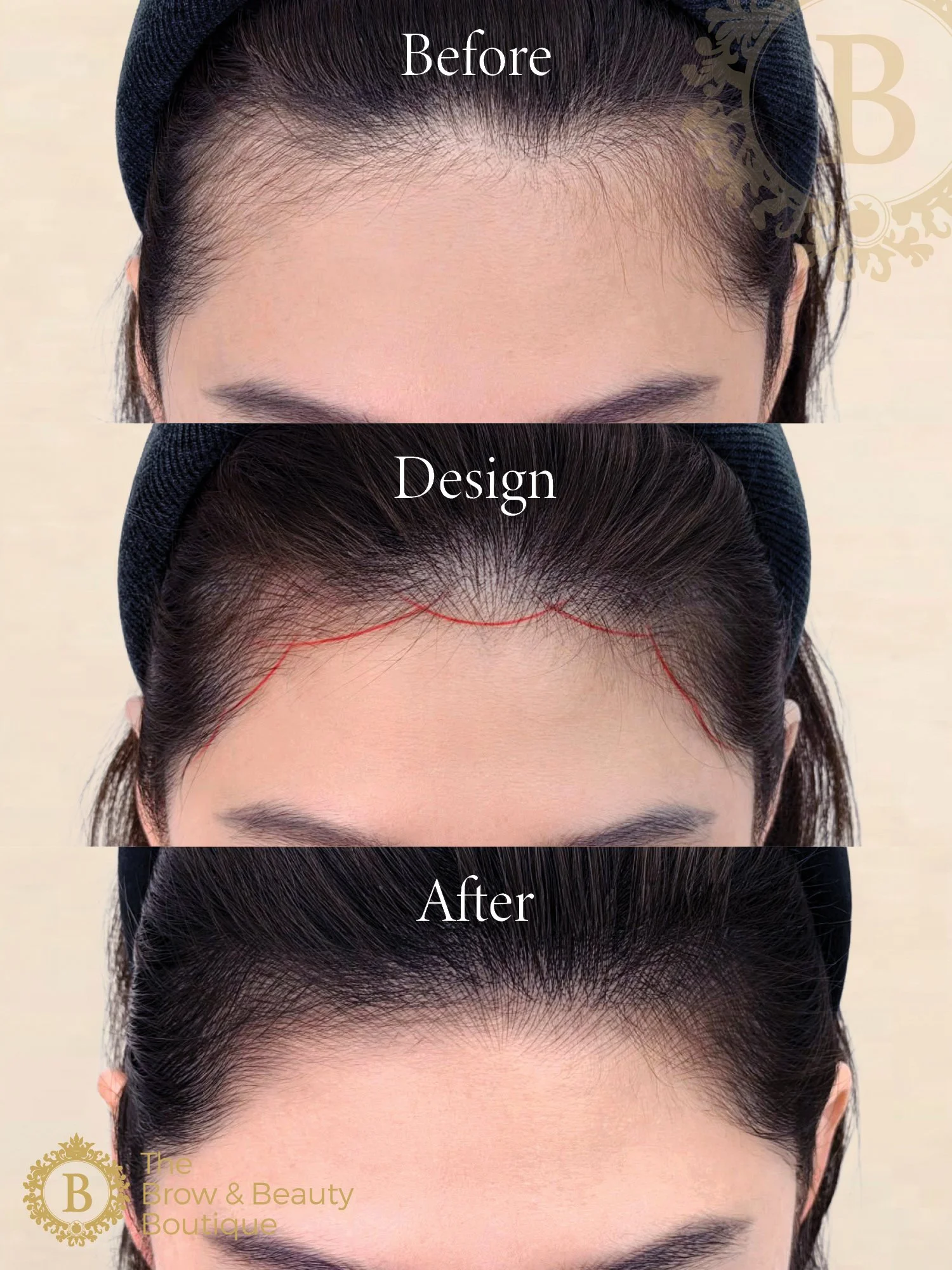
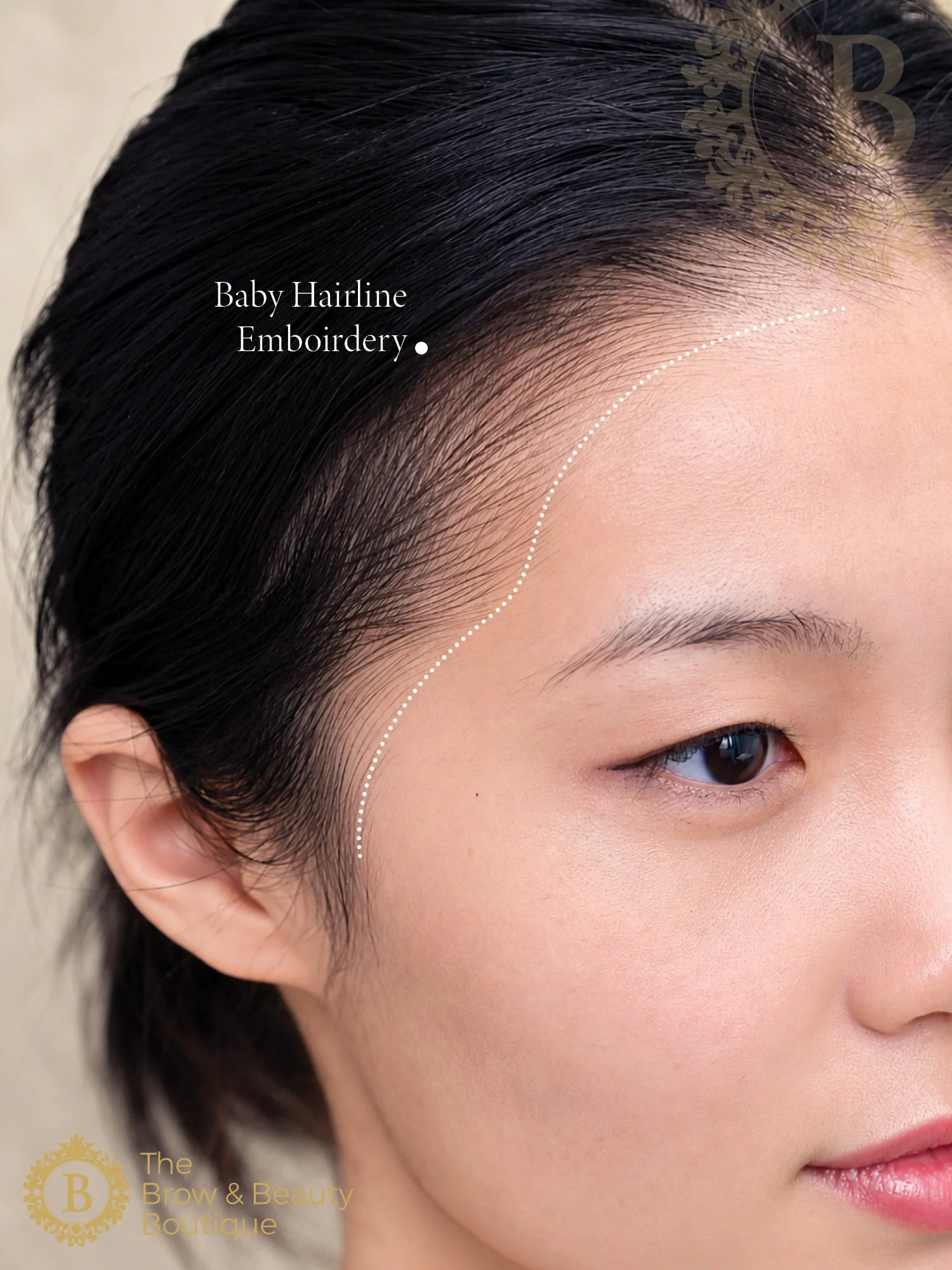
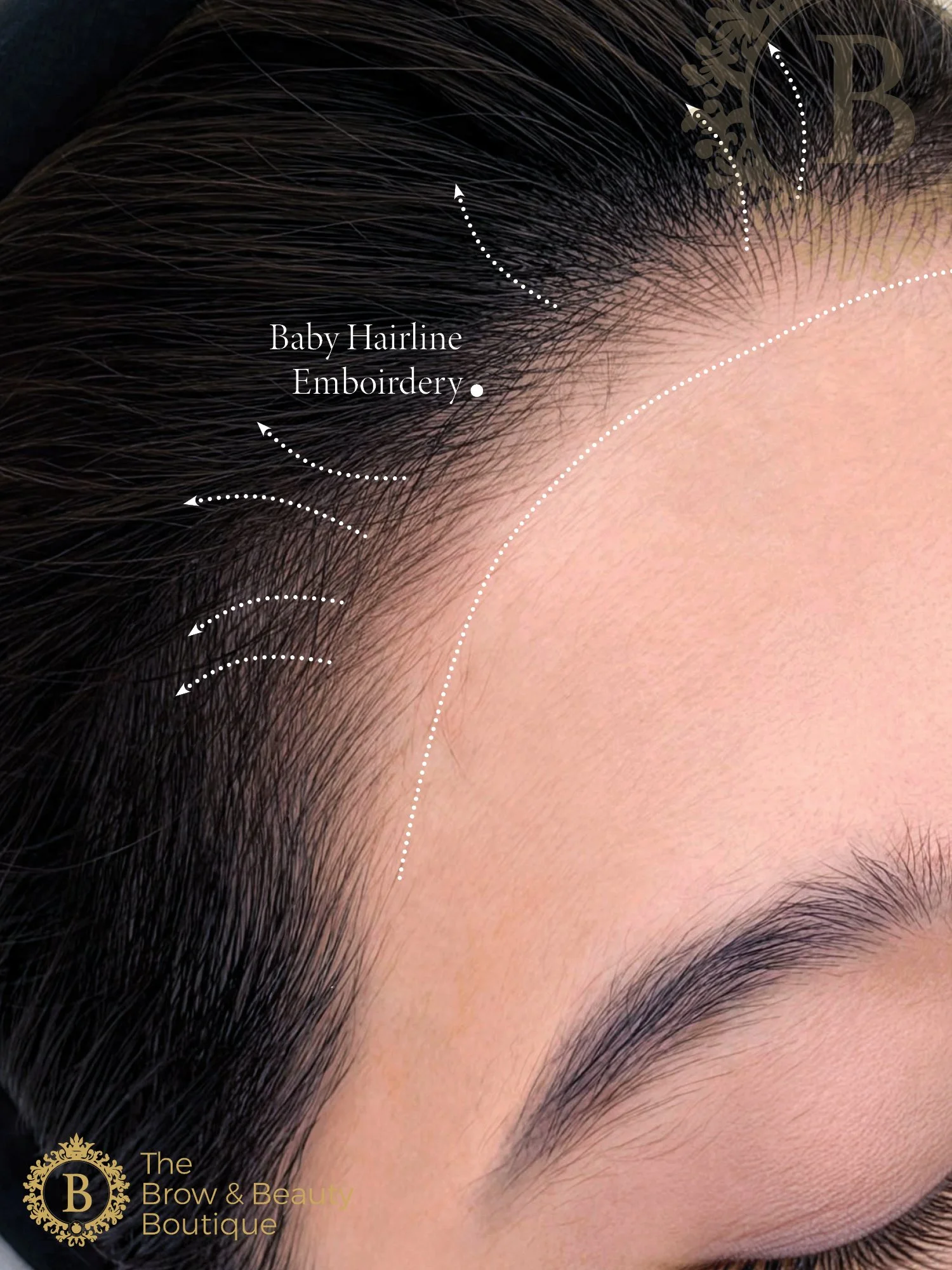
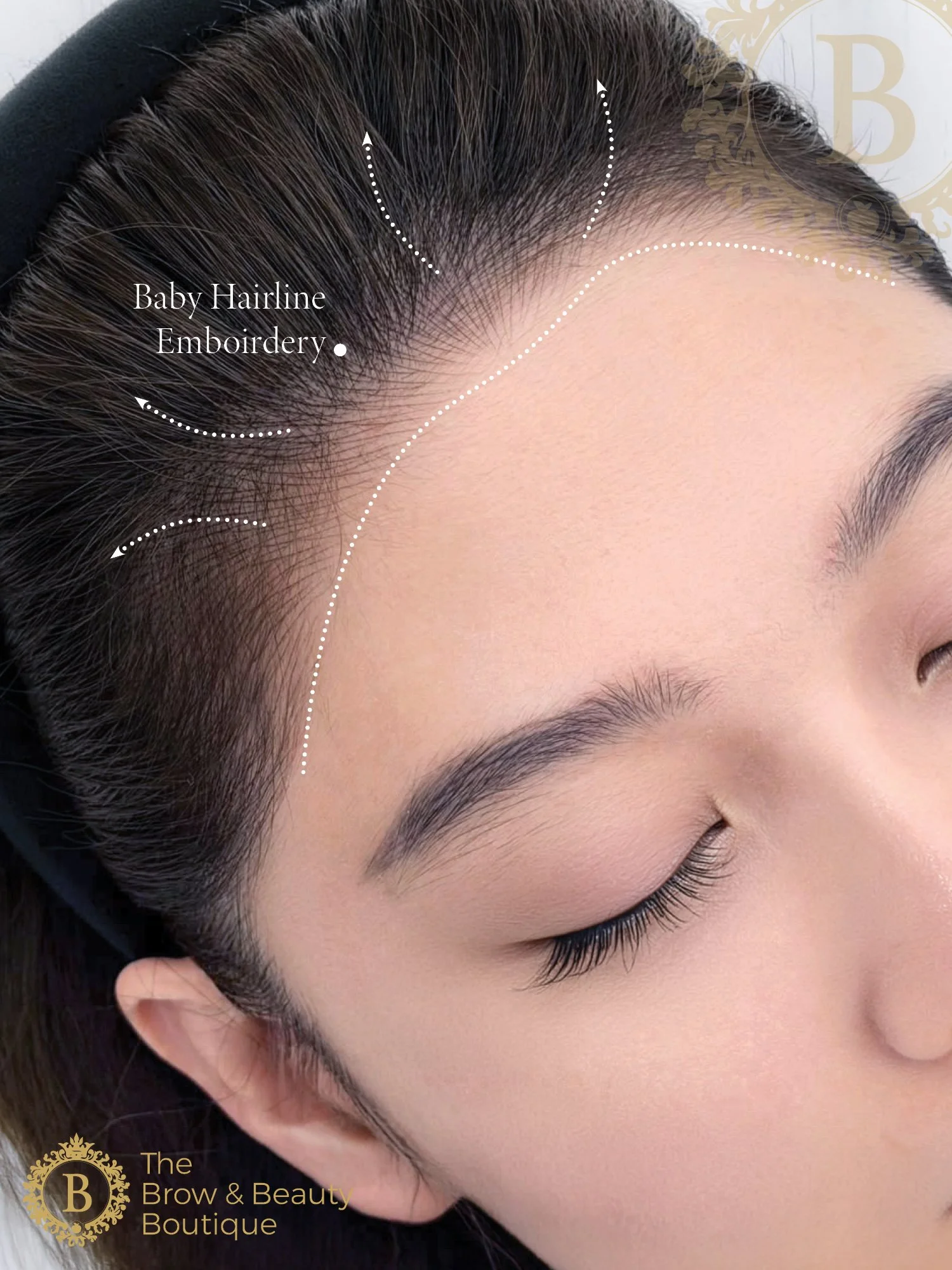
Natural Hairline Design
As natural as your own hair
A natural-looking hairline is more than simply adding strokes. Each detail is designed around the way your own hair grows and how your hairline frames your face — creating a result that feels naturally yours while bringing greater harmony to your facial features.

Natural Direction
Strokes follow the natural direction and flow of your existing hair growth.

Natural Density
Spacing and density are varied to recreate the softness and irregularity of real baby hairs.

Natural Colour
Pigment is selected to complement your existing hair colour and create a seamless transition.

Facial Harmony
Hairline shape and placement are designed around your facial proportions for a softer, more balanced frame.
Process & What To Expect
Your Baby Hairline Journey
From personalised hairline mapping to final healed colour, every stage is designed around your natural hair growth, facial proportions and desired result.
Consultation
We begin by understanding the areas you would like to improve, your existing hair growth and the overall result you want to achieve.
Hairline Mapping
Your proposed hairline is designed around your forehead, facial proportions, temples and natural hair growth.
Stroke Design
Hair direction, spacing and density are planned to recreate the natural irregularity and flow of real baby hairs.
Pigment Matching
Pigment is selected to complement your existing hair colour and create a natural transition into the surrounding hairline.
Hairline Embroidery
Fine semi-permanent strokes are created individually across the mapped treatment area to build the desired hairline effect.
Healing & Touch-Up
The colour softens as the skin heals. A touch-up can refine areas where pigment retention is lighter than desired.
HEALING TIMELINE
Healing & Aftercare
Healing typically takes around 7–14 days. Mild redness, tenderness, dryness or itching may occur, while light peeling or scabbing can occur in some clients.
Darker & More Defined
The hairline may initially appear darker and more defined. Mild redness or tenderness can occur.
Dryness & Softening
Mild dryness, itching or light scabbing may develop. Avoid scratching or picking the treated area.
Colour Settles
The pigment gradually softens and may appear approximately 30–50% lighter as the initial healing process completes.
Final Healed Result
The colour continues to settle into a softer, more natural appearance. Touch-up can be considered if retention is lighter in certain areas.
Baby Hairline Embroidery typically lasts around 1.5–2 years. Longevity varies depending on factors including skin type, sun exposure, lifestyle, healing response and pigment retention.
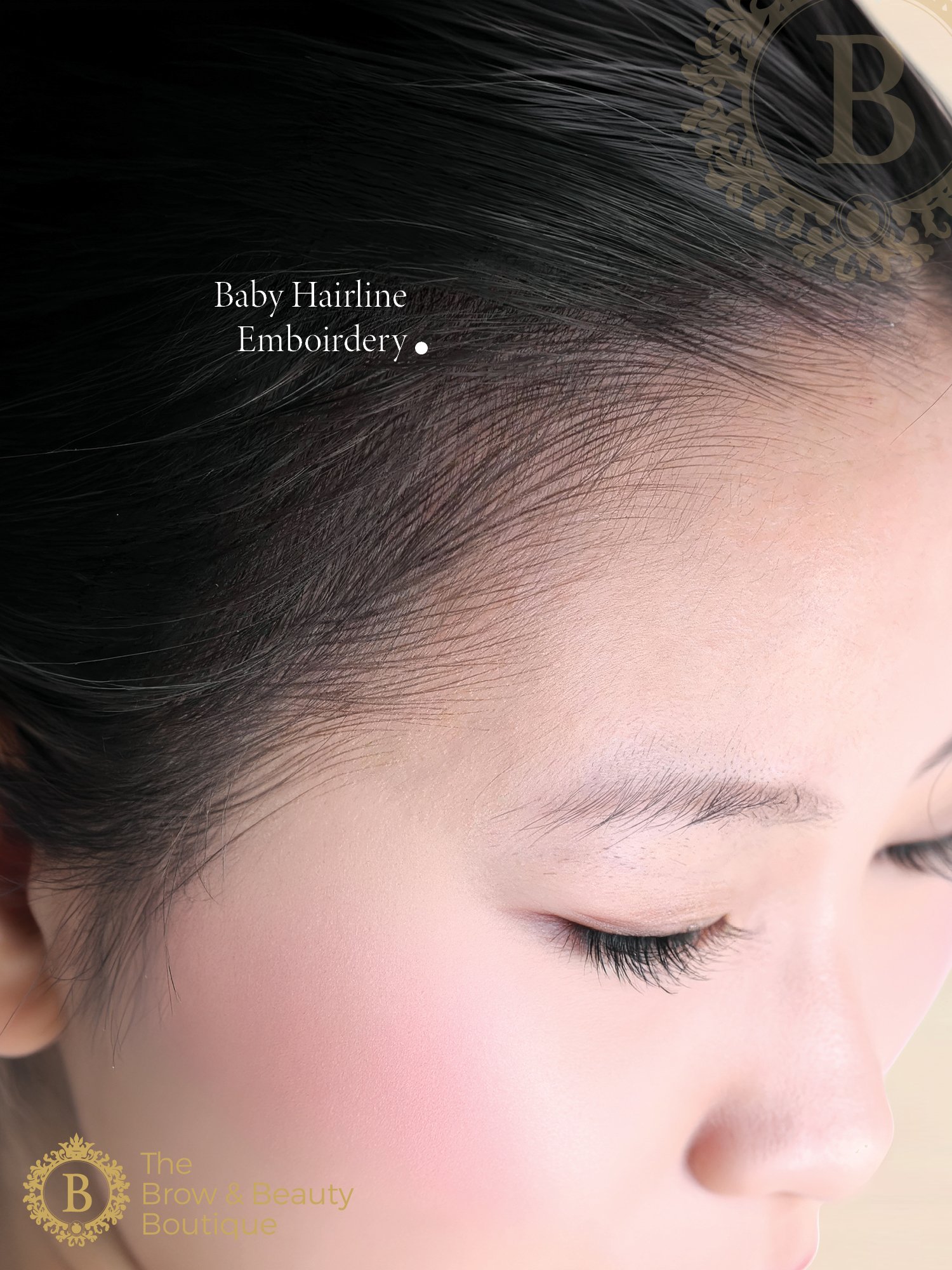
THREE APPROACHES TO HAIR & HAIRLINE CONCERNS
Three Solutions for your Hair Concerns.
Baby Hairline Embroidery, Scalp Micropigmentation and Microneedling for Hair Regrowth each address a different type of concern. The right treatment depends on whether your goal is to reshape the hairline, create the appearance of greater scalp density, or support natural hair growth.
| Feature | HAIRLINE DESIGN Baby Hairline Embroidery | SCALP DENSITY Scalp Micropigmentation | HAIR REGROWTH Microneedling |
|---|---|---|---|
| Primary Goal |
Reshape & soften the hairline Creates fine hair-like strokes to visually improve hairline shape and facial framing. |
Create the appearance of scalp density Mimics the look of natural hair follicles or short stubble across thinning areas. |
Support natural hair growth Focuses on scalp stimulation and supporting the condition of existing hair follicles. |
| Best For | High foreheads, sparse temples, receding edges and uneven hairlines. | Thinning hair, male or female pattern hair loss, alopecia and areas of visible scalp. | Diffuse thinning, weakened hair density and those looking to support natural regrowth. |
| Visual Result |
Individual hair-like strokes Designed to resemble natural baby hairs and blend into the existing hairline. |
Follicle-like pigment dots Creates the illusion of shaved follicles, short stubble or greater scalp density. |
Your own natural hair Does not create a cosmetic hair effect; the goal is to support existing hair and scalp health. |
| Technique | Fine semi-permanent strokes are placed along the hairline and customised to natural hair direction and facial proportions. | Specialised microneedles deposit pigment into the scalp to replicate the appearance of natural hair follicles. | Controlled microneedling is performed across the scalp to support scalp stimulation and treatment absorption. |
| Ideal Outcome | A softer, fuller-looking hairline that creates more balanced facial framing. | A scalp that appears denser, with reduced contrast between visible scalp and existing hair. | Healthier-looking, stronger and potentially fuller natural hair over time. |
| Recovery |
Healing period required Mild redness, dryness or temporary scabbing may occur during healing. |
Minimal disruption Clients can generally resume normal social activity soon after treatment, while following scalp aftercare. |
Minimal downtime Temporary scalp redness or sensitivity may occur after treatment. |
| Longevity |
Approximately 1.5–2 years Pigment retention varies according to skin, lifestyle and healing. |
Approximately 2–3 years Results gradually fade over time depending on metabolism, lifestyle and sun exposure. |
Progressive treatment Results depend on treatment consistency, scalp condition and individual response. |
| Real Hair Growth |
Cosmetic enhancement. Designed to visually improve the hairline rather than stimulate new growth. |
Cosmetic enhancement. Designed to recreate the appearance of follicles and density rather than stimulate new growth. |
Growth-focused approach Intended for clients whose priority is supporting their own natural hair. |
WHICH APPROACH FITS YOUR GOAL?
Three excellent Treatments. for all Hair Concerns
Tell us what you are hoping to improve and our team can help you understand which treatment — or combination of treatments — may be most appropriate.
Baby Hairline Embroidery
Best suited for visually reshaping the hairline, softening a high forehead, filling sparse temples and improving facial framing.
Scalp Micropigmentation
Best suited for creating the appearance of fuller scalp density, camouflaging visible scalp and recreating the look of natural follicles.
Microneedling for Hair Regrowth
Best suited for clients whose priority is supporting their existing hair, scalp condition and natural hair density over time.
We want to help you acheive your hair goals.
Hairline Embroidery changes the visual frame of the face. SMP creates the appearance of greater scalp density. Microneedling focuses on supporting your natural hair. Your consultation helps determine which approach best matches your concern.
SUITABILITY
Is Baby Hairline Right for You?
Baby Hairline Embroidery is suitable for clients who want to improve the shape, density and framing of the hairline without surgery.

Enhance Your Hairline
- Soften the appearance of a high or prominent forehead
- Fill sparse temples or hairline edges
- Improve an uneven or asymmetrical hairline
- Create softer, more balanced facial framing
- Enhance the hairline without surgery
Your Main Concern Is Hair Loss
- You have significant or diffuse hair thinning
- You want to create the appearance of greater scalp density
- Your priority is supporting natural hair growth
- You have an active scalp or skin condition requiring assessment
- You are unsure which treatment best matches your concern
Not sure whether Baby Hairline Embroidery, SMP or Hair Regrowth treatment best matches your concern?
WhatsApp Us for Advice
FAQ
-
A hair transplant surgically moves real hair follicles, involving incisions, recovery time, potential scarring, and risks such as infections, swelling, and mismatched hair density.
Hairline Embroidery, on the other hand:
Is non-invasive
Has no scarring
Has minimal downtime
Is painless
Creates a natural, fuller look
It is a safe and effective alternative for clients who want hairline improvement without surgery.
-
Aftercare instructions will be provided and must be followed closely.
Do & Don’ts
Do:
Gently pat the area with a clean tissue after the procedure
Keep the area dry for 24 hours
Apply healing cream when dryness appears
Don’t:
Pick, scratch, or exfoliate the area
Use washcloths or scrubs
Apply makeup on the treated area for 10 days
Sweat heavily or exercise for 1 week
Use saunas, steam rooms, or swim for 10 days
-
Downtime: 3–7 days
Peeling: Most clients (90%) experience little to no peeling. Sensitive skin types may peel more.For the small minority who experience extended peeling (up to 4–6 weeks), it is usually due to pre-existing sensitive skin conditions. This is normal—do not rub or disturb the area.
-
Yes. Our artists specialise in creating strokes that mimic the direction, colour, and behaviour of natural hair. The result blends seamlessly into your existing hairline.
-
We apply high-grade numbing cream and intermediate numbing liquids throughout the procedure. Most clients describe it as mild scratching or light pressure.
-
Our PMU service will only come into contact one's outer skin layer also known as the epidermis. Currently, there are no studies on the effects of pigments used in microblading and the chemicals that it contains affecting the fetus.
However, should you have any hesitation or doubt about the procedure during this period, please feel free to arrange for another appointment in the coming months. Most importantly, is to feel comfortable & safe when you are engaging our services.
-
Yes. The pigment is semi-permanent and gradually breaks down over 1–2 years without regular touch-ups.
-
A touch-up ensures optimal pigment retention and colour stability. Because everyone heals differently, a touch-up helps refine the final shape and density. All packages include one complimentary touch-up.
-
Unfortunately, clients who are prone to keloids should avoid microblading as the skin may develop raised scars. We do not recommend proceeding.
-
To ensure optimal healing and colour retention, please avoid the following for at least 2 weeks:
Swimming (chlorine & saltwater can fade pigment)
Saunas and steam rooms
Hot baths or prolonged exposure to heat
Heavy sweating or intense exercise
Touching, picking, or scratching the treated area
Exfoliating acids or active skincare near the hairline
Direct sun exposure without protection
Avoiding these activities helps the pigment settle smoothly and reduces the risk of irritation or premature fading.