Hair Regrowth for Stress-Induced Shedding Using Localised Regenerative Stimulation


Stress-induced hair shedding is one of the most alarming yet biologically reversible forms of hair loss. Clients often describe sudden, diffuse shedding weeks or months after a period of emotional stress, illness, hormonal disruption, or physical exhaustion. At The Brow & Beauty Boutique, this pattern is recognised not as follicular failure, but as a temporary disruption of the hair growth cycle that can be guided back into balance with the right timing and localised regenerative support.
In stress-related shedding, follicles are usually intact. The issue lies in how stress signals push a large number of follicles prematurely into the telogen (resting) phase, a phenomenon commonly referred to as telogen effluvium. When regrowth planning respects this biology rather than reacting to panic, outcomes become far more predictable.
What Stress Does to the Hair Growth Cycle
Hair follicles are highly sensitive to systemic stress signals. Elevated cortisol, inflammatory mediators, sleep disruption, and nutrient redistribution all affect follicular signalling. Instead of progressing normally through the growth cycle, follicles abruptly exit anagen and enter telogen. Because telogen shedding occurs weeks later, clients often fail to connect the hair loss to the original stressor.
Importantly, this shedding does not mean follicles are damaged or dying. It means they are paused. The key mistake many people make is attempting aggressive stimulation too early, when follicles are still completing their resting phase. This can worsen shedding or prolong recovery.

Why Localised Regenerative Stimulation Matters
Once the acute stress phase has passed and shedding begins to stabilise, follicles benefit from targeted support that encourages re-entry into active growth. Localised regenerative stimulation focuses on restoring microcirculation, improving oxygen delivery, and reintroducing growth signals at the follicular level without overwhelming the scalp.
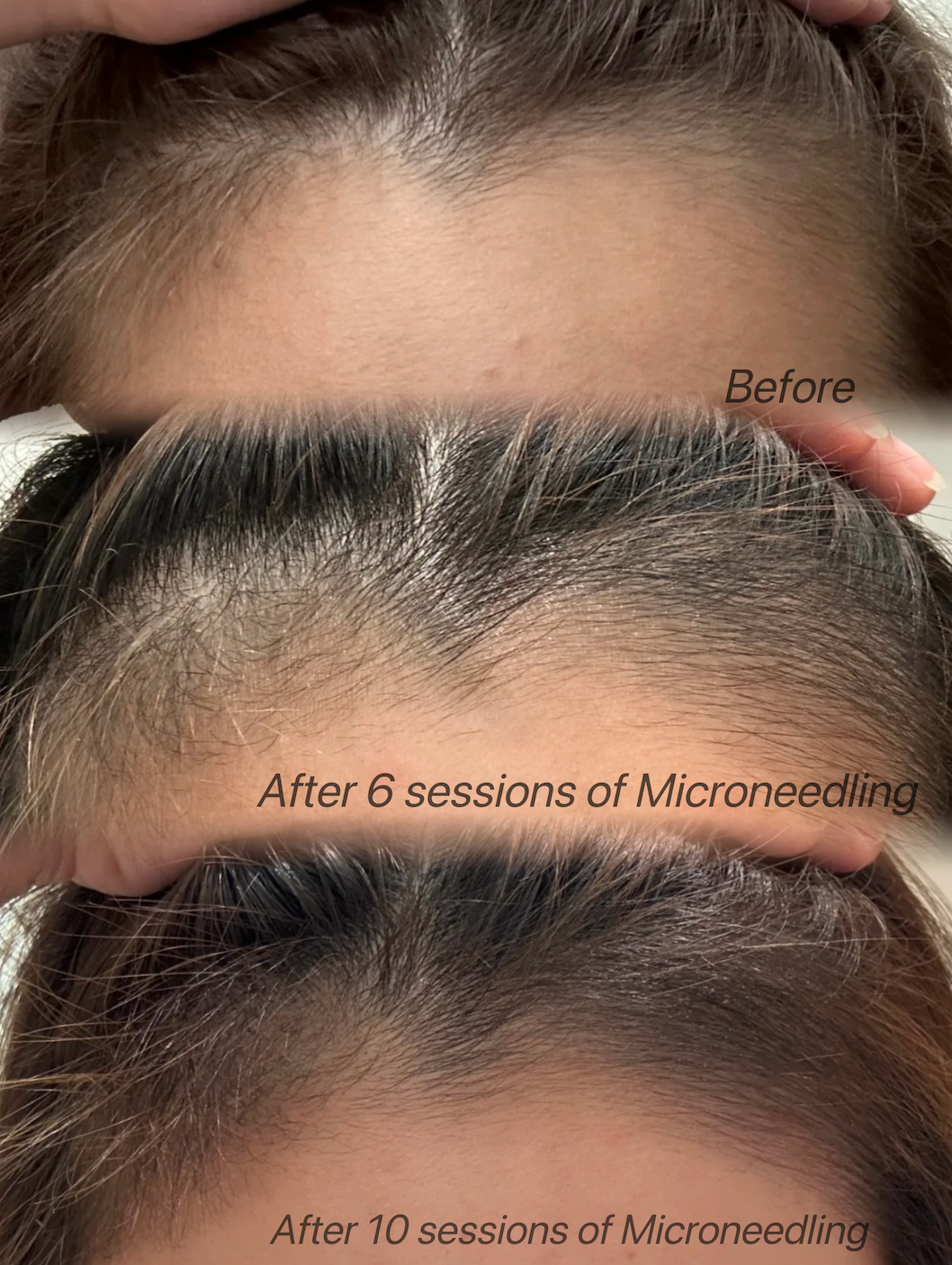
At The Brow & Beauty Boutique, this is achieved through assessment-led microneedling for hair regrowth. Rather than forcing growth, microneedling acts as a biological cue, signalling follicles that conditions are safe for regeneration. When applied at the correct depth and interval, it supports a smoother transition back into anagen.
Clients beginning this pathway often book through scalp microneedling regrowth appointments, ensuring treatment timing aligns with post-stress recovery rather than emotional urgency.
Timing Is Critical in Stress-Related Regrowth
One of the most important aspects of managing stress-induced shedding is timing. Intervening too early can aggravate follicles that are still biologically resting. Waiting too long, however, may allow follicles to re-enter growth slowly or unevenly.
Assessment helps determine where a client is within the stress–shedding–recovery timeline. Early indicators such as reduced shedding, scalp comfort, and the appearance of fine regrowth hairs often signal that follicles are ready for stimulation. Localised microneedling at this stage helps synchronise regrowth without triggering inflammation.
Supporting Brows and Lashes After Stress Events
Stress-induced shedding does not always affect scalp hair alone. Many clients also notice thinning eyebrows or increased lash fall following prolonged stress, burnout, or illness. These follicles are even more sensitive due to their shorter growth cycles.
The Eyebrow Regrowth Booster supports brow follicles through improved circulation and follicular nutrition once stress levels normalise. Clients may begin structured care via eyebrow regrowth booster sessions, allowing progress to be reviewed across multiple cycles.
Similarly, lash recovery is supported through the Lash Regrowth Booster. For clients whose lashes became fragile or sparse during stressful periods, lash regrowth booster appointments help restore stability without overstimulation of the periocular area.
When Stress Reveals Pre-Existing Vulnerabilities
In some cases, stress-induced shedding exposes underlying circulatory or hormonal vulnerabilities. Hair may regrow, but with reduced density or finer calibre than before. This does not indicate permanent loss, but it does suggest follicles need additional support to regain full efficiency.
Localised regenerative stimulation, combined with appropriate spacing and recovery, helps address these vulnerabilities without escalating treatment intensity unnecessarily. This is particularly important for clients who experienced repeated stress episodes or prolonged burnout.
Medical-Aesthetic Support Through La Dermalogique
For clients with delayed recovery or persistent shedding beyond expected timelines, additional support may be provided through La Dermalogique, the medical-aesthetic sister clinic working alongside The Brow & Beauty Boutique. Advanced options such as hairline regrowth microneedling may be introduced when vascular or regenerative response needs reinforcement under medical oversight.
This collaboration ensures regrowth strategies remain measured, evidence-led, and tailored rather than reactive.
What Clients Should Expect From Stress-Related Regrowth
Regrowth after stress is usually gradual but reassuring. Early improvements include reduced daily shedding and improved scalp comfort. Fine regrowth hairs often appear first, followed by thicker shafts as follicles complete successive growth cycles. Full visual recovery can take several months, which is normal and biologically appropriate.
At The Brow & Beauty Boutique, expectation setting is treated as part of the treatment itself. Clients are guided through timelines so progress feels understandable rather than uncertain.
Those wishing to understand the clinic’s philosophy and assessment-led approach can explore our story to gain insight into how regrowth is planned and monitored.
Regrowth That Respects Recovery
Stress-induced hair shedding is not a failure of the follicle. It is a protective biological response. By respecting recovery timelines and applying localised regenerative stimulation at the right moment, follicles are given the signal to resume growth safely and predictably. This approach transforms stress-related hair loss from a source of fear into a manageable, recoverable phase of the hair cycle.