Periocular Pigment Behaviour Explained: What Determines Whether Eyeliner Can Be Refined


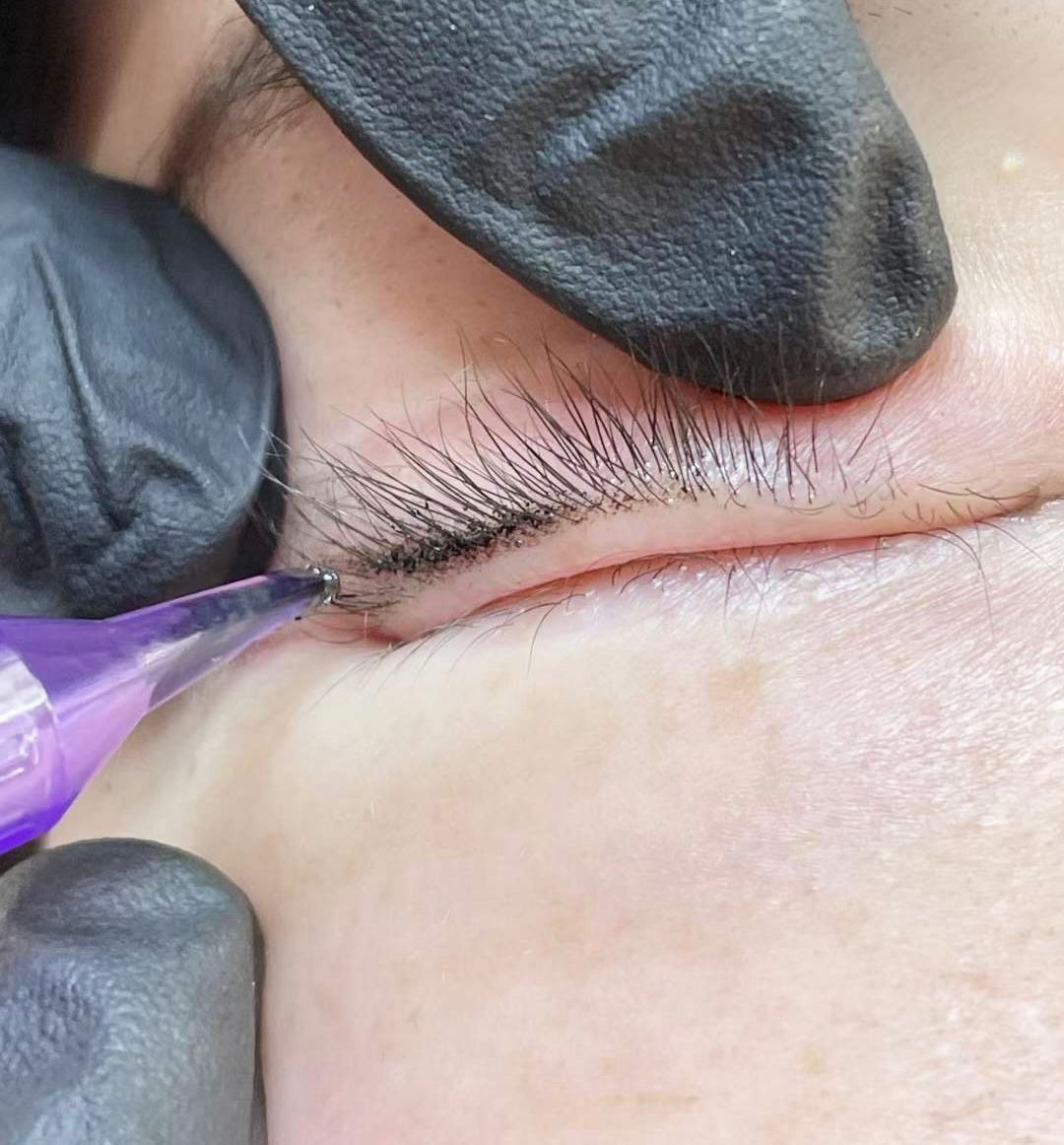
One of the most common questions clients ask during eyeliner correction consultations is whether their existing eyeliner can be refined, reshaped, or softened rather than fully removed. From a professional standpoint, the answer is never a simple yes or no. Whether eyeliner can be refined safely depends on how the pigment is behaving within the periocular tissue, not just how it looks on the surface.
At The Brow & Beauty Boutique, refinement is never treated as a cosmetic decision alone. It is the final outcome of understanding periocular pigment behaviour, stabilising that behaviour where needed, and only then determining whether refinement is biologically appropriate.
Why Periocular Pigment Behaves Differently From Other Areas
The periocular region is unlike any other tattooed area of the face. Eyelid skin is thin, highly vascularised, and in constant motion due to blinking and facial expression. There is minimal subcutaneous fat, and the tissue must accommodate both movement and protection of the eye itself.
Because of this, pigment in the periocular region is far more sensitive to depth, density, and implantation technique. Pigment that behaves predictably in the brow or lip area may behave very differently around the eye. Over time, these differences become more apparent, particularly when pigment was implanted deeply or with high saturation.
This is why refinement decisions must be based on behaviour over time, not initial appearance.
The Key Pigment Behaviours That Determine Refinement Potential
Before eyeliner can be refined, several biological factors must be evaluated. These factors explain whether new pigment can be introduced safely or whether correction and stabilisation must occur first.
Pigment depth stability
Pigment placed superficially within the dermis tends to remain sharper and lighter over time. Deeper pigment is more prone to diffusion, migration, and colour shift. If depth is inconsistent along the eyelid margin, refinement becomes unpredictable.
Edge behaviour and diffusion
Clean, stable edges suggest pigment has settled into a predictable state. Soft, blurred, or expanding edges indicate ongoing diffusion. Refining eyeliner with unstable edges usually leads to thicker or heavier results rather than improved definition.
Density consolidation
After healing, pigment particles can consolidate, making eyeliner appear darker or more dominant. If density is already excessive, refinement without reduction increases visual weight and accelerates distortion.
Directional migration
Pigment that is drifting downward or outward is still biologically active. Introducing new pigment into this environment often causes the refined shape to follow the same migration pathways over time.
Chromatic stability
Colour shifts such as black appearing grey or blue signal depth-related behaviour. Refinement may intensify these shifts if not preceded by appropriate correction.
Each of these behaviours provides information about whether the periocular environment is suitable for refinement or whether intervention is required first.
Why Appearance Alone Is Misleading
Two eyeliners can look equally similar at rest yet have very different refinement potential. One may be stable, shallow, and evenly distributed, while the other may be deep, diffused, and actively migrating beneath the surface.
This is why immediate redesign based on appearance alone often fails. Without understanding pigment behaviour, refinement decisions are guesses rather than informed choices. In the periocular region, guesswork increases risk.
A detailed explanation of how these decisions are made can be found in the clinic’s framework for professional eyeliner colour correction in Singapore, where assessment and restraint are prioritised over cosmetic urgency.
Assessment Is What Determines Eligibility for Refinement
A structured periocular assessment evaluates how pigment is behaving now, not how it was intended to behave originally. This assessment considers depth variation, density distribution, diffusion patterns, anatomical alignment, and tissue reactivity.
Based on this evaluation, eyeliner typically falls into one of three categories:
Some eyeliner is stable and refinement-ready, meaning pigment behaviour is predictable and superficial enough to support careful redesign.
Some eyeliner requires partial correction or stabilisation before refinement can be considered. In these cases, selective reduction or controlled pigment lightening may be necessary to create a safe foundation.
Other eyeliner is not suitable for immediate refinement due to deep placement, active migration, or excessive density. Attempting to refine these cases without correction often worsens long-term outcomes.
Understanding which category applies is what protects both the eye and the result.
Start With a Periocular Pigment Behaviour Assessment
If you are considering eyeliner refinement, the most important first step is understanding how your pigment is behaving beneath the surface. A professional consultation allows your specialist to explain whether refinement is appropriate now or whether stabilisation is required first.
Book an eyeliner correction consultation to receive an assessment grounded in anatomy, pigment behaviour, and periocular safety rather than surface appearance alone.
Why Stabilisation Often Comes Before Refinement
Stabilisation does not necessarily mean removal. In many cases, it involves bringing pigment behaviour under control so it no longer diffuses, migrates, or consolidates unpredictably. This may involve controlled periocular pigment lightening, selective density reduction, or staged observation.
Once pigment behaviour becomes predictable, refinement decisions become far more accurate. Without stabilisation, refinement inherits the same biological instability that caused earlier distortion.
This sequencing is especially important in the periocular region, where even small errors can have long-lasting visual impact.
When Refinement Becomes Safe and Predictable
Once pigment behaviour is stable, refinement can be planned with confidence. Modern eyeliner embroidery techniques are designed to respect periocular biology by prioritising superficial dermal placement, controlled saturation, and anatomical alignment with the eyelid margin.
Clients exploring this stage may review eyeliner embroidery services in Singapore, including refined options such as baby eyeliner for subtle lash enhancement or classic eyeliner for structured yet balanced definition.
These approaches are only introduced when the periocular environment can support them safely.
Supporting Periocular Tissue During the Decision Process
Pigment behaviour is influenced not only by technique, but also by tissue quality and recovery. Supporting hydration, circulation, and barrier integrity improves comfort and predictability during correction and refinement planning.
Many clients incorporate the La Dermalogique Eye Spa – Iris Clarity treatment during their correction journey. This supportive care promotes periocular calmness without interfering with pigment protocols.
Refinement Is Earned Through Stability
Whether eyeliner can be refined is determined by periocular pigment behaviour, not by desire or surface appearance. When behaviour is understood and stabilised, refinement becomes safer, subtler, and far more durable.
Skipping this step often leads to repeated correction cycles and increasing risk.
Schedule your professional eyeliner correction consultation to begin with clarity, assessment & a strategy that protects both your eyes and your long-term results.