Baby Hairline Embroidery vs Scalp Micropigmentation for Uneven Hairline Density
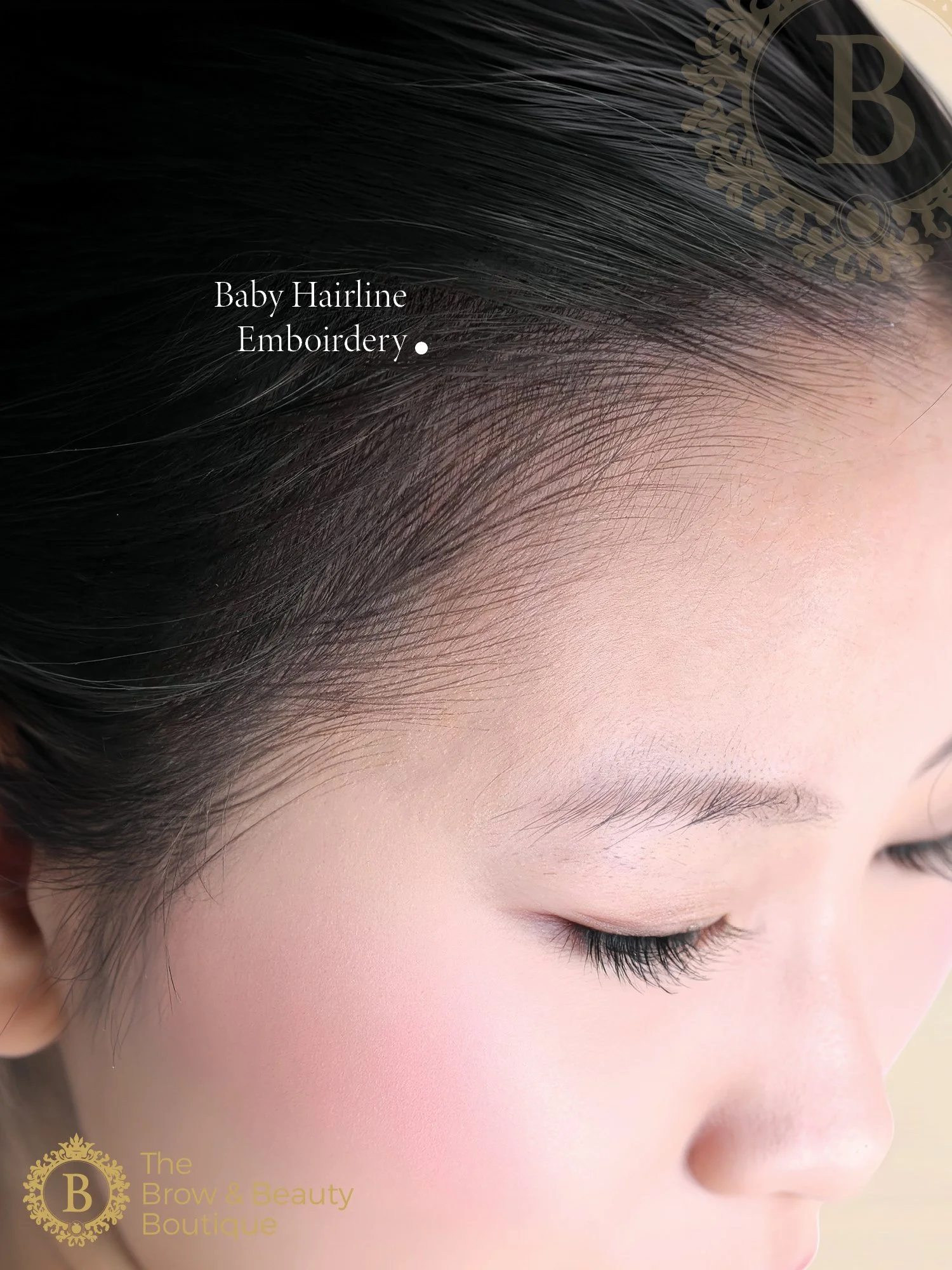
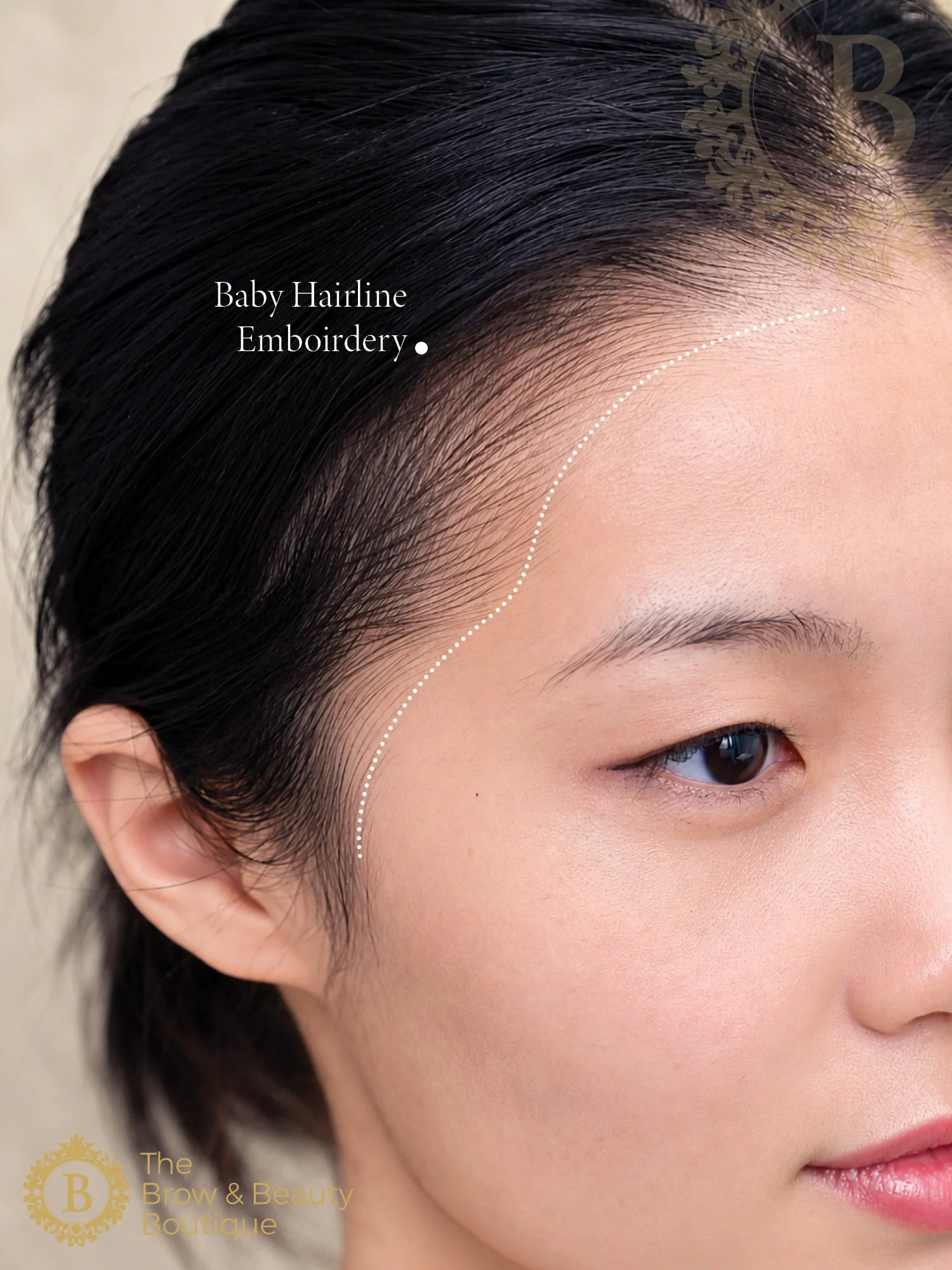
An uneven hairline does not always mean that the entire scalp is thinning.
Sometimes one temple is naturally more recessed. Sometimes the frontal edge contains small gaps. In other cases, the hairline itself is relatively intact but the scalp behind it appears increasingly visible.
Those differences determine whether Baby Hairline Embroidery or Scalp Micropigmentation is more appropriate.
Both can create the appearance of greater fullness, but the word “fullness” means something different in each treatment.
Baby Hairline Embroidery Focuses on Individual Hair Strokes
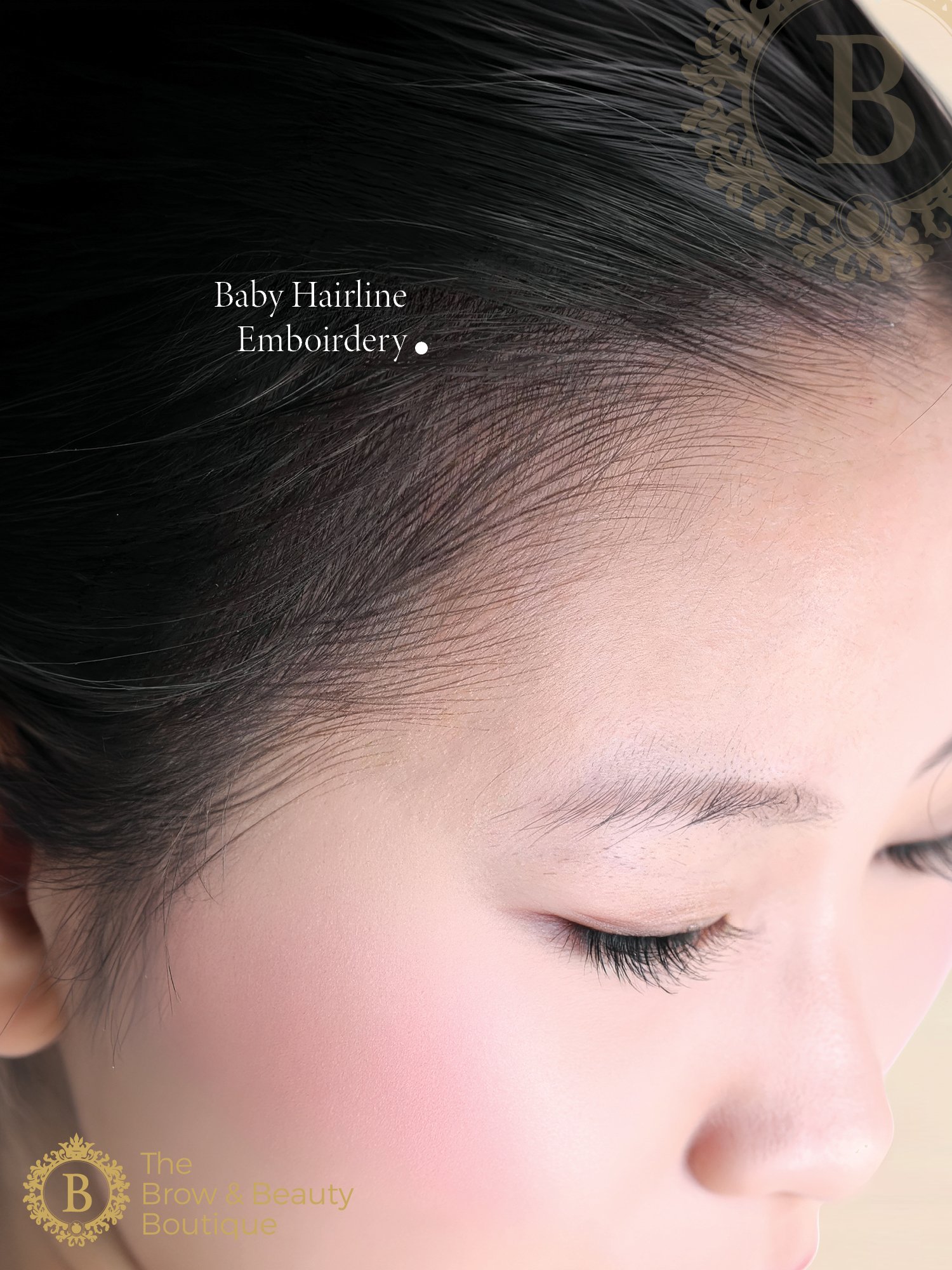
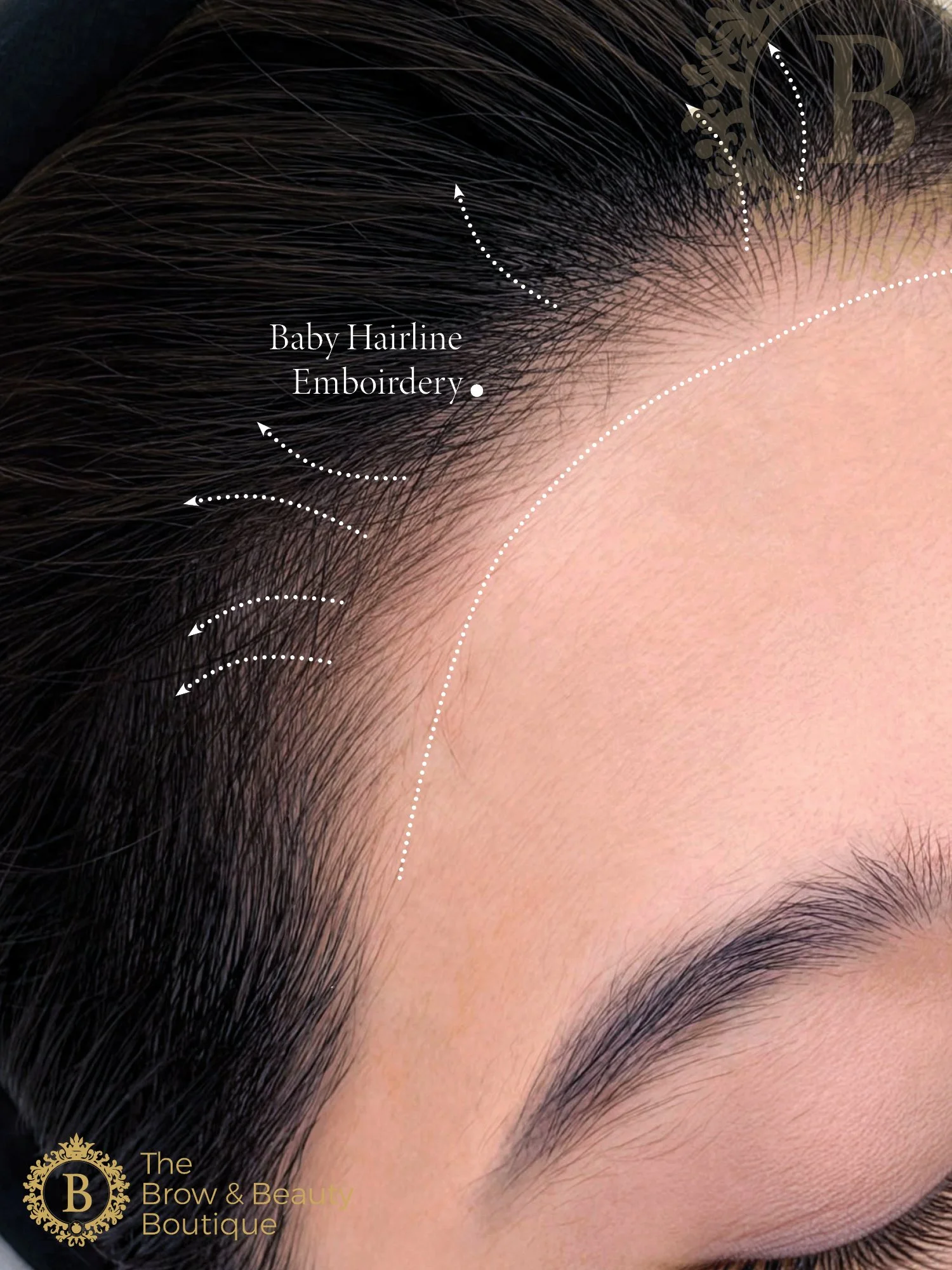
Baby Hairline Embroidery is designed around fine linear strokes.
At the frontal hairline, natural hairs do not all emerge in exactly the same direction. Their angle changes around the temples and central forehead.
A convincing Baby Hairline Embroidery design therefore needs to account for:
Directional growth
Existing hair density
Forehead proportions
Asymmetry
Pigment colour
Where natural hairs transition into skin
This makes it particularly useful for small irregularities along the border of the hairline.
Scalp Micropigmentation Focuses on Density
Scalp Micropigmentation works differently.
Rather than creating elongated hair-like strokes, SMP creates small pigment impressions intended to resemble hair follicles.
This can reduce the contrast between scalp and existing hair.
For someone whose hairline itself is reasonably shaped but one side looks thin because more scalp is visible behind it, SMP may therefore address the more important visual problem.
Why Does Location Matter?
Imagine two clients who both say:
“The left side of my hairline looks thinner.”
For the first person, the issue might be several centimetres of empty frontal edge. Hair-like strokes could visually complete the outline.
For the second person, the frontal hairs may still be present, but density behind them has reduced.
The complaint sounds identical.
The appropriate cosmetic technique may not be.
This is why a specialist assessment matters more than automatically choosing a procedure based on a single keyword such as “thinning.”
Which Gives the Most Natural Result?
Natural-looking results depend on matching the visual technique to the anatomy being treated.
Hair-like strokes make sense where individual hairs would naturally be visible.
Follicle-like impressions make sense where the objective is reducing visible scalp between existing hairs.
Neither technique should simply be spread everywhere.
This reflects The Brow & Beauty Boutique's broader assessment-first approach: technique should follow the concern, not the other way around.
Can the Two Treatments Be Combined?
In selected cases, potentially.
A person may have uneven frontal corners as well as reduced density behind the hairline.
Baby Hairline Embroidery could address the outline while SMP addresses a density concern.
That does not mean more pigment automatically creates a better result.
Treatment zones, healing and visual balance need to be considered carefully. A restrained approach is often more natural than trying to eliminate every visible area of skin.
What If the Uneven Density Is Getting Worse?
Cosmetic pigment does not diagnose or stop hair loss.
If one side is becoming noticeably thinner, shedding has increased or density is progressively changing, the cause should not simply be covered without consideration.
Clients interested in supporting their existing natural hair can also explore Microneedling for Hair Regrowth.
This again addresses a different objective from either Baby Hairline Embroidery or SMP.
Choosing Between Hairline Shape and Density
The easiest way to think about the two treatments is:
If the missing visual element is individual hairs along the edge, consider Baby Hairline Embroidery.
If the missing visual element is density across the scalp, consider SMP.
Some concerns sit between the two, which is why treatment should be individualised.
At The Brow & Beauty Boutique, the goal is not simply to apply pigment wherever the scalp is visible. It is to determine what type of mark belongs naturally in that area.
If you are unsure whether your uneven hairline is primarily a shape or density concern, book an appointment for an assessment.