Eyeliner That Has Thickened Over the Years Can Be Re-Conditioned With Tissue-Preserving Correction Strategies


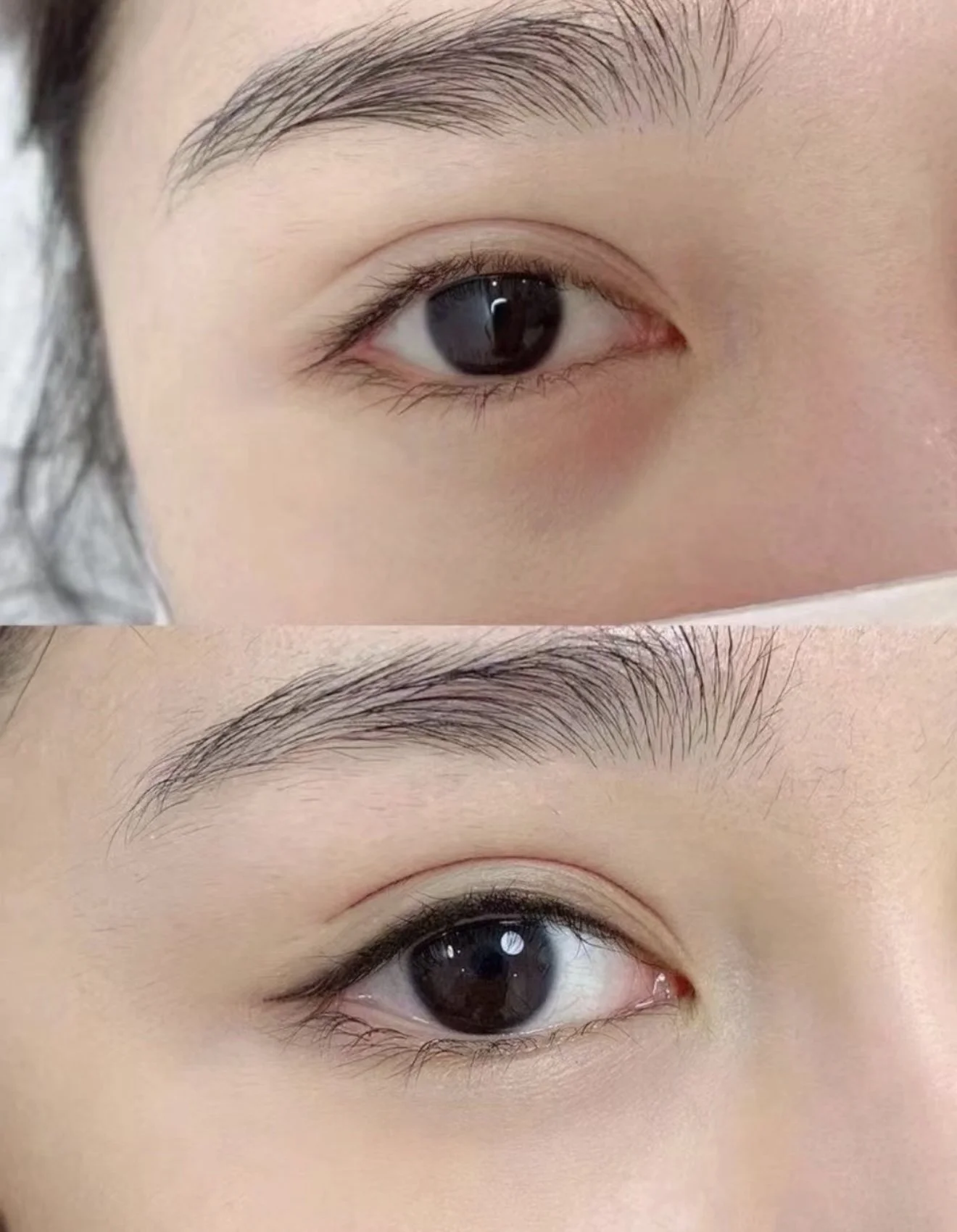
Eyeliner that has gradually thickened over the years is a common long-term outcome of periocular permanent makeup. What may have started as a fine, elegant line can slowly appear heavier, wider, or more dominant at the eyelid margin. Clinically, this change is not a failure of eyeliner as a concept. It is the result of progressive pigment behaviour, tissue response, and density accumulation within one of the most delicate anatomical regions of the face.
At The Brow & Beauty Boutique, thickened eyeliner is managed through tissue-preserving correction strategies that focus on re-conditioning the periocular environment rather than aggressively removing pigment. The objective is to restore balance, clarity, and comfort while protecting long-term eyelid health.
Why Eyeliner Appears Thicker as It Ages
Periocular skin changes continuously over time. The eyelid margin is thin, highly mobile, and influenced by repetitive muscular movement from the orbicularis oculi muscle. As skin elasticity changes and tissue structure subtly shifts, previously well-placed pigment can begin to present differently.
Several mechanisms contribute to the appearance of thickened eyeliner. Density overload may become more visible as surrounding tissue thins. Microscopic diffusion artefacts can soften the original edge, increasing perceived width. In some cases, mild pigment migration or chromatic shift causes the eyeliner to look darker or more shadowed than intended, further amplifying heaviness.
Importantly, these changes are gradual and biological. They do not indicate that the pigment is unstable or that the tissue has been damaged beyond repair. They indicate that the periocular environment has evolved and now requires correction that respects those changes.
Why Aggressive Removal Is Not the First-Line Solution
When eyeliner appears thicker over time, many assume that complete removal is necessary. In the periocular region, this assumption can lead to unnecessary risk. Aggressive removal techniques may compromise barrier integrity, increase post-inflammatory response, or create avoidable ocular proximity concerns.
Medical-led correction takes a more conservative approach. Instead of erasing pigment forcefully, specialists focus on controlled pigment reduction and re-conditioning. By selectively lightening areas contributing most to heaviness, visual balance can be restored while preserving tissue integrity.
This philosophy underpins the clinic’s approach to professional eyeliner colour correction in Singapore, where correction plans are guided by pigment behaviour, depth analysis, and periocular safety rather than speed or absolutes.
Tissue-Preserving Correction as a Structured Process
Re-conditioning thickened eyeliner is not a one-step intervention. It follows a structured, incremental protocol designed to respect healing timelines and anatomical limits.
The process begins with assessing pigment density distribution, depth, and edge behaviour. Areas contributing most to visual heaviness are identified and addressed first through targeted pigment reduction. Between sessions, the periocular tissue is allowed to stabilise so that improvements can be evaluated accurately before further correction.
This staged approach reduces the risk of overcorrection and ensures that clarity is restored progressively rather than abruptly. Clients are guided through realistic expectations, understanding that refinement occurs over time.
Begin With a Periocular Density Assessment
Because thickening can result from different combinations of depth, diffusion, and tissue change, correction must always start with a consultation. This allows your specialist to determine whether controlled pigment reduction, staged correction, or stabilisation is the most appropriate first step.
Book a professional eyeliner correction consultation to receive an assessment grounded in anatomy, pigment science, and periocular safety.
Re-Defining Eyeliner After Re-Conditioning
Once excess density has been reduced and the eyelid margin has stabilised, some clients choose to reintroduce definition using modern eyeliner embroidery. This step is optional and only considered when residual pigment no longer compromises clarity.
Contemporary techniques prioritise superficial dermal placement, controlled saturation, and alignment with the natural lash line. The goal is not to recreate bold eyeliner, but to restore proportionate definition that ages predictably with the skin.
Clients considering this phase can review the clinic’s overview of eyeliner embroidery services in Singapore. Depending on eyelid anatomy and aesthetic preference, suitable options may include baby eyeliner for subtle enhancement or classic eyeliner for refined structure without excessive density.
Supporting Periocular Skin During Re-Conditioning
Correction outcomes are influenced not only by pigment management, but also by how well the periocular skin recovers between sessions. Supporting hydration, circulation, and barrier function helps maintain comfort and predictability.
Many clients incorporate supportive care such as the La Dermalogique Eye Spa – Iris Clarity to promote periocular comfort and tissue resilience. This treatment complements correction work by supporting skin calmness without interfering with pigment protocols.
Re-Conditioning, Not Erasing
Eyeliner that has thickened over the years does not require aggressive removal. With tissue-preserving correction strategies, balance and clarity can be restored safely and progressively.
Through careful assessment, controlled pigment reduction, and thoughtful sequencing before any re-embroidery, the periocular region can be re-conditioned for long-term stability and natural definition.
Schedule your eyeliner correction consultation to begin a medically guided, safety-first path toward lighter, more balanced eyeliner & lasting confidence.