Addressing Eyeliner That Has Aged Poorly Due to Early Implantation Techniques
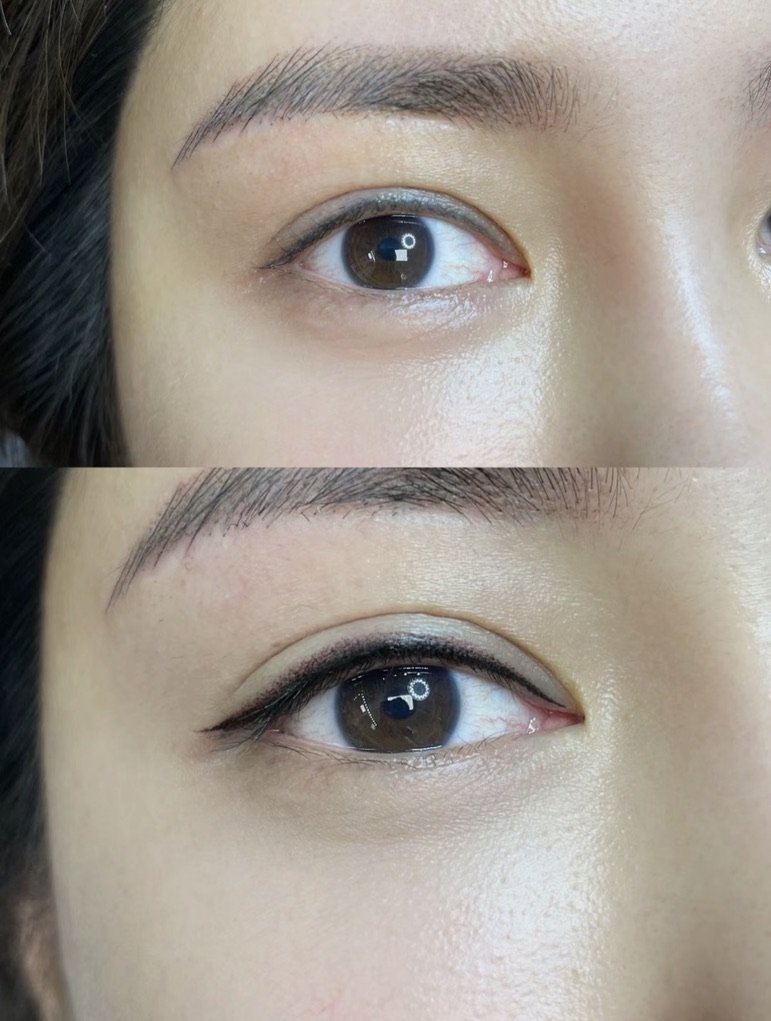

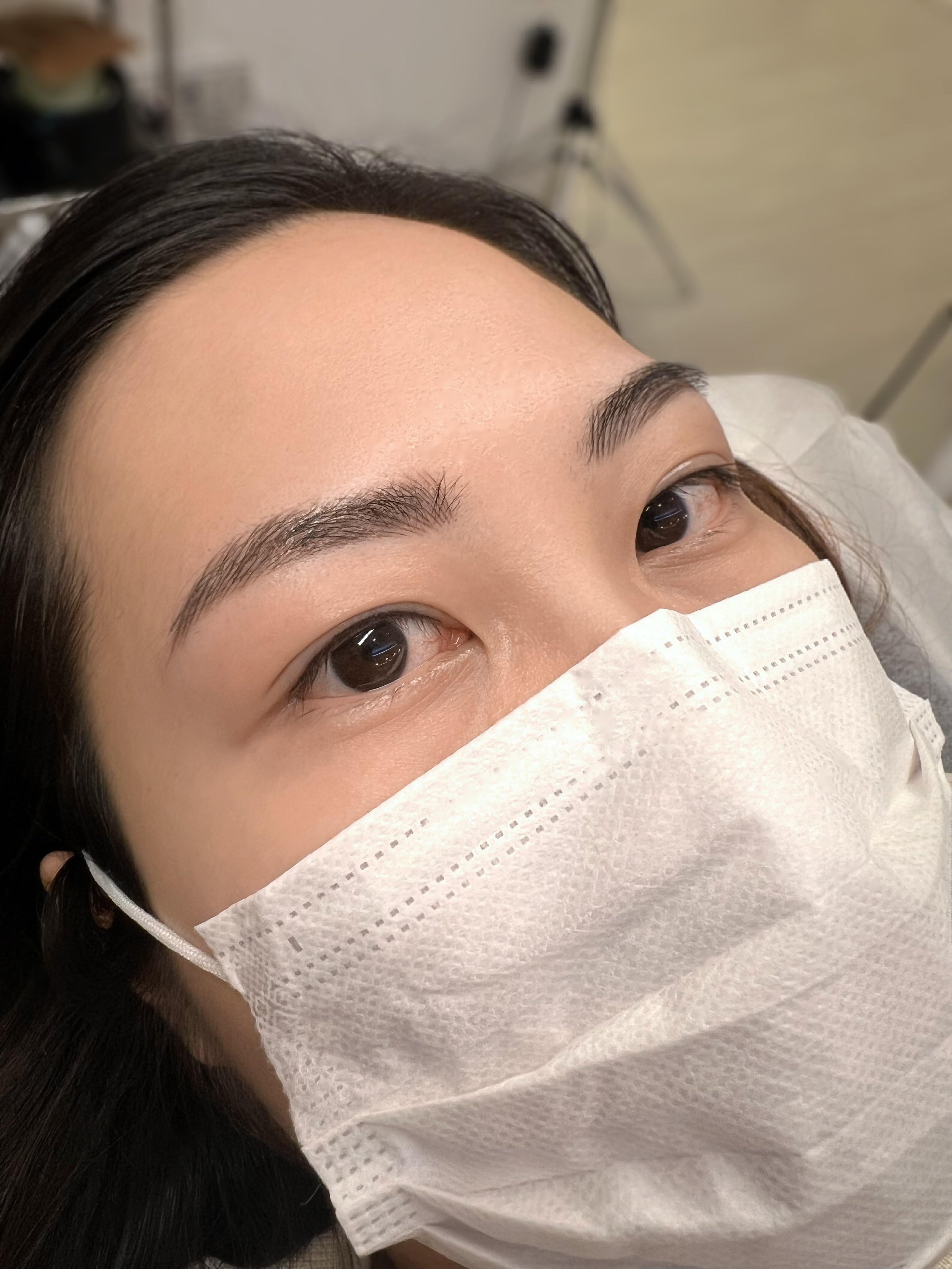
Many clients seeking eyeliner correction are not dealing with a recent issue, but with eyeliner performed years ago using techniques that are no longer considered stable or appropriate for the periocular region. What once appeared neat can gradually become blurred, heavy, uneven, or misaligned with the eyelid margin. From a professional standpoint, this is not a mystery. It is a known outcome of early implantation techniques that did not account for long-term pigment behaviour in delicate periocular tissue.
At The Brow & Beauty Boutique, these cases are approached through medical-led assessment and controlled correction. The goal is not to erase history, but to understand how older techniques behave today and to correct them safely without introducing new instability.
What Early Eyeliner Implantation Techniques Did Differently
Earlier approaches to eyeliner tattooing often prioritised immediate visibility and longevity over biological compatibility. Heavier saturation, deeper dermal placement, and limited understanding of periocular movement were common at the time.
These techniques frequently involved:
Deeper pigment implantation, increasing long-term migration risk
High-density saturation, creating visually heavy lines over time
Carbon-dominant pigments, prone to chromatic shift
Minimal depth modulation, treating the eyelid like less delicate facial skin
While these methods could look bold and defined initially, they often aged poorly as the eyelid tissue responded over years of movement, blinking, and natural structural change.
How Poor Ageing Presents Years Later
Eyeliner affected by early implantation techniques rarely “fails” suddenly. Instead, it changes gradually. Clients often describe the eyeliner as looking heavier, blurrier, lower, or no longer aligned with their eyes.
Common long-term presentations include:
Diffusion beyond the original borders
Downward shadowing beneath the lash line
Loss of crisp edge definition
Colour shifts toward grey or blue
Asymmetry between eyes
These changes are not surface issues. They reflect how pigment placed too deeply or densely behaves as tissue evolves. Recognising this distinction is critical, because it determines how correction should be approached.
Why Aggressive Removal Is Rarely the Right First Step
When eyeliner has aged poorly, it is tempting to pursue fast or aggressive removal. In the periocular region, this approach often introduces unnecessary risk. Eyelid skin has limited tolerance for trauma, and overcorrection can compromise barrier integrity or prolong inflammation.
More importantly, not all poorly aged eyeliner requires full removal. In many cases, the pigment remains largely intact but visually excessive due to diffusion and depth-related instability. Treating these cases with aggressive methods can reduce future correction options rather than improve them.
Medical-led correction focuses instead on controlled periocular pigment lightening and stabilisation, addressing excess pigment while preserving tissue health.
Assessment Is Essential With Legacy Eyeliner Work
When dealing with older eyeliner, assessment becomes even more critical. Pigment brands, formulations, and implantation depths are often unknown. Without understanding how the pigment is behaving now, any intervention becomes speculative.
A professional periocular assessment evaluates:
Pigment depth and density variation
Extent of diffusion or migration
Relationship between eyeliner placement and current eyelid anatomy
Tissue reactivity and healing capacity
This information determines whether correction should begin with stabilisation, partial reduction, or staged intervention. The clinic’s approach to professional eyeliner colour correction in Singapore explains how these decisions are made conservatively, prioritising predictability over speed.
Begin With a Legacy Eyeliner Assessment
If your eyeliner was done many years ago and no longer suits your eyes, the most important first step is evaluation. A consultation allows your specialist to explain how older implantation techniques have influenced your current outcome and what can be improved safely.
Book an eyeliner correction consultation to receive guidance based on anatomy, pigment behaviour, and periocular safety rather than assumptions.
Correcting Poorly Aged Eyeliner Through Controlled Staging
Medical-led correction for legacy eyeliner is rarely a single-session process. Instead, it follows an incremental correction protocol, allowing tissue to stabilise between stages and specialists to observe pigment response carefully.
This staged approach enables:
Gradual reduction of excess density
Improved edge clarity without provoking migration
Protection of eyelid structure and healing capacity
By working conservatively, correction remains adaptable. If pigment responds more quickly than expected, the plan can be adjusted. If it responds slowly, intervention can be paced appropriately.
When Modern Eyeliner Embroidery Becomes an Option
Once poorly aged pigment has been stabilised and excess diffusion addressed, some clients choose to reintroduce eyeliner definition using contemporary techniques. This step is optional and always sequenced after correction, never used to mask unresolved issues.
Modern eyeliner embroidery prioritises superficial dermal placement, controlled saturation, and anatomical alignment with the eyelid margin. Clients considering refinement may explore eyeliner embroidery services in Singapore, including subtle options such as baby eyeliner for refined lash enhancement or classic eyeliner for balanced definition.
These approaches are designed to age predictably, avoiding the depth and density issues of earlier techniques.
Supporting Periocular Skin During Correction
Correction outcomes are influenced by how well periocular tissue recovers between stages. Supporting hydration, circulation, and barrier integrity improves comfort and predictability.
Many clients incorporate the La Dermalogique Eye Spa – Iris Clarity treatment during correction. This supportive care promotes periocular calmness without interfering with pigment protocols.
Poor Ageing Is a Technique Issue, Not a Dead End
Eyeliner that has aged poorly due to early implantation techniques does not have to remain unchanged. With medical-led assessment, controlled correction, and thoughtful sequencing, clarity and balance can be restored safely.
The key is patience, restraint, and a process that respects both pigment behaviour and long-term eye health.
Schedule your professional eyeliner correction consultation to begin a correction journey grounded in safety, judgement & lasting results.