Why Removing Existing Lip Pigment Is Essential Before Effective Colour Correction
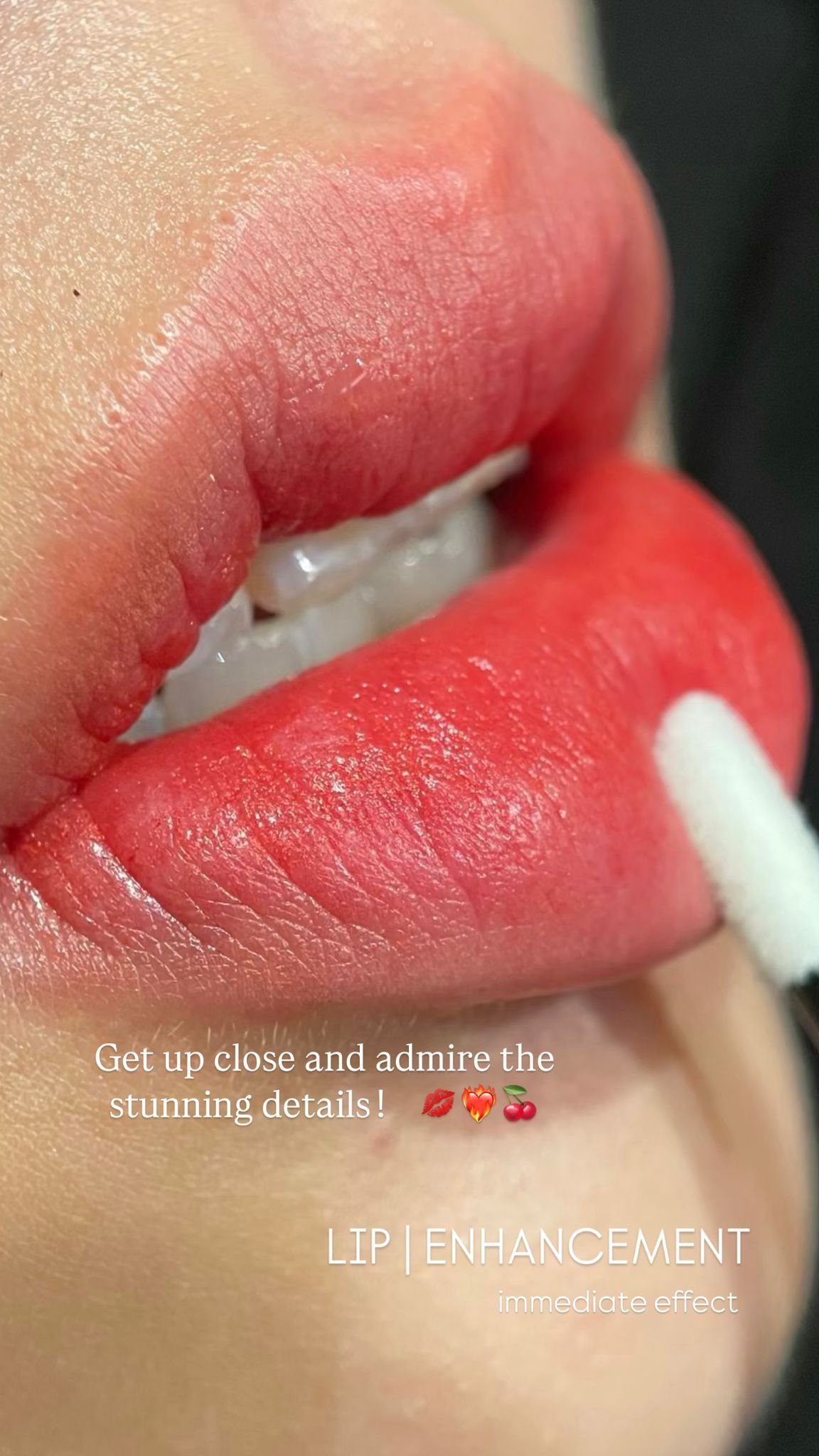

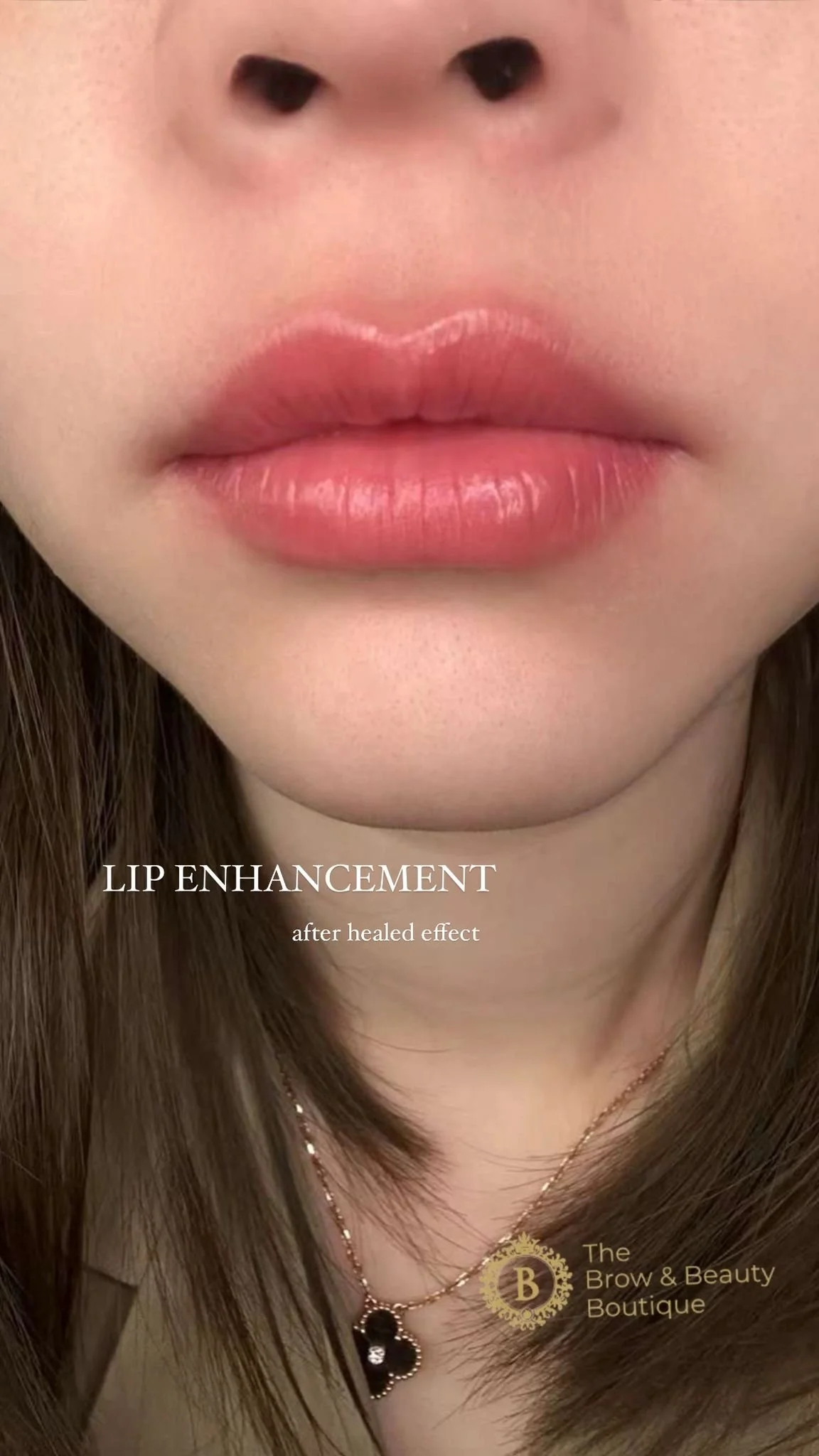
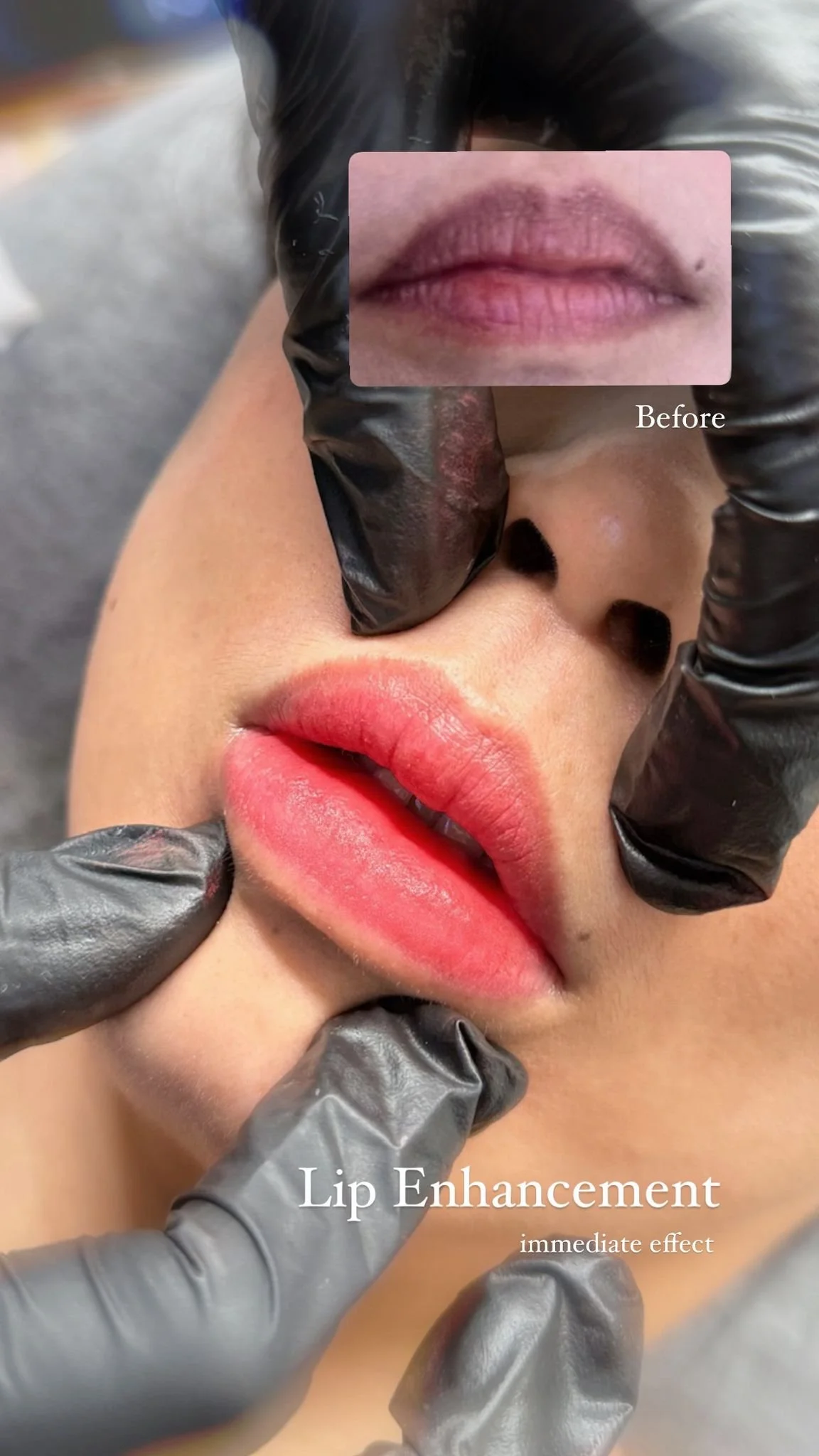
When lip colour results appear uneven, muted, greyed, or resistant to correction, the instinctive response is often to adjust the colour itself. Warmer tones are added, neutralisers are layered, or saturation is increased in the hope of restoring balance. In practice, however, effective colour correction rarely begins with colour. It begins with addressing what is already present in the tissue.
At The Brow & Beauty Boutique, the starting point for reliable lip correction is a clear understanding of existing pigment behaviour. In many cases, removing or reducing residual pigment is not optional. It is essential.
The Problem With Correcting Over Existing Pigment
Lip pigment does not disappear simply because it has faded. Even when colour looks lighter on the surface, residual pigment often remains embedded at varying dermal depths. This underlying pigment continues to influence how new colour is perceived.
When corrective colour is applied over existing pigment, several issues arise simultaneously:
Light passes through multiple pigment layers before reflecting back
Residual undertones distort newly introduced hues
Depth inconsistencies create uneven saturation
Old and new pigments interact unpredictably over time
What appears to be a colour problem is, in reality, a structural pigment interference issue. Without addressing the existing pigment load, colour correction becomes guesswork rather than a controlled process.
Residual Pigment Is Not Neutral
A common misconception is that faded pigment is inactive. In fact, residual pigment is often the most disruptive factor in lip correction.
Older pigment may:
Sit deeper in the dermis
Carry cooler or oxidised undertones
Respond differently to light and blood flow
React unpredictably when layered over
Even minimal residual pigment can significantly alter the appearance of corrective tones. This is why lips that have undergone multiple corrections often become increasingly grey, purple, or dull rather than more balanced.
Why Colour Neutralisation Alone Has Limits
Colour neutralisation has a valid place in lip correction, but only under specific conditions. When residual pigment load is low and depth is consistent, neutralisation can help refine tone. When residual pigment is dense, deep, or uneven, neutralisation alone is insufficient.
Applying corrective hues over unstable pigment can:
Increase cumulative pigment density
Reduce long-term predictability
Temporarily mask problems that resurface later
Narrow future correction options
At The Brow & Beauty Boutique, neutralisation is never used to compensate for unresolved pigment interference. The foundation must be stabilised first.
Pigment Removal as a Reset, Not an Erasure
Lip colour removal is often misunderstood as undoing previous work. In correction-led practice, removal functions as a reset mechanism, not a reversal.
Selective pigment removal allows for:
Reduction of oversaturated areas
Lightening of cool or oxidised pigment
Improved light reflection through the vermilion
Restoration of colour predictability
Importantly, removal does not always mean full clearance. Many cases benefit from partial reduction that recalibrates pigment load without over-stressing the tissue. This controlled approach creates a neutral, stable base upon which correction can succeed.
You can explore how this reset process works through our lip colour removal service.
Why Corrective Colour Performs Better After Removal
Once existing pigment interference has been reduced, colour correction becomes significantly more precise. Pigment settles more evenly, undertones remain stable, and healing outcomes are easier to predict.
This is why removal is positioned as a preparatory phase, not a detour. Corrective colour applied after proper reduction behaves differently because it is no longer competing with unstable pigment beneath the surface.
Clients often notice that:
Colour appears clearer rather than muddy
Healing is more uniform across the lips
Undertones remain consistent over time
Fewer corrective sessions are needed
The Role of Lip Embroidery After Correction
After residual pigment has been addressed and colour behaviour stabilised, lip embroidery becomes the natural completion step. At this stage, embroidery enhances shape, softness, and tone rather than compensating for instability.
This sequencing is critical. Embroidery performed on a stable foundation is more predictable, longer-lasting, and visually refined. It is also why The Brow & Beauty Boutique consistently achieves reliable outcomes even in complex correction cases.
Clients ready for refinement may explore lip embroidery blush or lip embroidery enhancement once correction prerequisites are met.
Why Assessment Determines the Correct Pathway
Not every set of lips requires removal before correction. Determining when removal is necessary depends on careful assessment of:
Pigment depth and density
Residual colour influence
Healing history and tissue response
Long-term colour behaviour
At The Brow & Beauty Boutique, consultations are designed to clarify these factors rather than rush decisions. Clients are guided through the reasoning behind each recommendation so they can proceed with confidence rather than uncertainty.
For insight into how similar cases have been resolved, our customer stories provide real-world examples of correction-first outcomes.
Stability Before Refinement
Effective colour correction is not about adding the right colour. It is about creating the right conditions for colour to behave predictably. Removing or reducing existing pigment is often the only way to achieve that stability.
If previous lip work continues to interfere with your results, the next step is not more pigment. It is foundation correction.
You may begin this process by scheduling the appropriate service directly:
To learn more about our approach and services, visit The Brow & Beauty Boutique.