Regrowth After Failed Hair or Brow Treatments Using Biological Reset Protocols
Failed hair or eyebrow treatments leave more than visible disappointment. They often leave the follicular environment biologically confused, inflamed, or suppressed. Clients commonly report that regrowth “never came back” after an unsuccessful procedure, multiple corrections, or overly aggressive treatments. At The Brow & Beauty Boutique, regrowth after failure is approached through biological reset protocols, not escalation. The aim is to restore follicular readiness before expecting visible improvement.
In most failed cases, follicles are not destroyed. Instead, they are trapped in prolonged resting phases due to inflammation, disrupted circulation, pigment interference, or repeated trauma. Attempting further stimulation without addressing these factors often worsens the problem. A biological reset focuses on stabilisation first, signalling second, and regrowth last.
Why Regrowth Often Fails After Previous Treatments
Hair and brow treatments fail for predictable biological reasons. Excessive stimulation can exhaust follicles. Deep or repeated pigment placement can impair microcirculation. Poorly timed interventions can interrupt the natural growth cycle, pushing follicles into extended telogen phases.
Clients who have tried multiple serums, lasers, or needling sessions without assessment often experience diminishing returns. Each additional attempt increases inflammation while reducing follicular responsiveness. At The Brow & Beauty Boutique, this pattern signals the need to pause and reset rather than push harder.
What a Biological Reset Actually Means
A biological reset does not mean “doing nothing.” It means removing barriers to regrowth before reintroducing stimulation. This often involves reducing inflammatory load, restoring dermal integrity, and improving oxygen and nutrient delivery to the follicle.
In brow cases, residual pigment from failed microblading or embroidery is a common barrier. Pigment placed too deeply or repeatedly can disrupt circulation and alter the follicular microenvironment. In these situations, regrowth may not resume until the skin is stabilised through RF Pulse eyebrow removal and brow revival. This step reduces pigment burden and allows tissue recovery before regrowth planning begins.
Resetting the Scalp After Failed Hair Treatments
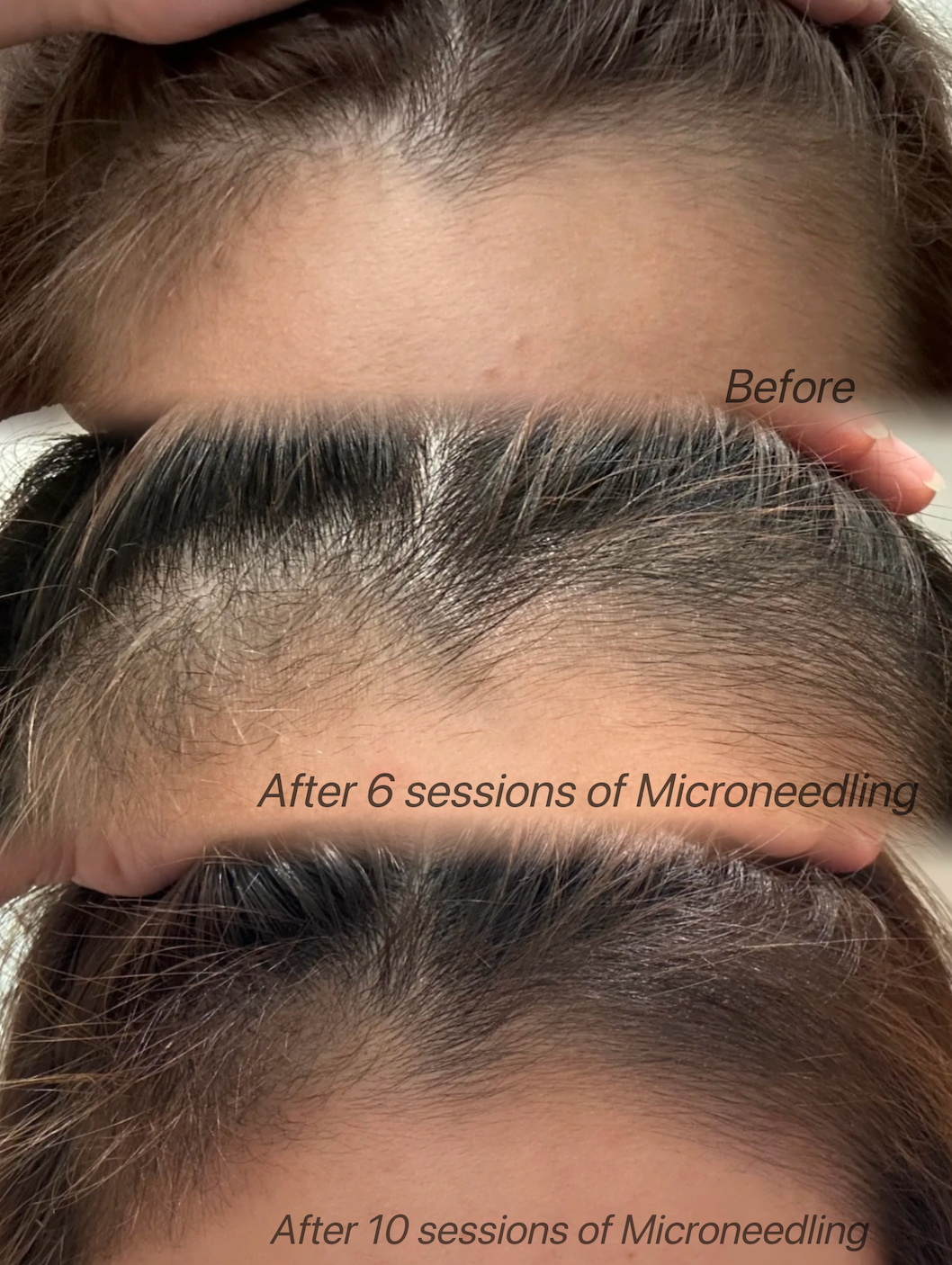
For scalp hair, failed treatments often leave the scalp either over-stimulated or chronically inflamed. Clients may notice increased shedding, patchy regrowth, or hair that grows back finer than before. These outcomes usually reflect disrupted signalling rather than permanent follicular loss.
Once inflammation is controlled, regrowth signalling can be reintroduced carefully through microneedling for hair regrowth. When used as part of a reset protocol, microneedling is not aggressive. Depth, spacing, and frequency are adjusted to reawaken follicles without triggering further stress.
Clients beginning this phase often schedule care via scalp microneedling regrowth appointments, ensuring treatments align with biological recovery rather than urgency driven by past disappointment.
Brow Regrowth After Failed Cosmetic Procedures
Eyebrows are especially vulnerable to failed interventions because of their short growth cycles and delicate follicular structure. Overworked brows may still produce hair, but shafts are fine, uneven, or short-lived. Without reset protocols, further regrowth attempts often plateau quickly.
The Eyebrow Regrowth Booster is used after stabilisation to support circulation, follicular nutrition, and skin balance. Clients typically begin with eyebrow regrowth booster sessions so progress can be assessed over multiple cycles rather than judged prematurely.
Importantly, regrowth after failure often prioritises hair quality before hair quantity. Thicker, more resilient shafts usually appear before visible density increases.
Lash Regrowth After Overuse or Treatment Fatigue
Failed lash treatments frequently involve breakage masquerading as loss, compounded by follicular suppression from repeated extensions or harsh removals. A biological reset here focuses on eliminating mechanical stress and restoring follicular stability before expecting length or density.
The Lash Regrowth Booster supports lash follicles during this recovery phase. Clients initiating lash reset care may use lash regrowth booster appointments to ensure treatment intervals respect the lash growth cycle rather than forcing stimulation too soon.
Why Reset Protocols Restore Predictability
The defining feature of a biological reset is predictability. Once inflammation is reduced and circulation restored, follicles respond more consistently to stimulation. Regrowth becomes gradual but measurable, replacing the cycle of hope and disappointment many clients experience after failed treatments.
At The Brow & Beauty Boutique, reset protocols are assessment-led. This means some clients begin regrowth within weeks, while others require longer stabilisation periods. Both pathways are valid and designed to protect long-term follicular health.
Medical-Aesthetic Support Through La Dermalogique
More complex recovery cases may require deeper regenerative support. This is where La Dermalogique, the medical-aesthetic sister clinic, provides additional oversight. Treatments such as hairline regrowth microneedling can be introduced when vascular response or healing capacity is compromised, ensuring reset protocols remain effective without being aggressive.
Resetting Expectations Alongside Biology
One of the most important aspects of regrowth after failure is expectation management. Reset protocols take time because follicles must exit prolonged resting phases before visible growth resumes. Early signs of success often include reduced shedding, improved hair texture, or stronger individual hairs rather than immediate fullness.
Clients are encouraged to ask questions, understand sequencing, and view regrowth as recovery rather than correction. This mindset shift often makes the difference between sustainable progress and repeated disappointment.
Those wishing to understand the clinic’s philosophy and long-term approach can explore our story for deeper insight into how assessment-led care guides every regrowth plan.
Regrowth After Failure Is Still Regrowth
Failed treatments do not mean regrowth is no longer possible. They mean the follicular environment needs to be reset before it can respond again. By prioritising biological recovery, sequencing interventions correctly, and reintroducing stimulation with restraint, regrowth after failure becomes achievable, predictable, and far more stable over time.