Why Eyeliner Can Look Acceptable at First but Distort Years Later—and How Correction Addresses This
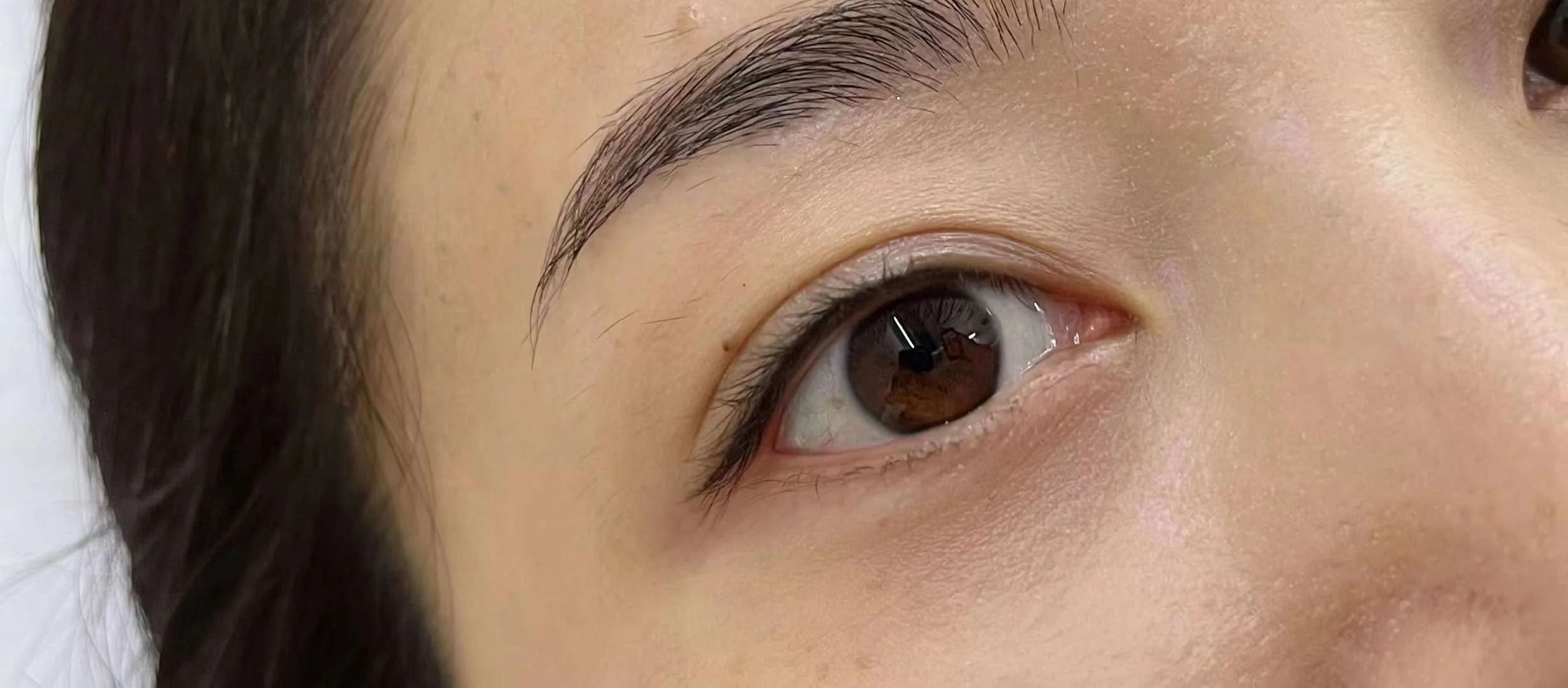


One of the most confusing experiences for clients is realising that eyeliner which once looked perfectly acceptable has changed significantly years later. The shape may appear thicker, blurrier, lower, or misaligned with the eye, even though no additional work has been done. From a professional standpoint, this delayed distortion is not unusual, nor accidental. It reflects how periocular pigment behaves over time within living, changing tissue.
At The Brow & Beauty Boutique, eyeliner correction is grounded in understanding why long-term distortion occurs before attempting to fix it. Correction is not about reversing time, but about responding intelligently to biological reality.
Why Eyeliner Can Look Fine in the Beginning
Immediately after eyeliner implantation and early healing, pigment often appears crisp and well-defined. Several factors contribute to this initial acceptability.
In the early phase, pigment particles are freshly placed and have not yet interacted fully with the surrounding tissue. Mild post-procedure swelling can temporarily mask density and soften edges, making the eyeliner appear balanced. Additionally, the eyelid structure at the time of implantation may have supported the original placement visually.
Most importantly, time has not yet revealed how depth, density, and tissue movement will influence the pigment. Early results are not a reliable predictor of long-term behaviour, particularly in the periocular region.
What Changes Over the Years
The periocular area is dynamic. Blinking, facial expression, gravity, and gradual anatomical changes all influence how pigment behaves beneath the skin. Eyelid skin is thin and constantly in motion, which makes it especially sensitive to depth-related instability.
Over time, several processes may occur simultaneously:
Pigment placed too deeply may begin to diffuse laterally, creating soft or blurred edges. Density that once seemed appropriate can consolidate as inflammation fully resolves, making eyeliner appear darker or heavier. Gravity and tissue dynamics can cause pigment to appear lower than its original position, producing shadowing beneath the lash line. In some cases, chromatic shift occurs, with black pigment appearing grey or blue as it interacts with dermal tissue.
These changes happen slowly, often over years. Because the progression is gradual, clients may not notice until the eyeliner no longer complements their eyes.
Why Distortion Is a Technical Issue, Not a Personal One
Clients often blame themselves for ageing-related changes, skin type, or lifestyle factors. In reality, long-term eyeliner distortion is primarily linked to implantation depth, density control, and early technique choices.
Earlier eyeliner techniques frequently prioritised longevity and boldness, sometimes using deeper placement or heavier saturation than what is considered stable today. While these approaches could look acceptable initially, they often failed to account for how pigment behaves in periocular tissue over decades rather than months.
This distinction matters, because it reframes the problem. Distorted eyeliner is not a sign that something was “done wrong” recently. It is a sign that the pigment has reached a stage where it needs professional management rather than concealment.
Why Immediate Redesign Rarely Solves the Problem
When eyeliner distorts, the instinctive solution is often to redraw it. Unfortunately, adding pigment over unstable eyeliner usually accelerates the same processes that caused the distortion in the first place.
New pigment tends to follow existing migration pathways. Additional saturation increases density overload, making eyeliner appear even heavier over time. Layering also obscures diagnostic information, making it harder to determine where the original pigment sits and how it is behaving.
For this reason, responsible correction never begins with redesign. It begins with assessment and stabilisation.
A detailed explanation of this conservative philosophy can be found in the clinic’s approach to professional eyeliner colour correction in Singapore, where long-term predictability is prioritised over quick cosmetic fixes.
How Correction Addresses Long-Term Distortion
Medical-led eyeliner correction focuses on managing pigment behaviour rather than chasing surface appearance. The first step is understanding whether the eyeliner is still biologically active in terms of diffusion, migration, or density consolidation.
Depending on the findings, correction may involve controlled periocular pigment lightening, selective density reduction, or staged stabilisation. The aim is to reduce excess pigment and bring behaviour back into a predictable state without provoking inflammation or compromising eyelid integrity.
This process is incremental. By allowing tissue to recover between stages, specialists can observe how pigment responds and adjust the strategy accordingly. In the periocular region, restraint is not hesitation. It is a safety measure.
Start With a Diagnostic Eyeliner Consultation
If your eyeliner looked fine years ago but no longer suits your eyes today, guessing the solution can lead to further distortion. A professional consultation allows your specialist to identify what has changed beneath the surface and what can be improved safely.
Book an eyeliner correction consultation to receive an assessment based on anatomy, pigment behaviour, and long-term eye health rather than appearance alone.
When Redesign Becomes Appropriate Again
Once pigment behaviour has been stabilised and excess distortion addressed, some clients choose to refine their eyeliner. This step is optional and always comes after correction, never before.
Modern eyeliner embroidery techniques are designed to avoid the depth and density issues that contributed to earlier distortion. Superficial dermal placement, controlled saturation, and anatomical alignment with the eyelid margin significantly reduce long-term risk.
Clients exploring this phase can review eyeliner embroidery services in Singapore, including subtle options such as baby eyeliner for refined lash enhancement or classic eyeliner for balanced definition. These options are considered only when the periocular environment is stable.
Supporting Periocular Skin During Long-Term Correction
Long-standing eyeliner distortion often coincides with periocular skin that needs additional support. Maintaining barrier integrity, hydration, and circulation improves comfort and predictability during correction.
Many clients incorporate the La Dermalogique Eye Spa – Iris Clarity treatment during their correction journey. This supportive care complements medical-led correction without interfering with pigment protocols.
Time Reveals Pigment Behaviour, Not Failure
Eyeliner that distorts years later was not necessarily a mistake at the time. It is the result of pigment interacting with living tissue over time. Understanding this distinction is what allows correction to be safe, measured, and effective.
With assessment-led planning and controlled correction, eyeliner can be stabilised and refined in a way that respects both your eyes and long-term outcomes.
Schedule your professional eyeliner correction consultation to begin with clarity, safety & a correction strategy built for the long term.