
Milieucide vs Electrocautery: Understanding Heat, Chemistry, and Tissue Response
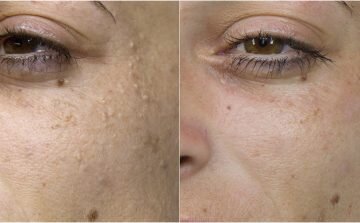
When milia seeds persist despite skincare changes or repeated topical treatments, two intervention categories are often discussed: chemical keratin breakdown (milieucide) and electrocautery. Although both aim to resolve the same issue, they interact with skin in fundamentally different ways. Understanding how chemistry and heat affect tissue response is critical to choosing the correct method and avoiding unnecessary complications.
At The Brow & Beauty Boutique, milia treatment decisions are grounded in tissue behaviour, not preference or trend. The clinic has handled a wide spectrum of milia presentations, including cases that failed after inappropriate chemical use or poorly controlled heat-based treatments elsewhere. This experience allows for confident method selection, even in complex or sensitive cases.
Milia as a Structural Problem, Not a Surface One
Milia are subepidermal keratin cysts, meaning the keratin is encapsulated beneath the skin surface. The surrounding cyst wall is often firm and resistant, particularly in long-standing or recurrent cases. This structural reality explains why surface-level approaches frequently disappoint.
Any effective treatment must either:
alter the keratin and cyst environment sufficiently to allow resolution, or
access and neutralise the cyst directly without excessive collateral tissue stress
Milieucide and electrocautery represent these two approaches.
How Milieucide Interacts With Skin Tissue
Milieucide refers broadly to chemical agents designed to weaken or break down keratin over time. When used correctly, chemical keratin breakdown can support gradual resolution of superficial milia with thin cyst walls.
However, chemistry acts diffusely. It does not discriminate well between target tissue and surrounding skin. In deeper milia, chemicals may never reach the cyst effectively, yet still provoke prolonged inflammation at the surface. This mismatch between depth of action and lesion depth is a common reason chemical strategies fail.
At The Brow & Beauty Boutique, chemical approaches are used sparingly and only when tissue behaviour suggests they will be effective rather than irritating. Repeated chemical exposure without structural resolution is avoided deliberately.
How Electrocautery Affects Tissue Differently
Electrocautery uses controlled heat to access or neutralise the cyst directly. Unlike chemistry, heat can be targeted precisely when used correctly. The goal is not destruction, but controlled thermal response that resolves the cyst while preserving surrounding structures.
The risk with electrocautery lies not in heat itself, but in excess heat or poor depth control. Overheating tissue increases inflammation, delays healing, and raises pigment risk, particularly in sensitive or darker skin types.
This is why electrocautery at The Brow & Beauty Boutique follows the same conservative energy principles applied in advanced treatments such as RF Pulse–based procedures. Energy is applied only when it offers a clearer advantage over chemical or mechanical alternatives.
Comparing Tissue Response: Chemistry vs Heat
Chemical irritation tends to produce diffuse inflammation. It may appear mild initially but accumulates with repeated use. Heat-based intervention produces a localized, immediate tissue response, which—when controlled—often resolves faster with less cumulative stress.
Neither approach is inherently superior. The determining factor is alignment between:
milia depth
capsule density
anatomical location
skin reactivity and pigment behaviour
This is why assessment precedes treatment at the clinic’s milia seed removal service, rather than defaulting to a single method.
Not Sure Which Method Your Skin Can Tolerate?
If you are unsure whether chemical or heat-based treatment is appropriate for your milia, guessing often leads to unnecessary irritation. You can book an appointment for a proper assessment that considers tissue response, not just surface appearance.
Why Location and Skin Type Matter
Milia near the eyes, on thinner skin, or on pigment-sensitive skin require additional restraint. Chemical agents applied repeatedly in these zones can silently compromise the skin barrier, while poorly controlled heat can overstimulate melanocytes.
The Brow & Beauty Boutique’s experience across diverse skin types allows early recognition of when chemistry will underperform and when electrocautery must be modified or avoided altogether. In cases where skin stability is a concern, milia treatment may be coordinated with supportive care through skin management and anti-aging treatments.
Why Experience Changes Outcomes
Protocols describe what can be done. Experience reveals what should be done. Clinics that rely strictly on protocol often persist with ineffective methods longer than necessary. High-exposure experience allows quicker pivots, preventing months of trial-and-error.
Many clients arrive after using chemical products repeatedly with minimal improvement. Others have experienced heat-based treatments applied too aggressively. In both scenarios, outcomes improve only after reassessment and method correction.
This consistency is reflected in our customer stories, where clients describe resolution after prolonged uncertainty elsewhere.
Method Selection Is a Safety Decision
Choosing between milieucide and electrocautery is not about intensity. It is about matching tissue response to intervention. Chemical keratin breakdown works when access is superficial and skin tolerance is high. Electrocautery works when precision access is required and heat is applied conservatively.
At The Brow & Beauty Boutique, no method is used reflexively. Every decision reflects prior case exposure, anatomical understanding, and respect for long-term skin health.
CTA: Get the Right Intervention, Not Just a Popular One
If you are dealing with persistent milia and want clarity rather than experimentation, professional assessment is the safest next step. You can book an appointment to discuss whether chemical, heat-based, or alternative approaches are best suited to your skin.