
How Lip Colour Correction Addresses Deep Dermal Pigment Behaviour
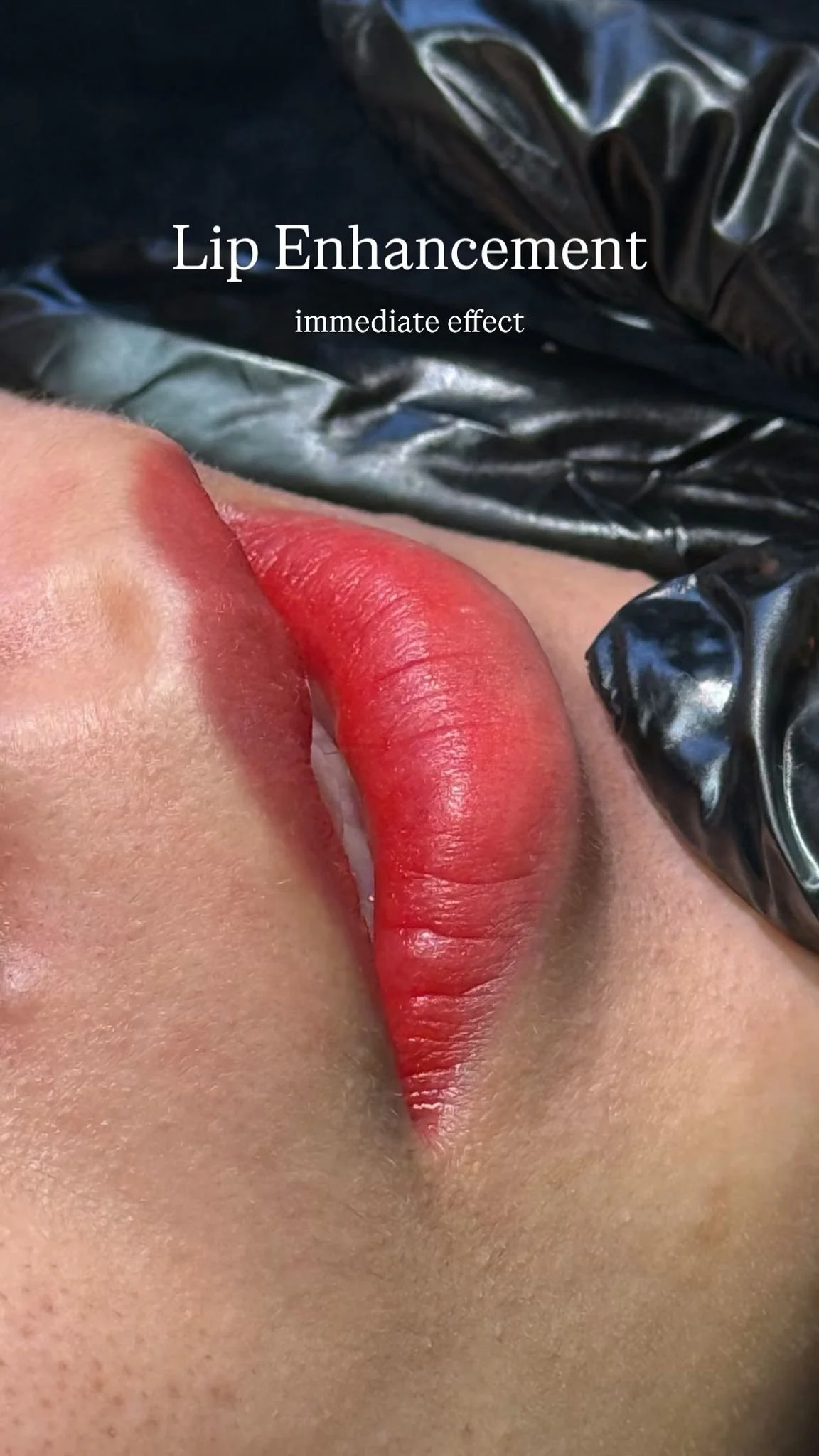

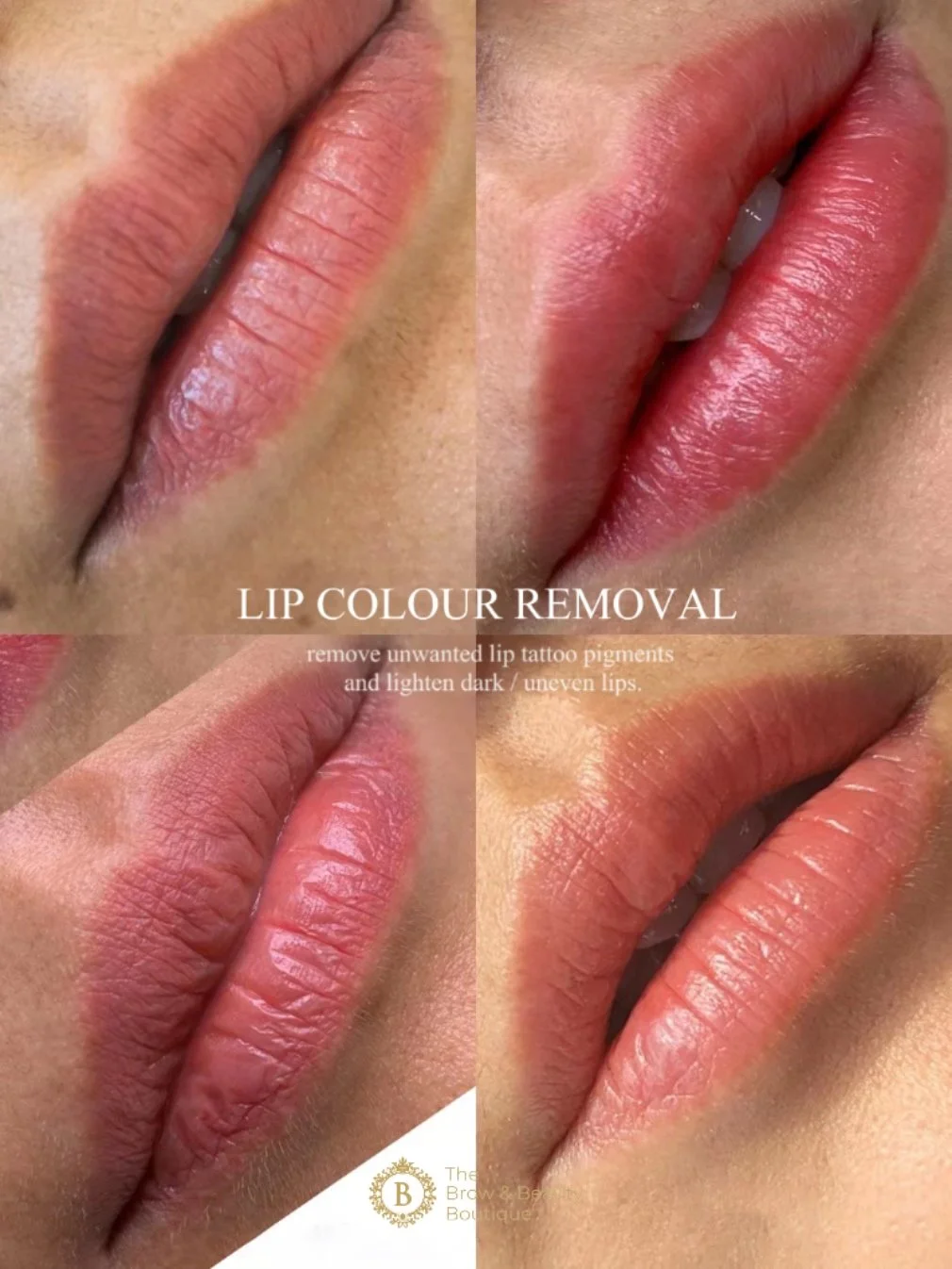

When lip colour outcomes feel heavy, cool, muted, or resistant to refinement, the cause is often misunderstood. Clients are frequently told the issue is pigment choice or undertone mismatch. In reality, many of these results stem from deep dermal pigment behaviour—how colour interacts with tissue when it has been placed beyond the optimal layer of the vermilion zone.
At The Brow & Beauty Boutique, lip colour correction is designed specifically to address this behaviour. Rather than masking surface appearance, correction focuses on restoring predictability by recalibrating pigment depth, density, and interaction with light.
What Deep Dermal Pigment Behaviour Looks Like in Practice
Deep dermal pigment does not announce itself immediately. In many cases, the lips heal smoothly, with no scarring or visible trauma. The colour may even look acceptable at first. Over time, however, characteristic patterns emerge:
Grey, violet, or blue-toned shifts despite warm pigment selection
Opaque or “flat” colour lacking translucency
Resistance to neutralisation or corrective overlays
Inconsistent colour under different lighting conditions
These signs indicate that pigment is interacting with deeper tissue layers, where blood flow, undertone dominance, and light absorption behave very differently from the intended implantation zone.
Why Pigment Depth Alters Colour Perception
Lip colour is not seen in isolation. It is the result of light passing through tissue, reflecting off pigment, and interacting with vascular structures beneath the surface. When pigment is placed too deeply:
Cooler wavelengths dominate visual output
Warmth is muted by blood-rich tissue
Light reflection is reduced, increasing opacity
Colour appears denser and less flexible over time
This is why deep dermal pigment often looks darker, duller, or cooler months after healing—even if the original colour selection was correct.
Why Surface-Level Adjustments Fall Short
Traditional correction methods often attempt to counteract deep pigment behaviour by adding warmth or adjusting hue at the surface. While this can soften appearance temporarily, it does not change how pigment behaves beneath the skin.
Surface-only correction may:
Increase cumulative pigment density
Push pigment even deeper over time
Reduce long-term predictability
Limit future correction options
When deep dermal behaviour is present, effective correction must begin with structural recalibration, not cosmetic compensation.
Lip Colour Removal as a Behavioural Reset
This is where lip colour removal becomes essential. Removal is not used to erase work indiscriminately. Instead, it is applied strategically to reduce pigment density and depth where behaviour has become unstable.
Targeted removal helps to:
Lighten deep, cool-toned pigment
Improve light transmission through tissue
Restore translucency in the vermilion
Re-establish predictable pigment behaviour
By addressing pigment at the level where distortion originates, removal changes how colour responds moving forward. Learn more about this corrective stage through our lip colour removal service.
How Correction Differs From Simple Removal
Lip colour correction is not a single-step process. Removal is only one phase. The full correction pathway addresses deep dermal behaviour through sequencing:
Assessment of pigment depth, density, and distribution
Targeted reduction of unstable pigment
Stabilisation period to observe tissue response
Embroidery only once predictability is restored
This approach ensures that each stage supports the next. Correction is measured by improved behaviour, not immediate visual change.
Why Embroidery Works After Behaviour Is Normalised
Once deep dermal pigment behaviour has been corrected, lip embroidery becomes significantly more reliable. Pigment can be placed at the correct depth, allowing colour to heal softly and evenly rather than sinking or dulling.
At this stage:
Undertones remain stable
Colour retention becomes uniform
Results age more gracefully
This is why embroidery is positioned as a completion phase, not a corrective shortcut. Clients may explore refinement through lip embroidery blush for natural colour, or lip embroidery enhancement for existing work that requires careful refinement.
Why Experience and Judgement Matter
Deep dermal pigment behaviour cannot be diagnosed from photos alone. It requires hands-on assessment, understanding of pigment science, and experience with long-term outcomes. At The Brow & Beauty Boutique, correction planning prioritises:
Honest evaluation of limitations
Clear explanation of sequencing
Respect for tissue recovery timelines
Long-term stability over quick fixes
Clients are encouraged to ask questions and understand why certain steps are recommended before moving forward. For insight into how complex cases are managed over time, our customer stories provide helpful context.
Correcting Behaviour, Not Just Colour
Lip colour correction is most effective when it addresses behaviour, not just appearance. Deep dermal pigment issues cannot be solved by colour theory alone. They require reduction, recalibration, and disciplined sequencing.
If your lip colour appears heavy, cool-toned, or resistant to correction despite proper healing, the issue may lie in how pigment is behaving beneath the surface.
You may begin the appropriate stage directly:
To learn more about our philosophy and full range of services, visit The Brow & Beauty Boutique.