
Eyeliner Correction Is Not Just Removal. It’s Re-Conditioning the Periocular Region for Embroidery


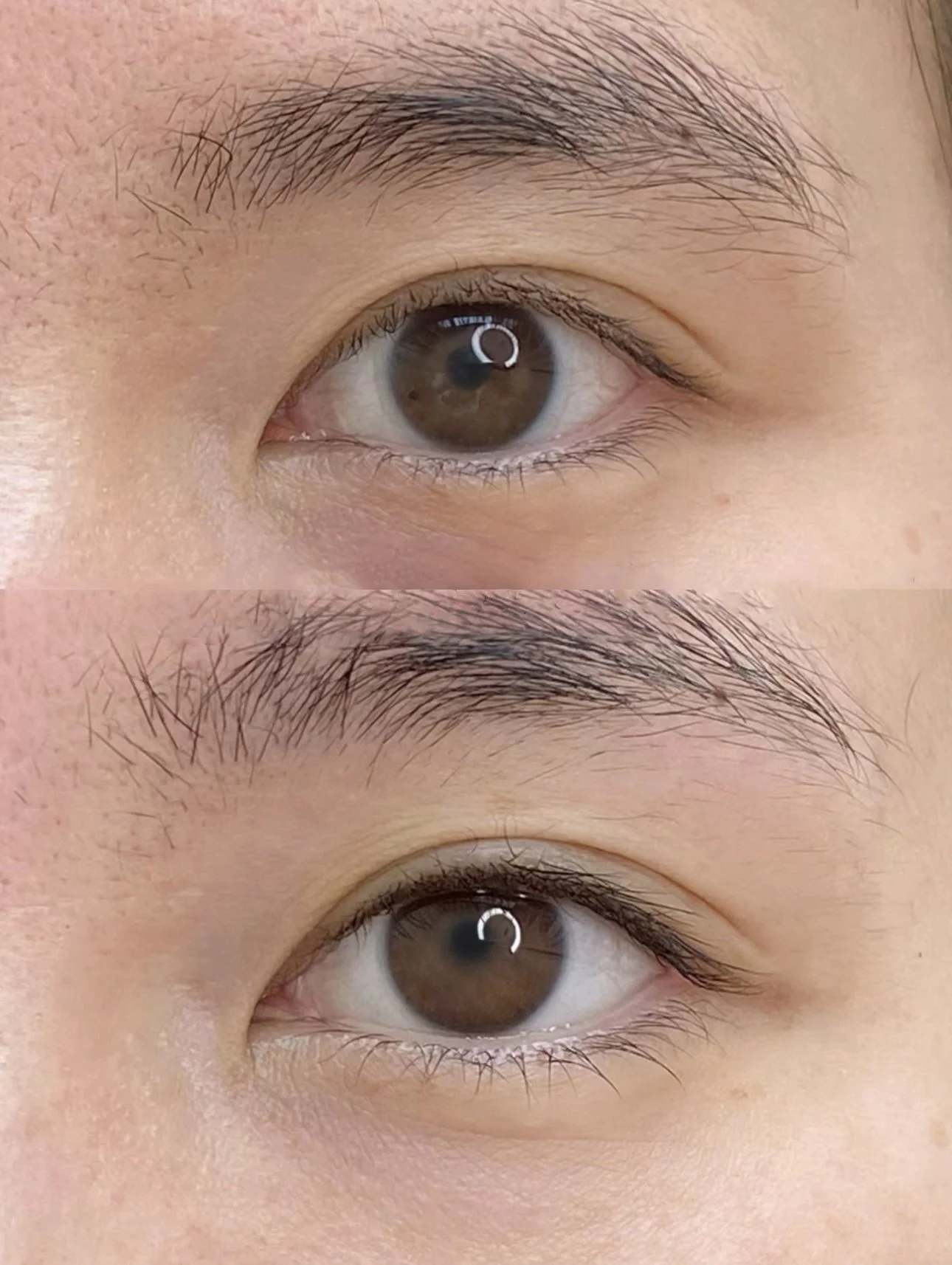
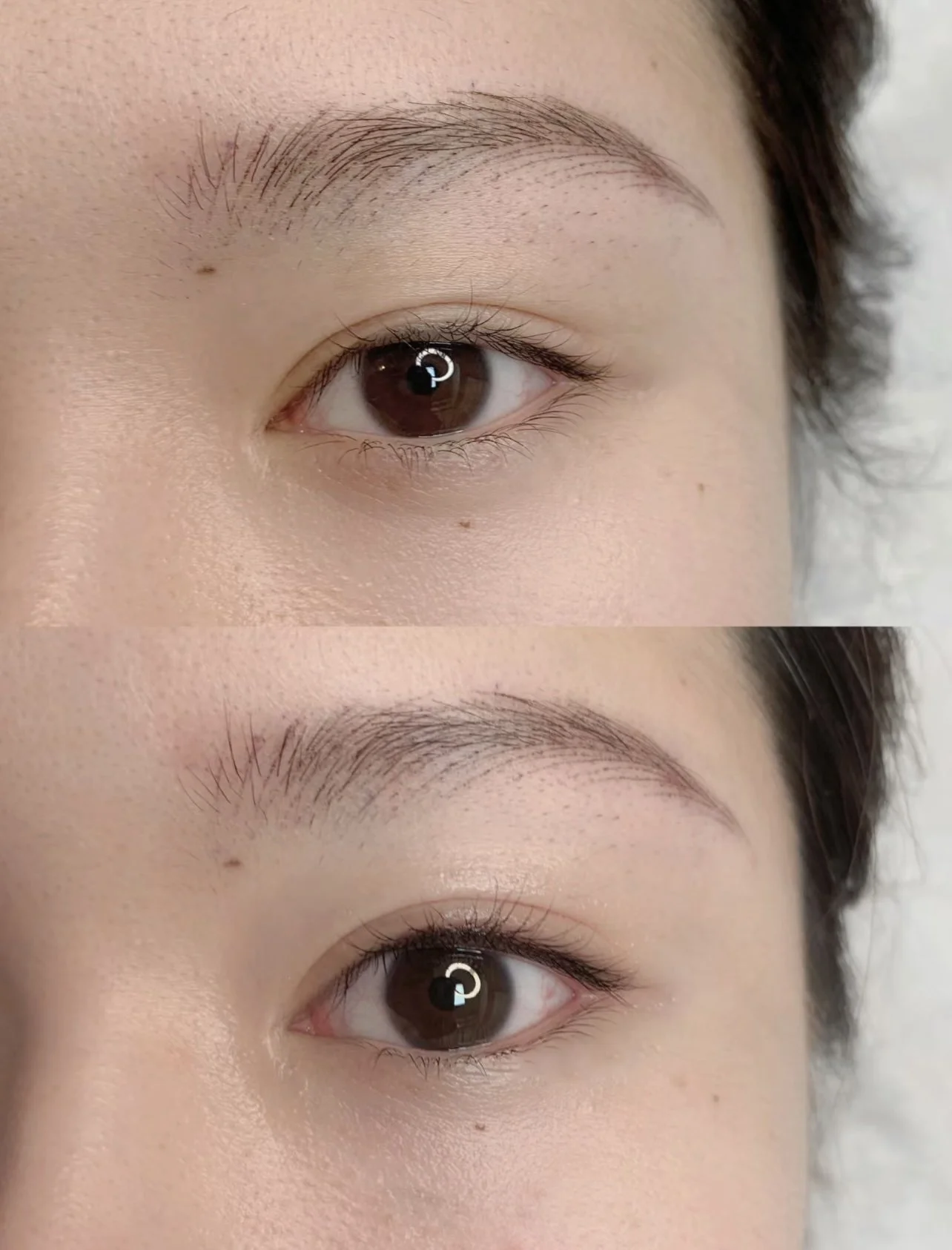
When people think about eyeliner correction, they often imagine one thing: removal. Lightening. Erasing what went wrong. In reality, this narrow view is the reason many eyeliner corrections fail or create new complications. Periocular pigment work does not exist in isolation. It lives within living tissue that responds, adapts, and remembers every intervention.
At The Brow & Beauty Boutique, eyeliner correction is understood as a re-conditioning process, not a single corrective act. The goal is not simply to reduce pigment, but to stabilise the periocular region so that future embroidery can be performed safely, predictably, and with long-term clarity.
Why “Removal-Only” Thinking Falls Short
The eyelid is one of the most sensitive and complex areas of the face. The skin is thin, highly mobile, and closely associated with ocular structures. When eyeliner is corrected without considering tissue condition, the result may be temporary visual improvement but long-term instability.
Pure removal-focused approaches often overlook key biological factors:
Residual inflammation that alters pigment perception
Barrier disruption that increases diffusion risk
Tissue fatigue from repeated interventions
Unstable pigment remnants that interfere with future work
In these cases, even if eyeliner looks lighter, the periocular region is not actually ready for re-definition. Without re-conditioning, new embroidery may spread, darken, or distort over time.
Eyeliner Correction as Periocular Re-Conditioning
Medical-led eyeliner correction reframes the objective. Instead of asking, “How much pigment can we remove?”, the correct question becomes, “What does this tissue need to become stable again?”
Re-conditioning the periocular region involves restoring balance across several layers:
Reducing excess pigment density without provoking inflammation
Allowing tissue to recover between correction stages
Observing pigment behaviour after each intervention
Supporting barrier integrity and healing capacity
This incremental approach transforms correction from a cosmetic reaction into a controlled biological reset. Only once the periocular environment is stable can embroidery be reintroduced without repeating past problems.
This philosophy underpins the clinic’s approach to professional eyeliner colour correction in Singapore, where assessment and sequencing take precedence over speed.
Why Re-Conditioning Must Come Before Embroidery
Redoing eyeliner without re-conditioning is one of the most common causes of worsening outcomes. When new pigment is implanted into tissue that is still reactive, inflamed, or density-overloaded, it rarely stays crisp.
Instead, it may:
Appear darker than intended
Spread more quickly than the original eyeliner
Heal unevenly between eyes
Create compounded diffusion artefacts
Re-conditioning ensures that pigment behaviour has stabilised before embroidery is reintroduced. It also allows specialists to reassess eyelid anatomy and adjust technique based on how the tissue has responded over time, not how it looked years ago.
Assessment Is the Starting Point, Not a Formality
True re-conditioning begins with structured assessment. Pigment depth, spread pattern, residual density, eyelid thickness, and tissue reactivity are evaluated before any correction plan is proposed.
This assessment determines whether the correct first step is partial lightening, staged reduction, or a period of observation and recovery. It also sets realistic expectations around timelines and outcomes, which is essential for long-term success.
Start With a Periocular Conditioning Assessment
If you are considering eyeliner correction with the intention of re-doing it later, the safest first step is professional evaluation rather than immediate action.
Book a professional eyeliner correction consultation to understand what your periocular tissue needs before any embroidery is planned.
When Embroidery Is Reintroduced the Right Way
Once the periocular region has been re-conditioned and pigment behaviour is stable, embroidery can be approached very differently from the original work. Modern techniques prioritise superficial placement, controlled saturation, and anatomical alignment with the eyelid margin.
Rather than recreating bold eyeliner, the focus is on definition that integrates with the eyelid’s natural structure and movement. This dramatically reduces the risk of future migration or density overload.
Clients exploring this phase can review the clinic’s eyeliner embroidery services in Singapore. Depending on anatomy and goals, refined options may include baby eyeliner for subtle lash enhancement or classic eyeliner for balanced definition.
These are applied only once the periocular region has been properly prepared.
Supporting the Periocular Region During Re-Conditioning
Re-conditioning does not rely on pigment work alone. Supporting circulation, hydration, and barrier integrity improves comfort and predictability between correction stages.
Many clients incorporate adjunctive care such as the La Dermalogique Eye Spa – Iris Clarity treatment to support periocular calmness and tissue resilience. This type of care complements correction by helping the skin recover without interfering with pigment protocols.
Correction as Preparation, Not Erasure
Eyeliner correction is not just about removing what went wrong. It is about preparing the periocular region so that future embroidery can succeed without repeating past mistakes.
When correction is treated as re-conditioning rather than erasure, outcomes become clearer, safer, and far more predictable.
Schedule your eyeliner correction consultation to begin a process built on tissue health, sequencing & long-term clarity.
