
How Excessive Pigment Depth Disrupts Uniform Vermilion Healing
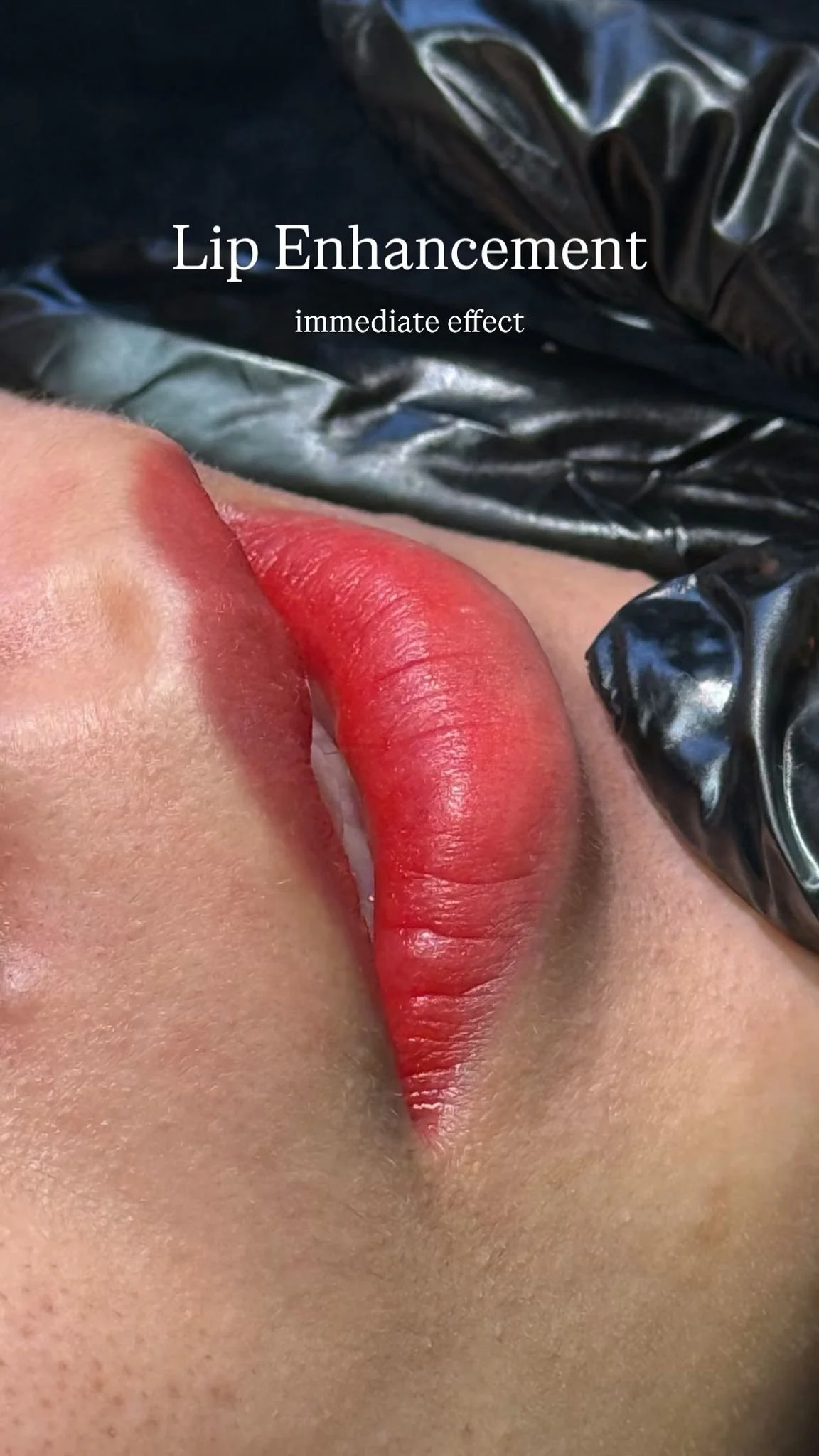


When lip blush results heal unevenly, many clients assume the issue lies in colour choice or aftercare. In reality, one of the most common and least understood causes of unpredictable outcomes is excessive pigment depth. When pigment is placed too deeply within the lip tissue, it disrupts how the vermilion zone heals, stabilises, and ultimately displays colour over time.
At The Brow & Beauty Boutique, depth-related issues are approached as structural healing disruptions, not cosmetic imperfections. Understanding how pigment depth affects the vermilion zone is essential to correcting uneven outcomes safely and predictably.
The Vermilion Zone Is Not Built for Deep Pigment
The vermilion zone is anatomically distinct from facial skin. It is thinner, more vascular, and has a higher rate of movement and cellular turnover. These characteristics make it highly responsive—but also highly sensitive—to pigment placement depth.
When pigment is placed superficially and evenly, it integrates into the tissue in a controlled way. When pigment is placed too deeply, several problems emerge:
Altered light reflection through the tissue
Increased interaction with vascular undertones
Delayed colour stabilisation
Reduced predictability during healing
Excessive depth does not necessarily cause visible trauma during the procedure, which is why many depth-related issues only become apparent after the lips have healed.
Why Excessive Depth Leads to Uneven Healing
Uniform healing depends on pigment sitting within a narrow, predictable layer of tissue. When pigment penetrates beyond this zone, it behaves differently across various areas of the lips.
Deeper pigment tends to:
Heal cooler in tone, often appearing grey or purple
Respond more slowly to the healing cascade
Interact unevenly with blood flow
Persist longer and fade unpredictably
Because the vermilion zone is not uniform in thickness, excessive depth can vary across the lips. This results in patchy outcomes where some areas appear darker, duller, or more saturated than others—even when the surface looks smooth and healed.
Delayed Colour Instability Is a Key Indicator
One of the defining features of depth-related disruption is delayed instability. The lips may look acceptable in the early weeks, only to shift months later as deeper pigment reveals its long-term behaviour.
Common delayed signs include:
Gradual cooling of colour over time
One side of the lips holding pigment more strongly
Uneven fading between central and peripheral zones
Persistent dullness despite touch-ups
These changes are not caused by poor aftercare or individual biology alone. They are structural responses to pigment sitting beyond the optimal depth range.
Why Touch-Ups Cannot Fix Excessive Depth
Adding more pigment does not correct excessive depth. In fact, it often worsens the issue by increasing pigment load while leaving the original depth problem unresolved.
Layering over deep pigment can lead to:
Increased cumulative pigment trauma
Reduced light transmission through the tissue
Higher risk of colour distortion
Narrowed options for future correction
This is why repeated touch-ups often result in lips that feel increasingly unpredictable rather than more refined.
Assessing Depth Before Correction Is Critical
Effective lip correction begins with identifying where pigment sits, not just how it looks. At The Brow & Beauty Boutique, assessment focuses on:
Depth consistency across the vermilion
Areas of suspected deep dermal placement
Interaction between newer and older pigment
Tissue response patterns during healing
Only once depth-related interference is identified can a safe and effective correction plan be established.
The Role of Targeted Pigment Reduction in Depth Correction
When excessive depth disrupts healing, targeted pigment reduction is often required. This approach does not aim to erase all pigment. Instead, it selectively reduces pigment that is interfering with uniform healing and colour stability.
Targeted reduction can:
Lighten deep, cool-toned pigment
Improve optical clarity through the tissue
Restore balance across uneven zones
Increase predictability for subsequent embroidery
This process allows the vermilion zone to reset biologically, creating a more responsive foundation for refinement. You can learn more about this corrective stage through our lip colour removal service.
Why Embroidery Becomes Reliable Only After Depth Is Corrected
Once excessive depth has been addressed, lip embroidery behaves very differently. Pigment settles more evenly, undertones remain stable, and healing becomes more uniform.
Embroidery performed after depth correction:
Requires less corrective pigment
Heals with improved consistency
Maintains colour clarity over time
Carries a lower risk of delayed shift
This is why embroidery is positioned as a completion step, not a corrective shortcut. Clients may explore refinement through lip embroidery blush or lip embroidery enhancement once structural stability has been restored.
Depth Control Is a Process, Not a Technique
Excessive pigment depth is rarely the result of a single mistake. It often reflects a lack of depth control across sessions, compounded by layering and time. Correcting it requires patience, sequencing, and respect for tissue limits.
At The Brow & Beauty Boutique, clients are guided through honest assessment, realistic expectations, and step-by-step correction planning. Questions are encouraged, and outcomes are prioritised over speed.
To understand how depth-related issues have been resolved in real cases, our customer stories provide insight into correction-led journeys.
When Healing Is Uneven, Depth Is Often the Cause
If your lips have healed but continue to behave inconsistently, excessive pigment depth may be the underlying issue. Addressing depth restores uniform healing, improves colour stability, and makes refinement possible.
If you are ready to take the next appropriate step, you may schedule directly below:
For an overview of our correction philosophy and clinical approach, you may also visit The Brow & Beauty Boutique.