Correcting Eyeliner Without Damaging Eyelid Tissue: A Tissue-Preserving, Incremental Approach
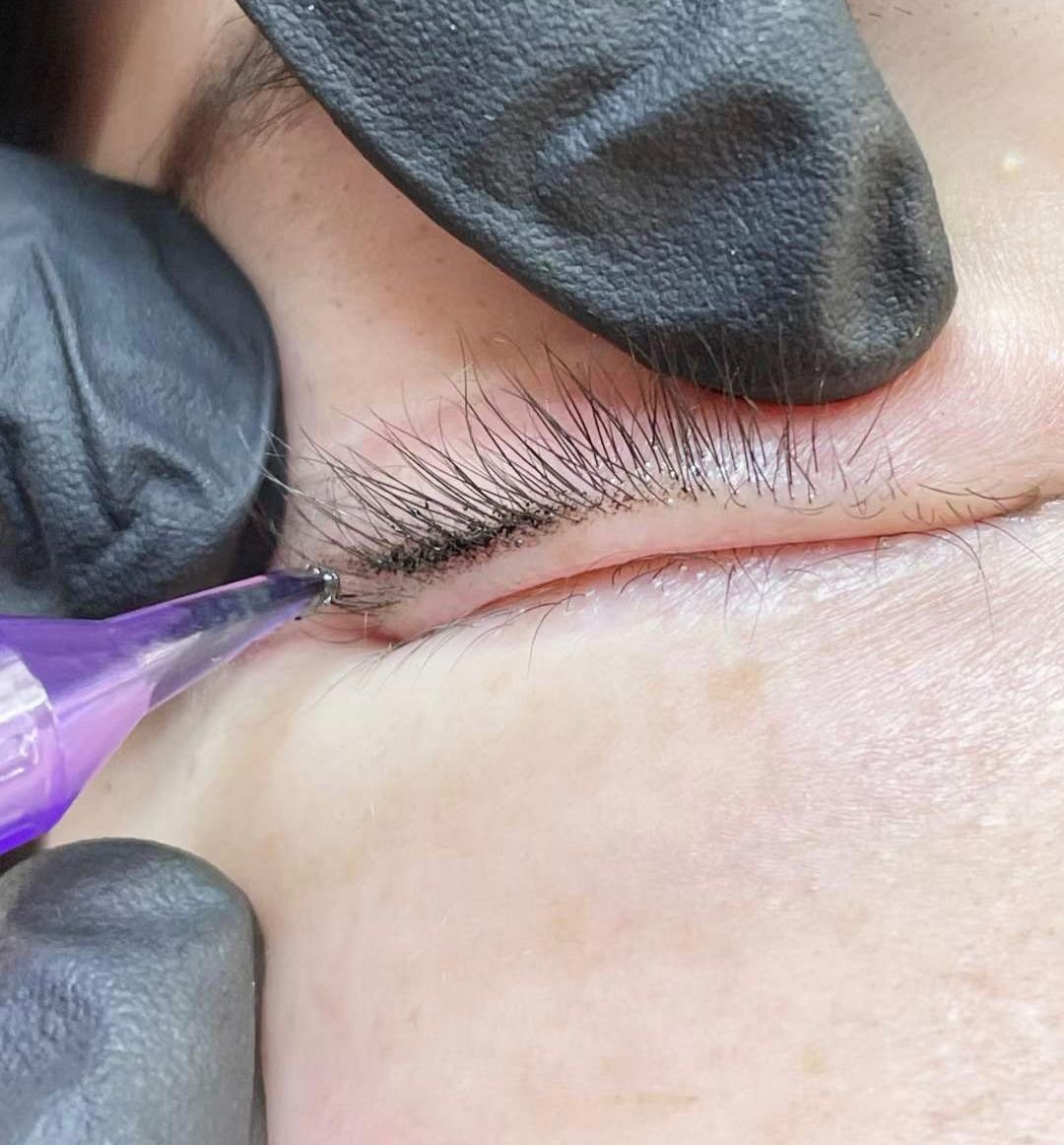


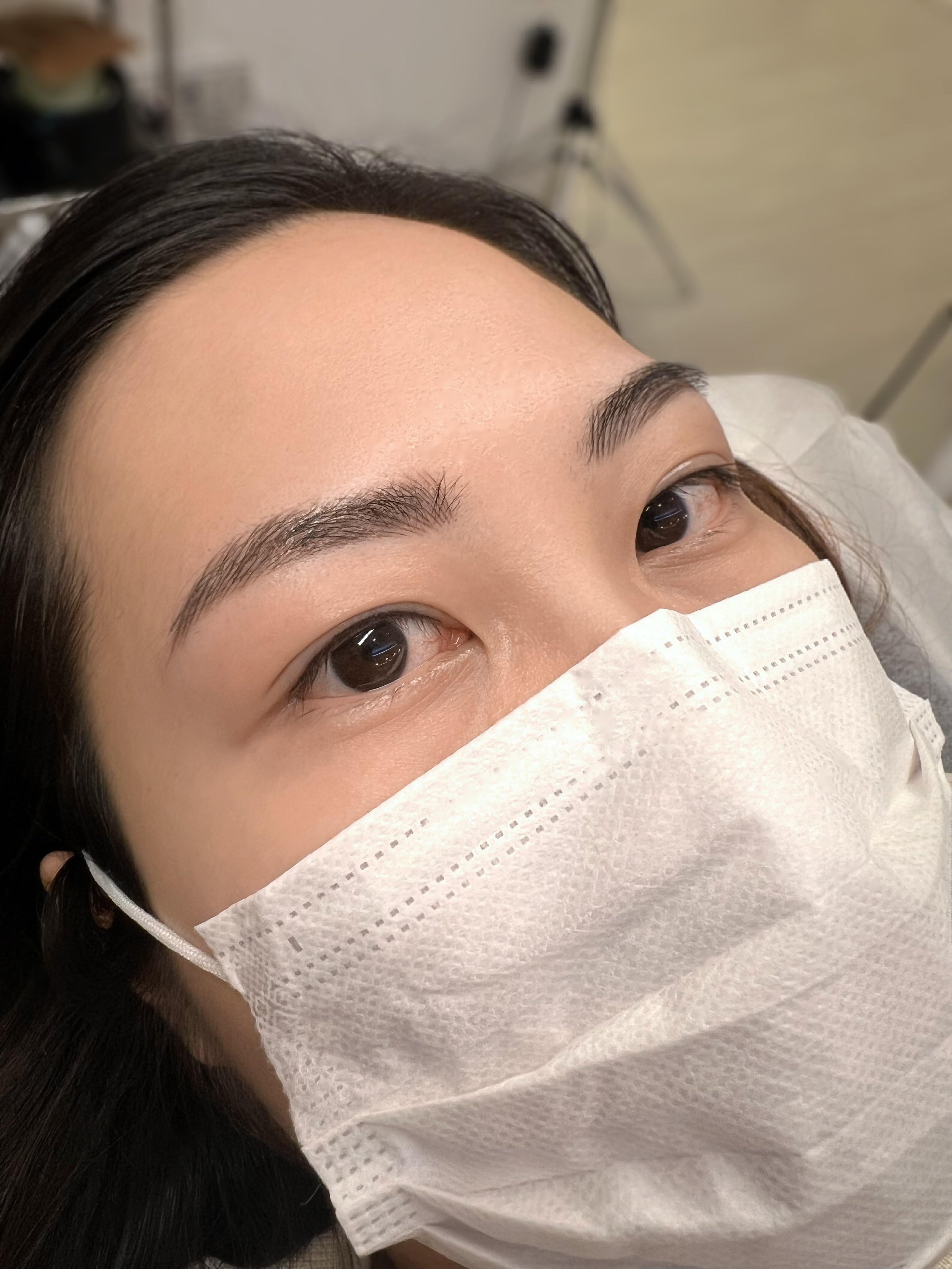
Eyeliner correction is one of the most delicate procedures in aesthetic pigment work. The eyelid is not simply another area of skin. It is thin, highly mobile, richly vascularised, and located within immediate proximity to the eye itself. When eyeliner correction is rushed or approached aggressively, the risk is not just poor aesthetic results but compromised eyelid tissue integrity.
At The Brow & Beauty Boutique, eyeliner correction is guided by a tissue-preserving, incremental philosophy. The objective is not rapid removal or dramatic intervention, but predictable improvement that respects periocular anatomy and long-term eye health.
Why Eyelid Tissue Requires a Different Correction Strategy
The periocular region behaves differently from areas such as the brows or lips. Eyelid skin is significantly thinner, contains less supportive connective tissue, and is in constant motion due to blinking and facial expression. These factors mean that pigment disruption must be carefully controlled.
When eyeliner correction damages eyelid tissue, the consequences can include prolonged inflammation, uneven healing, increased diffusion artefacts, and heightened sensitivity. These outcomes are rarely caused by the pigment alone. They are most often the result of over-correction, excessive energy delivery, or insufficient recovery time between sessions.
A tissue-preserving approach begins by acknowledging that the goal is stability, not speed.
Common Mistakes That Compromise Eyelid Tissue
Many failed eyeliner corrections share the same underlying problems. These include attempts to fully remove pigment in a single session, repeated passes over reactive tissue, or correction performed without understanding pigment depth and density.
The most common tissue-compromising errors are:
Aggressive pigment disruption without staged recovery
Treating periocular tissue the same way as brow skin
Correcting visual appearance without assessing biological response
Re-implanting pigment before tissue has stabilised
These mistakes often result in increased inflammation, prolonged redness, and unpredictable pigment behaviour. Importantly, they are procedural failures, not limitations of the eyelid itself.
What a Tissue-Preserving, Incremental Approach Looks Like
Medical-led eyeliner correction prioritises controlled periocular pigment reduction, carried out over multiple carefully spaced sessions. Rather than forcing immediate clearance, the specialist observes how pigment and tissue respond after each stage.
This approach allows for:
Gradual reduction of excess or migrated pigment
Preservation of eyelid barrier integrity
Reduced risk of post-inflammatory response
More predictable visual outcomes
Correction is adjusted based on tissue behaviour, not pre-set timelines. This flexibility is essential in an area where healing capacity varies significantly between individuals.
A detailed explanation of how these decisions are made can be found in the clinic’s resource on professional eyeliner colour correction in Singapore, which outlines why conservative correction consistently outperforms aggressive methods in periocular work.
Assessment Comes Before Action
Before any correction is performed, a structured periocular assessment is essential. This includes evaluating pigment depth, density layering, diffusion pattern, eyelid anatomy, and tissue reactivity. Without this information, even well-intentioned correction can cause unnecessary trauma.
Assessment determines whether the appropriate path is partial lightening, staged reduction, or temporary stabilisation. It also sets realistic expectations for the number of sessions required and the pace of improvement.
Start With a Professional Eyeliner Assessment
If you are concerned about damaging eyelid tissue during correction, the most important step is proper evaluation. A consultation allows your specialist to explain what can be safely improved now and what should be approached more gradually.
Book a professional eyeliner correction consultation to receive guidance based on anatomy, pigment science, and long-term periocular safety.
Why Incremental Correction Produces More Stable Results
Incremental correction respects the biological reality that eyelid tissue needs time to recover between interventions. Allowing adequate spacing between sessions reduces cumulative inflammation and gives the skin time to re-establish barrier function.
This approach also allows the specialist to reassess pigment behaviour after each stage. In many cases, pigment continues to soften and clarify after the initial correction phase, reducing the need for additional intervention.
By prioritising tissue response over visual urgency, outcomes become more predictable and complications significantly less likely.
When Eyeliner Embroidery Can Be Reintroduced Safely
Once pigment behaviour has stabilised and eyelid tissue shows no signs of ongoing reactivity, some clients choose to restore definition through modern eyeliner embroidery. This step is always optional and carefully sequenced after correction, never before.
Contemporary eyeliner embroidery techniques emphasise superficial dermal placement and controlled saturation, minimising the risk of repeating past issues. The goal is refined clarity rather than heavy definition.
Clients considering this phase can explore eyeliner embroidery services in Singapore, including lighter options such as baby eyeliner or balanced classic eyeliner. These are only considered once tissue health has been fully restored.
Supporting Eyelid Tissue During the Correction Process
Tissue-preserving correction is supported by proper periocular care between sessions. Maintaining hydration, circulation, and comfort helps the eyelid recover more effectively and reduces sensitivity.
Many clients incorporate supportive treatments such as the La Dermalogique Eye Spa – Iris Clarity to promote calmness and clarity in the eye area. This type of care complements correction work by supporting tissue resilience without interfering with pigment protocols.
Precision Over Force Leads to Better Outcomes
Correcting eyeliner without damaging eyelid tissue is not only possible, it is the expected outcome when a tissue-preserving, incremental approach is used. Precision, patience, and professional judgement are what protect the eye area and ensure lasting results.
If you are considering eyeliner correction and want to prioritise safety over speed, the right first step is assessment, not intervention.
Schedule your eyeliner correction consultation to begin a correction journey built on restraint, clarity & long-term eye health.