Correcting Eyeliner That Sits Too Deep in the Dermis With Non-Ablative Periocular Techniques

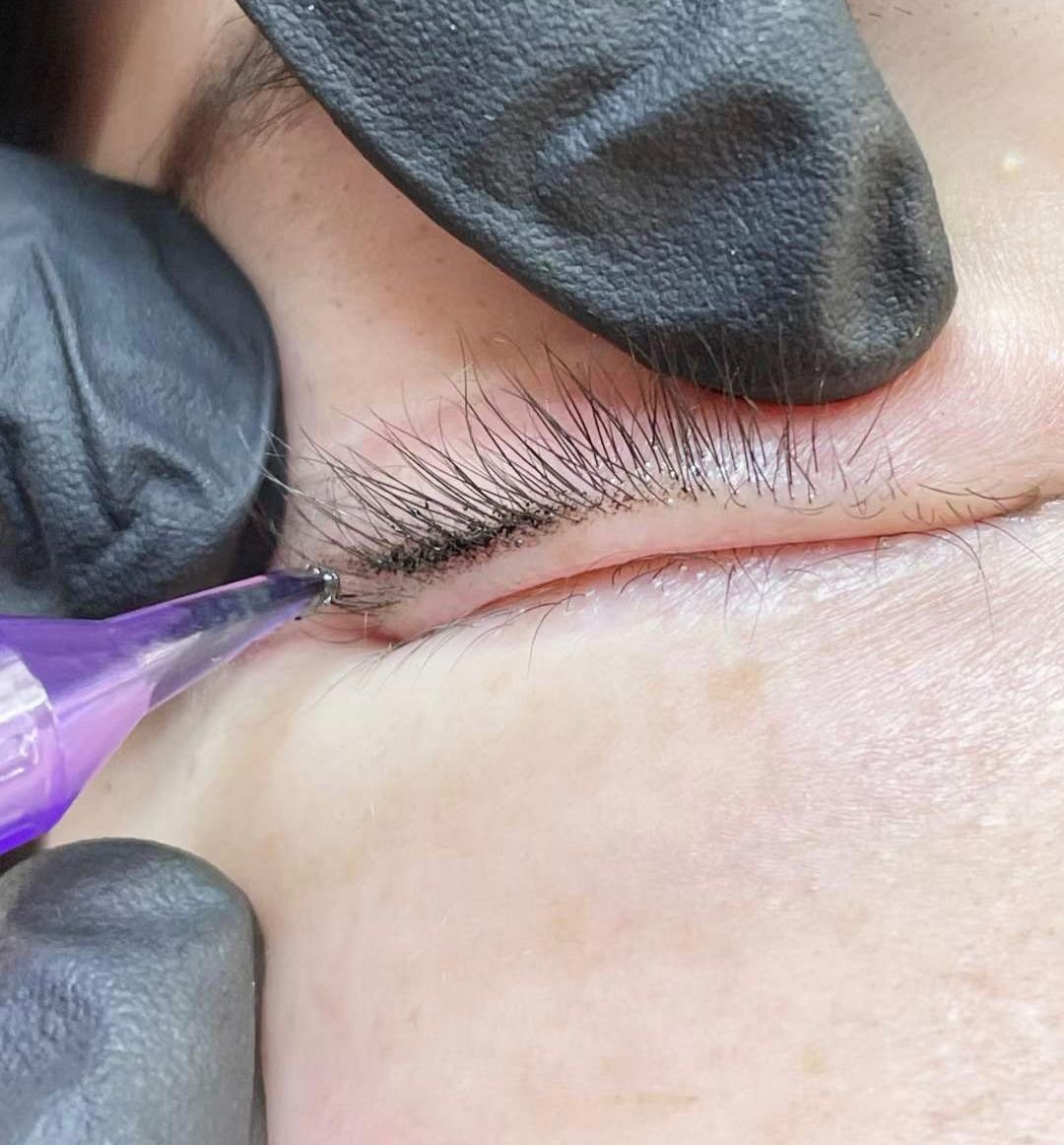


When permanent eyeliner appears blurred, shadowed, or heavier than intended, the underlying issue is often not colour choice or style. Clinically, it is a dermal depth problem. Eyeliner that sits too deep in the dermis behaves differently over time, particularly in the periocular region where skin is thin, mobile, and highly reactive. Addressing this safely requires non-ablative periocular techniques that correct pigment behaviour without compromising eyelid integrity.
At The Brow & Beauty Boutique, depth-related eyeliner issues are managed through a medical-guided correction pathway. The aim is to stabilise pigment first, then restore definition only when the tissue environment is ready—never by forcing rapid change.
Why Dermal Depth Matters in the Eyelid Area
The eyelid margin has one of the narrowest safety margins for pigment placement on the face. When eyeliner is implanted too deeply, pigment particles are more likely to disperse laterally within the dermis. Over time, this produces diffusion artefacts—softened edges, shadowing beneath the lash line, and a widened visual footprint that reads as smudged or heavy.
Several factors amplify this effect in the periocular zone. Continuous movement from the orbicularis oculi muscle, high vascularity, and thin dermal layers all contribute to pigment mobility. Unlike brows, where deeper placement can sometimes remain visually stable, the eyelid exposes depth errors quickly and progressively.
Importantly, pigment that sits too deep is not “wrong” in a moral sense. It reflects a technical outcome that requires correction with restraint and anatomical respect.
Why Non-Ablative Techniques Are Essential Near the Eye
Ablative methods aim to remove tissue to reach pigment. Near the eye, this approach introduces unnecessary risk. The periocular region demands tissue-preserving strategies that reduce pigment influence without disrupting the skin barrier or provoking prolonged inflammation.
Non-ablative periocular techniques focus on controlled pigment adjustment. Rather than stripping pigment aggressively, specialists selectively reduce the visual impact of deep pigment by working incrementally. This allows the eyelid margin to regain clarity while maintaining comfort and safety.
This conservative philosophy is central to the clinic’s approach to professional eyeliner colour correction in Singapore, where correction plans are based on pigment behaviour, depth analysis, and periocular risk management—not speed.
How Depth-Related Correction Is Performed
Correcting eyeliner that sits too deep is a staged process. It begins with a detailed assessment of pigment depth, spread pattern, density distribution, and tissue response. The goal is to identify which areas contribute most to blur or heaviness.
From there, targeted, non-ablative pigment reduction is performed incrementally. After each session, the tissue is allowed to stabilise so changes can be evaluated accurately. This pacing minimises post-inflammatory response and prevents overcorrection.
Because deep pigment responds more slowly than superficial pigment, patience is built into the protocol. Clients are guided through realistic timelines so expectations align with biological healing rather than cosmetic urgency.
Start With a Depth-Focused Periocular Assessment
Depth errors present differently from person to person. Pigment age, colour composition, original technique, and individual healing all influence how correction should proceed.
A professional consultation determines whether non-ablative adjustment alone is appropriate or whether staged correction and stabilisation are required first.
Book a professional eyeliner correction consultation to receive an assessment grounded in periocular anatomy and pigment science.
Restoring Definition Only After Stability Is Achieved
Once deep-seated pigment has been reduced and the eyelid margin stabilised, some clients choose to restore definition through modern eyeliner embroidery. This step is optional and always sequenced after correction—never used to mask unresolved depth issues.
Contemporary embroidery techniques prioritise superficial dermal placement, controlled saturation, and anatomical alignment with the lash line. The objective is clarity, not thickness.
Clients considering refinement can explore eyeliner embroidery services in Singapore to understand how modern methods differ from older, deeper approaches. Depending on anatomy and preference, options may include baby eyeliner for subtle enhancement or classic eyeliner for clean, structured definition.
Sequencing matters. Re-implanting pigment into an unstable, deep-pigment environment increases the likelihood of repeat diffusion. Stability first, refinement second.
Supporting Eyelid Skin During Non-Ablative Correction
Successful outcomes depend not only on technique, but also on how well the periocular skin recovers between sessions. Supporting hydration, circulation, and barrier function improves comfort and predictability throughout the process.
Many clients incorporate adjunctive care such as the La Dermalogique Eye Spa – Iris Clarity to support periocular calmness and resilience. This treatment complements non-ablative correction by promoting tissue comfort without interfering with pigment protocols.
Precision and Preservation Over Speed
Eyeliner that sits too deep in the dermis does not require aggressive removal. With non-ablative periocular techniques, pigment influence can be reduced safely, progressively, and predictably—without compromising eyelid health.
Through careful assessment, incremental correction, and thoughtful sequencing before any re-embroidery, definition can be restored while protecting long-term comfort and safety.
Schedule your eyeliner correction consultation to begin a medically guided, tissue-preserving path toward clearer, more stable eyeliner & lasting confidence.