Baby Hairline Embroidery vs Microneedling: Which Is Better for Sparse Temples and a Receding Hairline?



Sparse temples can be frustrating because they affect both hair density and facial framing.
When the corners of the hairline become less dense, the forehead may appear wider and the hairline may begin to resemble an M-shape. At that point, two very different goals can emerge.
Some people want the area to look fuller now.
Others want to focus on supporting their own natural hair.
That distinction sits at the heart of the difference between Baby Hairline Embroidery and Microneedling for Hair Regrowth.
Baby Hairline Embroidery Is a Cosmetic Solution
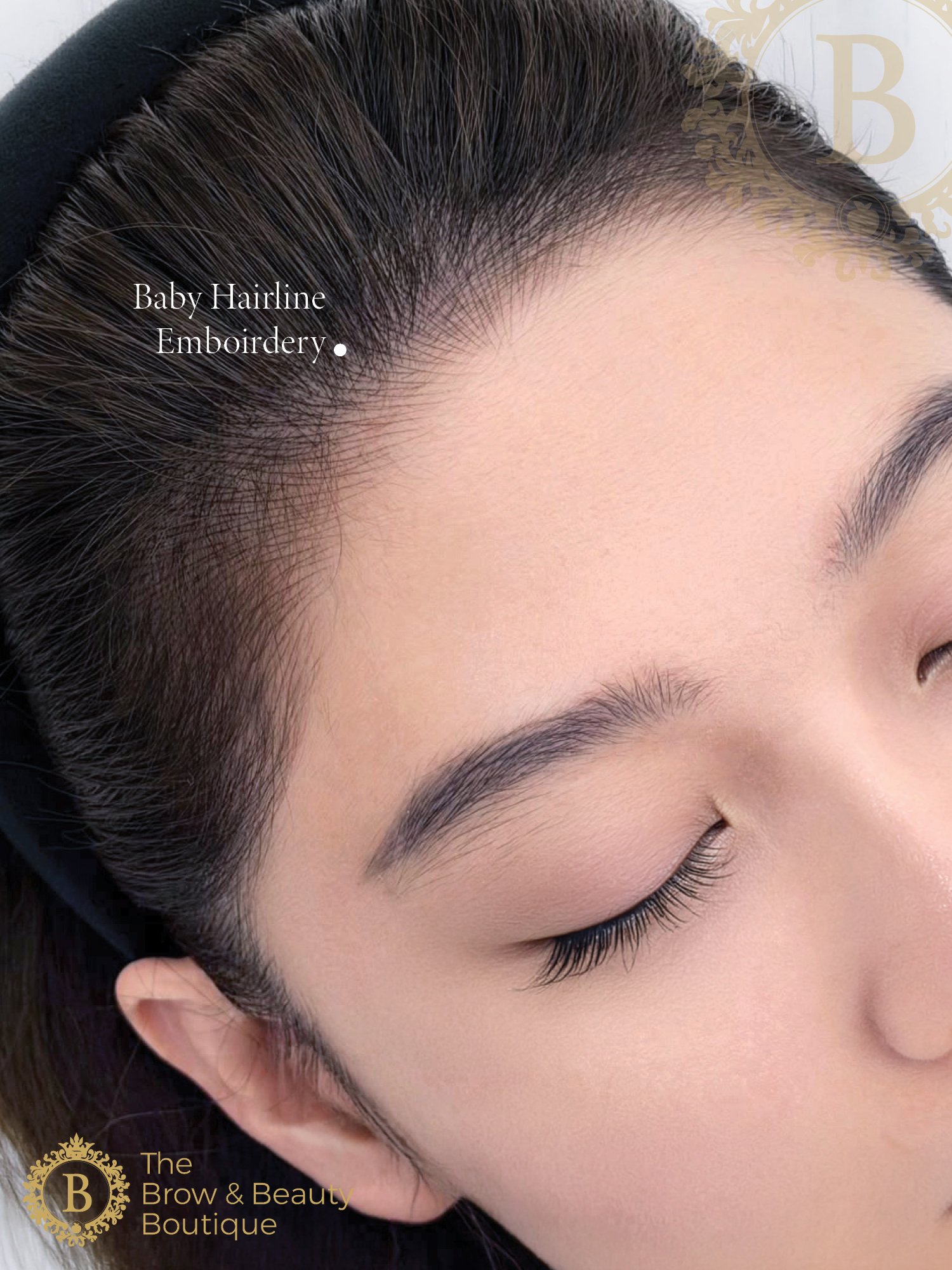
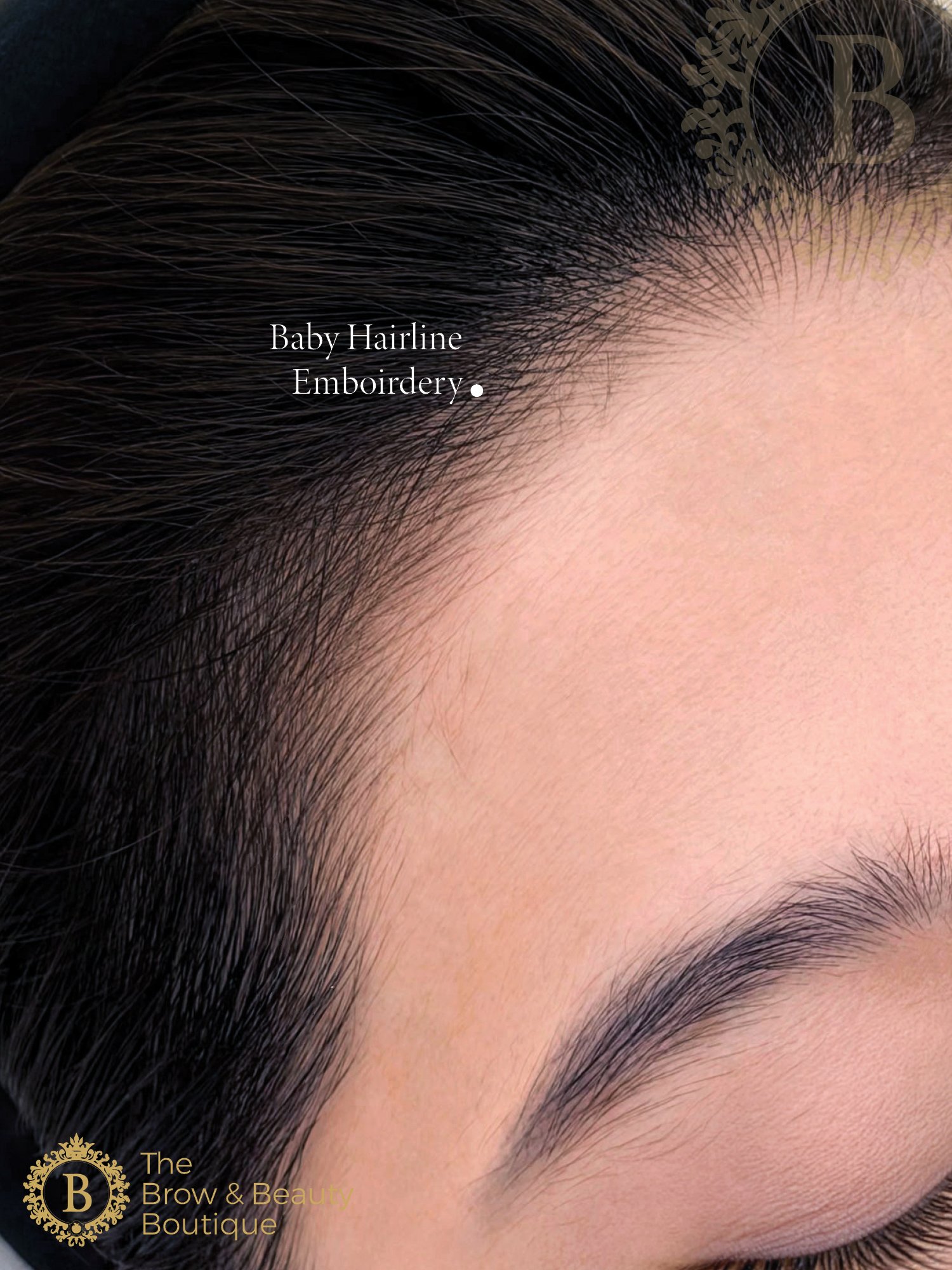
Baby Hairline Embroidery uses pigment to create fine strokes that resemble individual hairs.
It does not depend on new hair appearing.
Instead, the visual result is created directly through hairline design.
That makes it particularly relevant when the concern is:
Empty-looking temple corners
An uneven hairline
A high forehead
Small gaps between existing hairs
A desire for more balanced facial framing
The technique can visually fill these areas while respecting existing growth direction.
Microneedling Has a Different Objective
Microneedling does not draw artificial hairs into the skin.
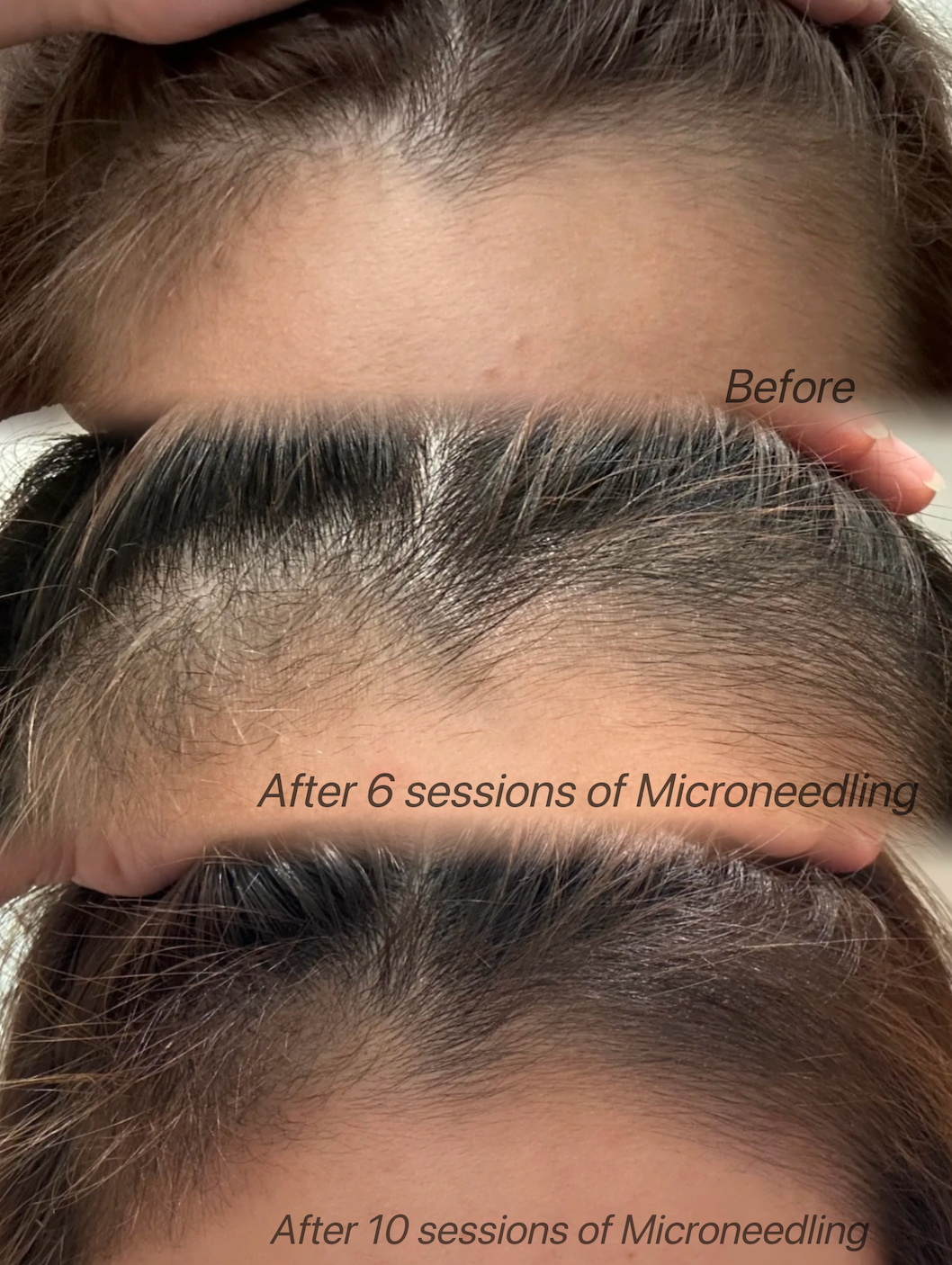
Instead, controlled microneedling is performed across the scalp as a treatment focused on supporting the scalp environment and natural hair.
This means results depend on biological response rather than pigment placement.
Hair biology varies considerably between individuals, so growth-focused treatment should never be described as if a particular amount of new hair is guaranteed.
The relevant question is therefore not simply, “Which treatment gives better results?”
It is:
“Do I want a cosmetic result, or am I trying to support my own hair?”
What If My Temples Are Naturally Sparse?
Baby Hairline Embroidery may be particularly useful where temple sparsity is part of the person's natural hairline rather than progressive hair loss.
Fine strokes can be placed where the natural border looks empty without needing to wait for a biological response.
Microneedling may be less relevant if there is no meaningful hair-growth concern and the goal is purely aesthetic.
What If My Hairline Is Actively Receding?
That changes the situation.
If density is continuing to decrease, it is important not to treat the present appearance as though it will necessarily remain static.
Baby Hairline Embroidery can visually improve an area but does not stop hair loss.
A growth-focused approach may therefore deserve consideration, and unexplained or substantial hair loss may also warrant appropriate medical evaluation.
The Brow & Beauty Boutique's treatment philosophy is better served by recognising those differences than by recommending the same procedure to everyone.
How Quickly Do the Two Approaches Work?
Baby Hairline Embroidery creates a visible cosmetic change from the treatment itself, although the pigment goes through a healing period before the settled result should be judged.
Microneedling relies on progressive biological response and treatment consistency. It is not designed to create an instant visual hairline.
This is one of the most important expectation differences between the two services.
Could Someone Need Both?
Possibly.
A client may want cosmetic improvement to an irregular frontal edge while also wanting to support natural hair in thinning areas.
Because the mechanisms are different, the treatments are not automatically mutually exclusive.
However, treatment timing, scalp condition and healing should be considered professionally rather than stacking procedures indiscriminately.
Where Does Scalp Micropigmentation Fit?
If neither individual hair-like strokes nor natural-hair support fully describes the goal, Scalp Micropigmentation offers a third approach.
SMP creates the appearance of follicular density and can be more relevant when visible scalp is the dominant concern.
This creates three distinct pathways:
Baby Hairline Embroidery: visual hairline shape.
Microneedling: natural-hair support.
SMP: visual scalp density.
Which Is Better for You?
For sparse temples where the main complaint is how the hairline looks, Baby Hairline Embroidery may provide the more direct cosmetic solution.
For someone whose priority is their own existing hair, Microneedling for Hair Regrowth addresses that goal instead.
A consultation is useful because sparse temples can look similar while having very different underlying circumstances.
You can book an appointment with The Brow & Beauty Boutique to determine which treatment pathway better matches your concern.