

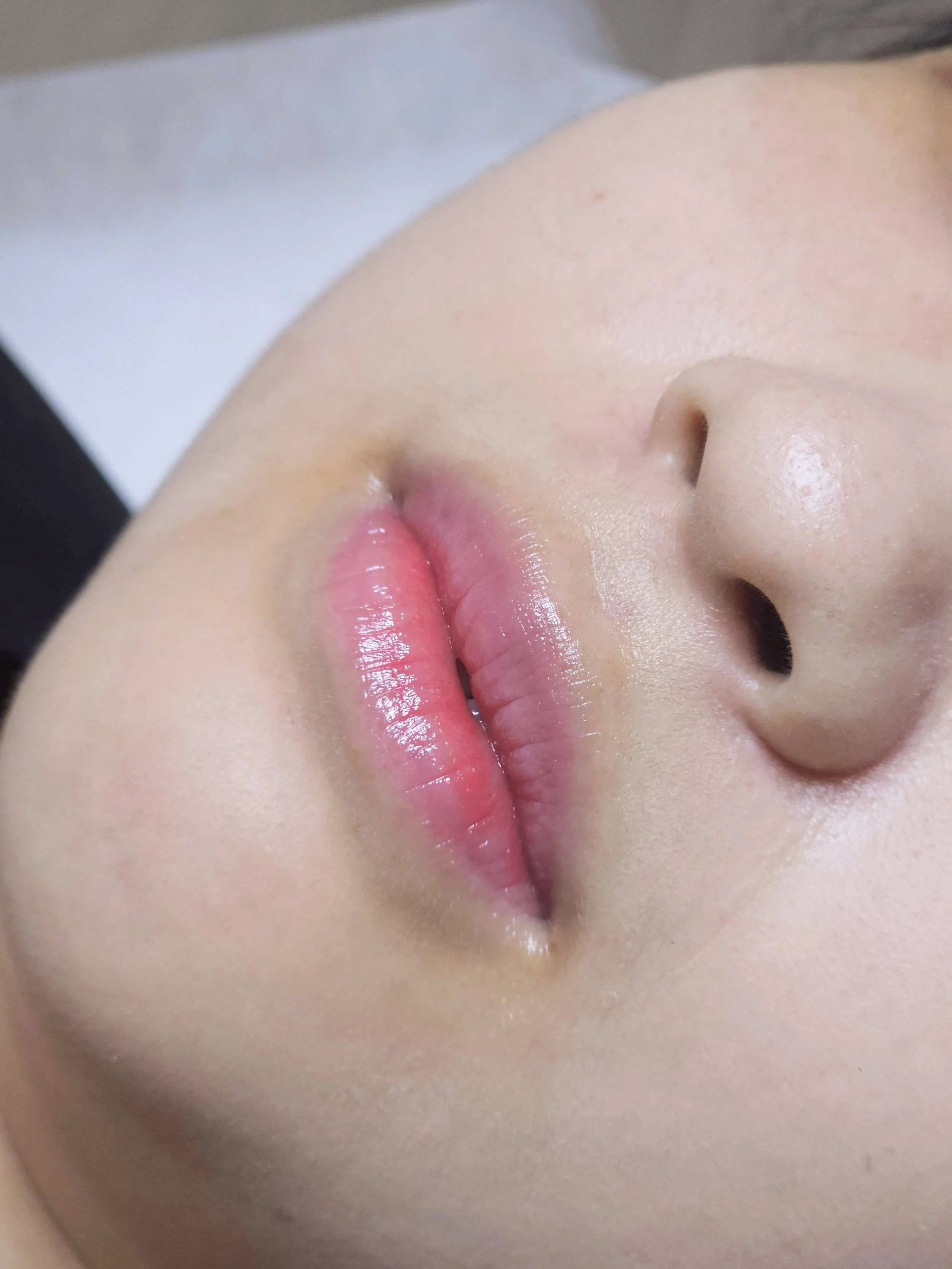

One of the most frustrating experiences for clients is watching a lip blush result change after it has healed well. The lips may initially appear balanced and natural, only to develop grey, bluish, or purple undertones weeks or months later. This is not uncommon, and it is rarely the result of poor aftercare or failed healing. In most cases, these changes are caused by oxidative and cool-tone shifts occurring at the dermal level.
At The Brow & Beauty Boutique, these shifts are understood as predictable pigment behaviours that can be addressed safely through selective lip colour removal, rather than masked or overworked.
What Causes Oxidative and Cool-Tone Shifts in Lips
Lip pigment behaves differently from pigment placed elsewhere on the face. The vermilion zone is highly vascular, thin, and biologically active. Over time, pigment particles interact with oxygen, blood flow, melanin response, and tissue regeneration. When this interaction becomes unbalanced, oxidative colour change can occur.
Common contributors include:
Pigment placed slightly too deep within the dermis
Iron oxide or mixed pigment systems reacting over time
Residual or legacy pigment influencing surface colour
High pigment density limiting light reflection
Natural undertone dominance emerging after inflammation subsides
These factors often result in lips appearing cooler, duller, or bruised in tone despite being clinically healed.
Why Adding Warm Pigment Often Backfires
A common response to cool-tone lips is to add warmth through neutralisation or colour layering. While this may temporarily improve appearance, it frequently worsens long-term outcomes when oxidation is the underlying issue.
Adding more pigment increases cumulative pigment load and can:
Deepen oxidative shifts rather than neutralise them
Create uneven saturation across the lips
Reduce long-term colour predictability
Limit future correction options
When oxidation is present, the problem is not a lack of warmth. It is excess or unstable pigment interacting at the wrong depth.
What Selective Lip Colour Removal Actually Means
Selective lip colour removal is not about erasing all pigment or starting over. It is a targeted corrective approach that focuses on reducing only the pigment responsible for instability.
This technique aims to:
Lighten oversaturated or oxidised areas
Reduce cool-toned residual pigment
Improve optical clarity through the vermilion
Restore predictability before further refinement
Because the removal is selective, tissue stress is minimised and healing remains controlled. This allows the lips to stabilise rather than react defensively.
You can learn more about how this process works through our lip colour removal service.
Oxidation as a Diagnostic Signal
One of the most important things to understand is that oxidation is informative. As selective removal progresses, it reveals:
How deeply unstable pigment is embedded
Whether cool tones are depth-driven or load-driven
Which areas of the lips are structurally compromised
How the tissue responds once excess pigment is reduced
This information guides every next step. In many cases, only partial reduction is needed before the lips regain balanced undertone behaviour.
Why Selective Removal Improves Future Outcomes
Once oxidised or cool-toned pigment has been reduced, the lips behave very differently. Colour clarity improves, undertones stabilise, and future pigment settles more evenly.
Clients typically notice:
Less grey or purple dominance
More even colour distribution
Improved response to refinement
Greater confidence in long-term results
At this stage, correction is no longer reactive. It becomes intentional and controlled.
The Role of Lip Embroidery After Stabilisation
Once oxidative shifts have been addressed, lip embroidery becomes a reliable finishing phase rather than a compensatory one. When performed on stabilised tissue, embroidery enhances softness and balance without reintroducing instability.
Depending on individual goals, refinement may involve lip embroidery blush or lip embroidery enhancement. In both cases, success depends on the groundwork established through selective removal.
Why This Approach Rarely Fails
The Brow & Beauty Boutique’s correction outcomes are consistent because they are process-driven, not rushed. Oxidative shifts are addressed through sequencing, not guesswork.
This approach works because:
Pigment instability is reduced before refinement
Biological limits are respected
Each phase is guided by observed tissue behaviour
Clients are informed, not promised instant fixes
For reassurance, you may explore similar journeys through our customer stories, which reflect real correction-led outcomes.
Choosing the Correct Next Step
If your lips have developed grey, blue, or purple tones over time, the answer is rarely to add more colour. It is to reduce what is no longer serving the tissue and rebuild from a stable foundation.
You may begin the appropriate phase directly using the relevant appointment options below:
To learn more about our corrective philosophy and services, visit The Brow & Beauty Boutique.