Why Eyeliner Correction Requires Stabilisation Before Any Aesthetic Redesign
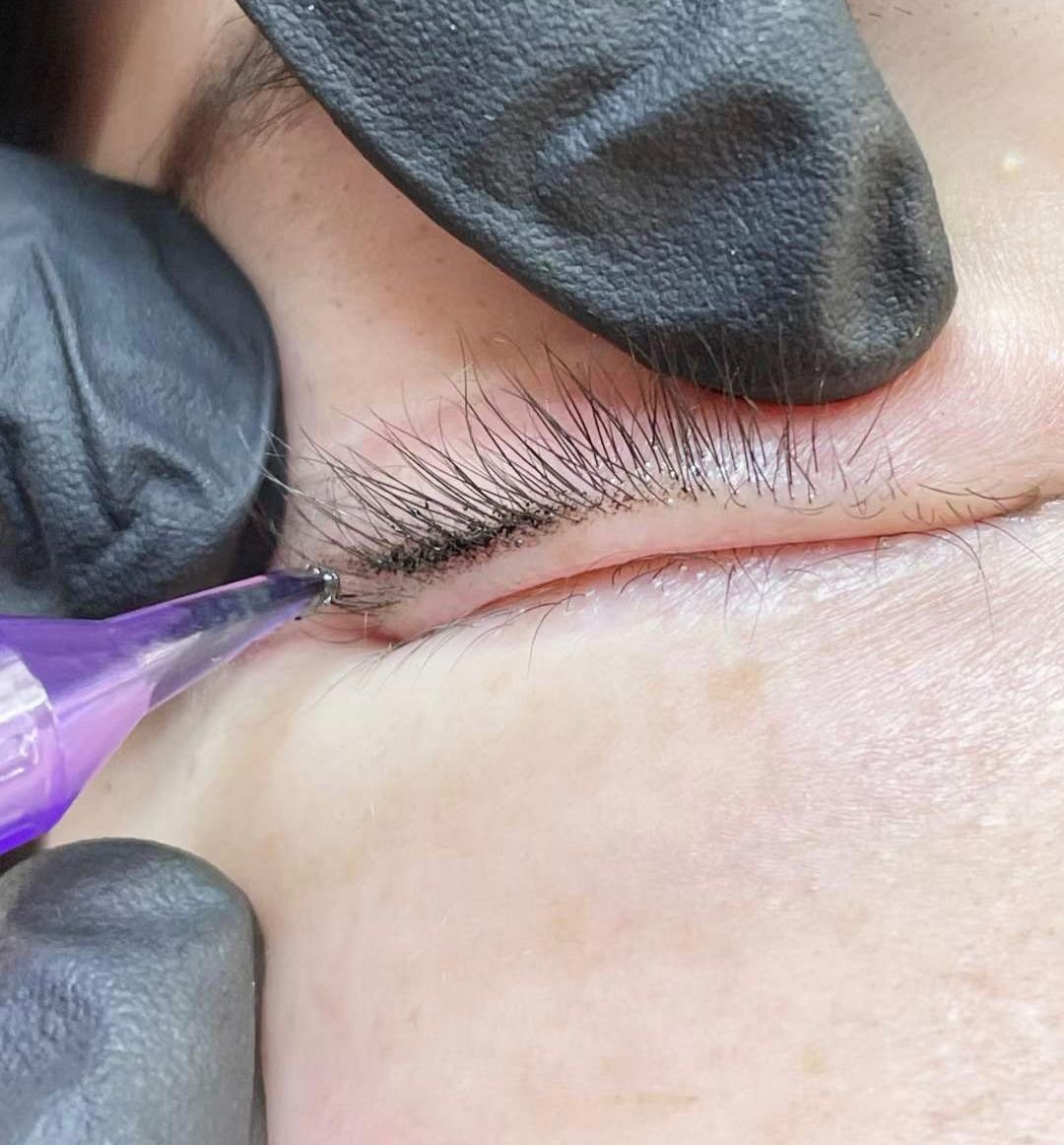


When eyeliner no longer looks right, the natural impulse is to redesign it immediately. Clients often ask to reshape, lift, thin, or refresh their eyeliner in a single step. From a medical and professional standpoint, however, aesthetic redesign is never the first stage of eyeliner correction. In the periocular region, attempting to redesign unstable pigment before it has been stabilised increases risk and reduces predictability.
At The Brow & Beauty Boutique, eyeliner correction follows a medical-led sequence:
assessment → stabilisation → correction → optional redesign
This order exists to protect the eye area and ensure long-term outcomes rather than short-term cosmetic fixes.
What “Unstable” Eyeliner Actually Means
Unstable eyeliner does not necessarily look dramatic or obviously flawed. In many cases, it appears only slightly blurred, heavier than intended, or subtly misaligned with the lash line. Beneath the surface, however, the pigment may still be biologically active.
Unstable eyeliner commonly shows one or more of the following behaviours:
Ongoing diffusion at the edges
Gradual downward or outward migration
Uneven density consolidation after healing
Chromatic shifts that continue to evolve
Mixed pigment depths within the same line
These behaviours indicate that the pigment has not fully settled into a predictable state. Redesigning eyeliner at this stage is like repainting over wet paint. The new work is affected by the old instability.
Why Aesthetic Redesign Fails Without Stabilisation
Aesthetic redesign involves introducing new pigment. In the periocular region, adding pigment to unstable tissue often amplifies the original problem.
When redesign is attempted too early, several outcomes are common:
Increased density overload, making eyeliner heavier
New pigment following old migration pathways
Loss of edge clarity due to layered diffusion
Reduced ability to assess pigment depth accurately
Fewer safe correction options in the future
Importantly, redesign does not reset pigment behaviour. It inherits it. If the underlying eyeliner is still migrating or diffusing, the redesigned shape will eventually follow the same pattern.
This is why medical-led correction treats redesign as a final step, not a starting point.
Stabilisation as a Clinical Requirement
Stabilisation refers to bringing pigment behaviour under control before any aesthetic decisions are made. This does not always mean removal. In many cases, it involves controlled periocular pigment lightening, selective reduction, or simply allowing tissue to settle between stages.
A stabilised eyeliner demonstrates:
Consistent edge behaviour
Predictable colour response
No active migration
Even tissue recovery between sessions
Only when these criteria are met can redesign be planned with confidence.
The clinic’s framework for professional eyeliner colour correction in Singapore explains how stabilisation strategies are selected based on pigment behaviour rather than appearance alone.
Assessment Determines the Need for Stabilisation
Not every eyeliner requires the same degree of stabilisation. Some cases need visible reduction, others require only monitoring and tissue recovery. Determining this requires structured periocular assessment.
Assessment evaluates:
Pigment depth and density variation
Direction and rate of diffusion or migration
Relationship between eyeliner placement and eyelid anatomy
Tissue reactivity and healing capacity
Without this information, it is impossible to know whether redesign is safe or premature. This is why reputable correction work never begins with shape planning.
Start With a Stabilisation-Focused Consultation
If you are considering eyeliner correction or redesign, the most important first step is determining whether your eyeliner is stable.
A professional consultation allows your specialist to explain whether stabilisation is required and what that process involves for your specific case.
Book an eyeliner correction consultation to receive guidance grounded in anatomy, pigment behaviour, and periocular safety rather than aesthetic urgency.
Correction Before Redesign: A Sequenced Process
Once stabilisation is achieved, correction becomes more precise. At this stage, excess pigment can be selectively reduced, misalignment addressed, and density rebalanced without provoking new instability.
Only after correction goals are met does aesthetic redesign enter the conversation. This sequencing ensures that new pigment is placed into a predictable biological environment, dramatically improving long-term outcomes.
This is especially important in the periocular region, where even small errors can have lasting visual impact.
When Aesthetic Redesign Becomes Appropriate
After stabilisation and correction, some clients choose to redesign their eyeliner using modern techniques. This step is optional and guided by current anatomy rather than past styles.
Contemporary eyeliner embroidery prioritises superficial dermal placement, controlled saturation, and alignment with the eyelid margin. Clients exploring this phase may review eyeliner embroidery services in Singapore, including refined options such as baby eyeliner for subtle enhancement or classic eyeliner for structured definition.
These options are introduced only after pigment behaviour has been stabilised.
Supporting Periocular Recovery During Stabilisation
Stabilisation is influenced not only by pigment management but also by tissue recovery. Supporting periocular skin health improves comfort and predictability between stages.
Many clients incorporate the La Dermalogique Eye Spa – Iris Clarity treatment during stabilisation and correction. This adjunctive care supports barrier integrity and calmness without interfering with pigment protocols.
Stabilisation Protects Redesign Outcomes
Eyeliner correction that skips stabilisation often leads to repeated disappointment. Redesign without control simply repeats the same biological patterns.
By stabilising pigment behaviour first, aesthetic redesign becomes safer, more precise, and far more durable.
Schedule your professional eyeliner correction consultation to begin with assessment, stabilisation & a correction plan that protects both your eyes and your long-term results.