
Milia Under the Eyes: Comparing Low-Risk Removal Methods for Delicate Skin Zones


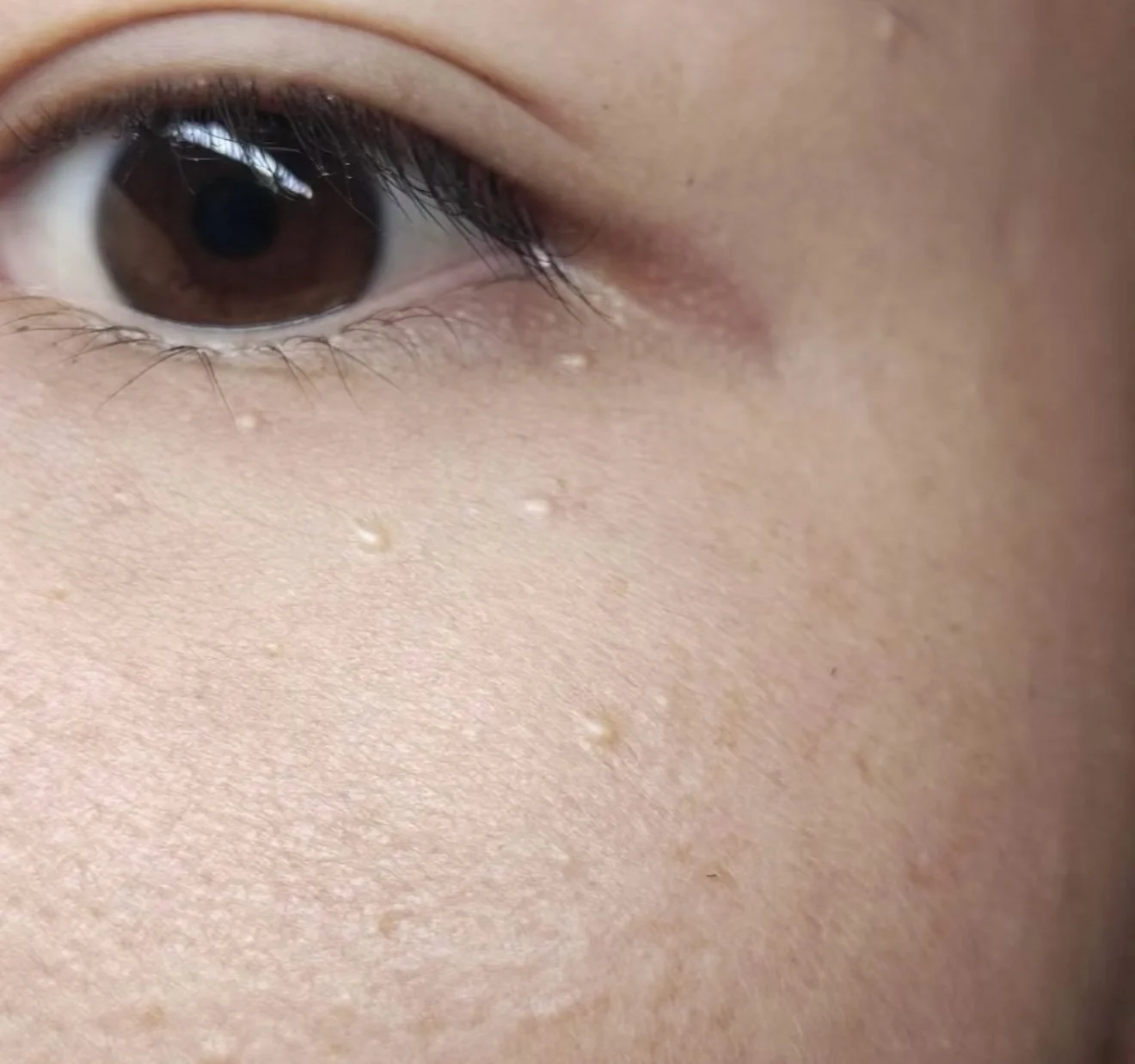
Milia that form under the eyes are often small, but the area they appear in makes them one of the most technically sensitive skin concerns to treat. The under-eye region has thinner epidermal layers, reduced structural support, and a higher risk of visible post-treatment changes. Because of this, milia removal beneath the eyes must prioritise precision and restraint over speed or intensity.
Although these bumps are commonly described as “eye milia” or “white bumps under the eyes,” clinically they are still subepidermal keratin cysts. What changes is not the lesion itself, but the environment surrounding it. Understanding this distinction is key to choosing low-risk removal methods that resolve the milia without compromising skin integrity.
At The Brow & Beauty Boutique, under-eye milia are assessed with a different clinical lens than milia found on other facial areas. Technique selection is guided by anatomy, skin behaviour, and prior treatment history rather than convenience.
Why the Under-Eye Area Requires a Different Approach
The under-eye region contains fewer sebaceous glands, thinner dermal layers, and a dense network of blood vessels close to the surface. This makes the skin more reactive to pressure, heat, and repeated intervention. Even minor trauma in this area can result in prolonged redness or texture changes.
Because of these factors, aggressive or routine milia techniques used elsewhere on the face are not automatically suitable beneath the eyes. Low-risk methods focus on accuracy, minimal tissue disruption, and controlled healing rather than complete clearance at all costs.
Common Low-Risk Removal Options for Under-Eye Milia
Low-risk does not mean ineffective. It means choosing techniques that respect anatomical limits while still addressing the keratin cyst properly.
Precision milia extraction may be appropriate when the milia is superficial, clearly defined, and not fibrotic. In these cases, controlled access allows release of the keratin without compressive force. However, even superficial milia beneath the eyes require gentler handling than similar lesions elsewhere.
Energy-based approaches may be considered when milia are deeper or resistant to manual release. When used conservatively, controlled energy allows access to the cyst without squeezing surrounding tissue. The same principles applied in RF Pulse treatments guide suitability here: depth control, minimal spread, and tissue response monitoring.
Importantly, not every under-eye milia should be treated immediately. In some cases, observation or delayed intervention produces safer outcomes than premature removal.
Why Under-Eye Milia Are Commonly “Botched”
Many clients seeking correction for under-eye milia report previous attempts that left the skin irritated or uneven. These outcomes usually stem from technique mismatch rather than irreversible damage.
Common causes include:
excessive squeezing
repeated needling
applying heat without depth control
treating non-milia lesions
In the under-eye area, even small technique errors are magnified. When milia are compressed instead of released, inflammation increases while the cyst remains intact. This creates the appearance of recurrence and often worsens skin texture.
Corrective care begins with allowing the skin to recover before reassessment. Once inflammation has settled, low-risk intervention can often be reintroduced more safely.
Differentiation Matters More Under the Eyes
Syringomas are frequently mistaken for milia beneath the eyes. Unlike milia, syringomas originate from sweat glands and cannot be extracted. Treating them as milia leads to repeated trauma without improvement.
Flat warts may also mimic milia in this region, especially when they present in clusters. Misidentification increases risk without benefit. This is why under-eye milia treatment always begins with correct diagnosis before method selection.
If you’re unsure whether under-eye bumps are truly milia, reassessment before treatment is strongly advised. You can book an appointment for professional evaluation prior to intervention.
Healing Considerations for Delicate Skin Zones
Healing under the eyes differs from healing on thicker facial skin. Mild redness may persist longer, and skin may temporarily appear uneven before normalising. Low-risk techniques aim to minimise these effects rather than eliminate them entirely.
Supporting the skin barrier after treatment plays a critical role in recovery. This aligns with the clinic’s broader philosophy seen in skin management and anti-aging treatments, where recovery and regeneration are prioritised alongside corrective care.
Why Recurrence Under the Eyes Is Often Technique-Related
When milia return beneath the eyes, it is rarely due to skin type alone. Recurrence often reflects incomplete removal, excessive trauma, or treating the wrong lesion altogether. Repeating the same approach rarely changes the outcome.
A shift toward lower-risk, assessment-led intervention often produces better long-term results. This principle is reflected in outcomes shared through our customer stories, where careful reassessment led to resolution after failed attempts elsewhere.
Choosing Safety Over Speed
Under-eye milia removal should never be rushed. The goal is not instant clearance, but safe resolution with minimal disruption to delicate skin. Low-risk methods prioritise skin health alongside cosmetic improvement.
For individuals considering treatment or concerned about previous under-eye milia attempts, professional guidance offers clarity and safety. Detailed information about assessment and care options is available through the clinic’s milia seed removal service.
When technique matches anatomy, outcomes improve and risk decreases. In delicate zones like the under-eye area, precision and judgement matter more than intensity.