Heavy Eyeliner Is a Density Issue, Not a Failure: How Controlled Pigment Reduction Restores Balance Before Re-Embroidery
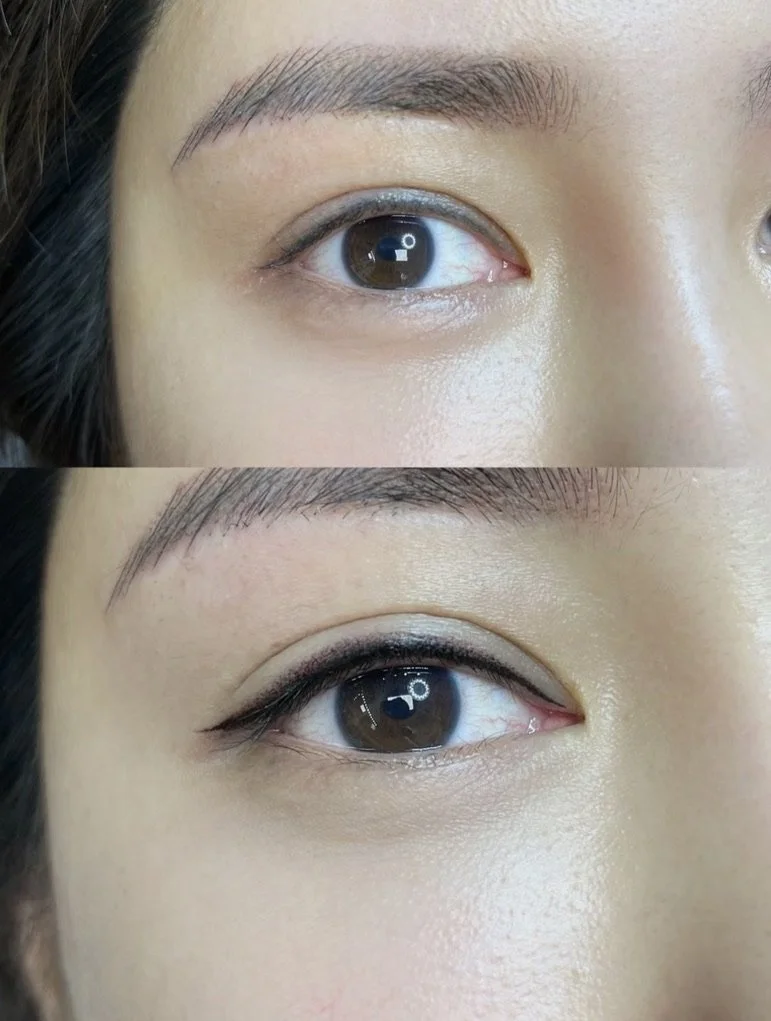
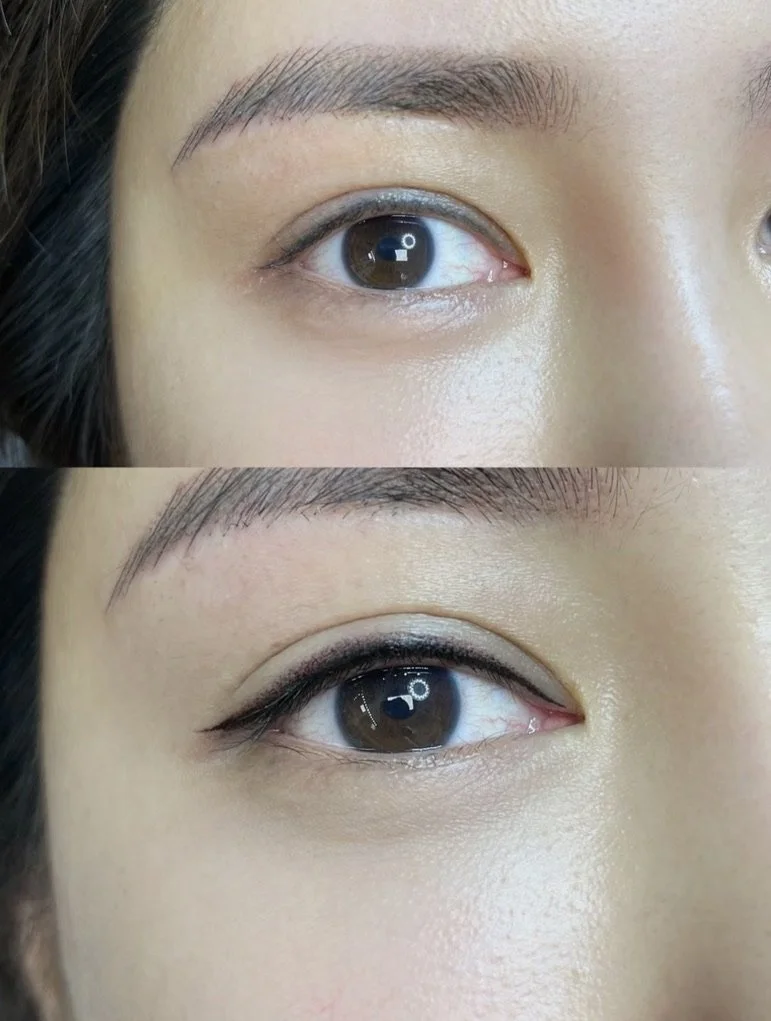


Heavy eyeliner is often misunderstood as a failed result. In clinical practice, it is more accurately described as a density imbalance within the periocular region. What clients experience as eyeliner that feels “too dark,” “too thick,” or visually overpowering is rarely the result of a single mistake. Instead, it reflects excess pigment concentration, depth-related saturation, and the way periocular tissue responds over time.
At The Brow & Beauty Boutique, heavy eyeliner is addressed through a medical-led framework that recognises density overload as a technical condition, not a personal or artistic failure. Correction begins by restoring balance to the eyelid margin before any consideration of re-embroidery.
Why Eyeliner Becomes Heavy Over Time
The periocular region has a limited tolerance for pigment. The eyelid skin is thin, highly mobile, and influenced continuously by the orbicularis oculi muscle. When eyeliner pigment is implanted with excessive density or placed deeper than intended, it may appear acceptable initially but become visually heavier as the tissue settles.
Several mechanisms contribute to this outcome. Density overload occurs when too much pigment is concentrated within a small anatomical zone. Over time, this may be compounded by diffusion artefact, where pigment particles soften and spread microscopically, increasing the perceived width of the line. In some cases, chromatic shift also plays a role, with black pigment presenting as grey or blue, further amplifying heaviness.
Importantly, heavy eyeliner does not mean the pigment is unstable or the tissue is damaged beyond correction. It means the visual balance between pigment load and eyelid anatomy has shifted, and that balance can be restored with the right approach.
Why Adding More Pigment Is Not the Answer
A common response to heavy eyeliner is to attempt refinement by adding more pigment in an effort to “even things out.” In the periocular region, this approach almost always worsens the problem. Additional pigment increases saturation, deepens density overload, and raises the risk of migration or further diffusion.
Medical-led correction takes the opposite approach. Instead of adding pigment, the focus is on controlled pigment reduction, selectively reducing excess density while preserving tissue integrity and ocular safety. This conservative strategy allows the eyelid margin to regain clarity without provoking unnecessary inflammation or trauma.
The principles behind this approach are outlined in the clinic’s resource on professional eyeliner colour correction in Singapore, which explains how density, depth, and pigment behaviour are evaluated before any corrective work is undertaken.
Controlled Pigment Reduction as a Structured Process
Correcting heavy eyeliner is not about erasing all pigment. It is about rebalancing. Controlled pigment reduction follows a structured protocol designed to respect periocular anatomy and healing timelines.
This process typically involves a detailed assessment of pigment depth, density distribution, and edge clarity. Areas contributing most to heaviness are identified, and reduction is performed incrementally. Between sessions, the tissue is allowed to stabilise so that visual changes can be assessed accurately before further intervention.
By working in stages, specialists minimise post-inflammatory response and avoid overcorrection. Clients are guided through realistic expectations, understanding that improvement occurs progressively rather than instantly.
Begin With a Professional Density Assessment
Because heaviness can stem from different causes such as depth, saturation, or diffusion, correction must always begin with a proper consultation. This allows your specialist to determine whether controlled pigment reduction, staged lightening, or temporary stabilisation is the most appropriate first step.
Book a professional eyeliner correction consultation to receive an assessment grounded in pigment science and periocular safety rather than guesswork.
Restoring Balance Before Re-Embroidery
Only once excess density has been reduced and the eyelid margin has stabilised does re-embroidery become a consideration. This sequencing is critical. Re-implanting pigment into an already saturated area increases the likelihood of repeat heaviness and long-term instability.
Modern eyeliner embroidery techniques differ significantly from older methods. They prioritise superficial dermal placement, controlled saturation, and anatomical alignment with the natural lash line. The objective is not to recreate bold eyeliner, but to reintroduce definition that remains proportionate and stable over time.
Clients exploring refinement options can review the clinic’s overview of eyeliner embroidery services in Singapore. Depending on eyelid anatomy and aesthetic goals, suitable options may include baby eyeliner for subtle enhancement or classic eyeliner for refined structure without excessive density.
Supporting Periocular Skin Health During Reduction
Successful outcomes depend not only on pigment management but also on how well the periocular skin recovers between sessions. Supporting hydration, circulation, and barrier function helps maintain comfort and predictability throughout the correction process.
Many clients incorporate supportive treatments such as the La Dermalogique Eye Spa – Iris Clarity to promote periocular comfort and tissue resilience. This type of care complements correction by supporting recovery without interfering with pigment protocols.
Balance, Not Blame
Heavy eyeliner is not a failure. It is a density issue that can be addressed safely with a structured, medical-led correction protocol. By reducing excess pigment first and respecting proper sequencing before re-embroidery, balance can be restored without compromising long-term eye health.
Through careful assessment, controlled pigment reduction, and precision re-design only when appropriate, clarity and proportion can be achieved.
Schedule your eyeliner correction consultation to begin a measured, safety-first journey toward balanced, wearable eyeliner & lasting confidence.