Chromatic Instability in Clinically Healed Lip Blush Results


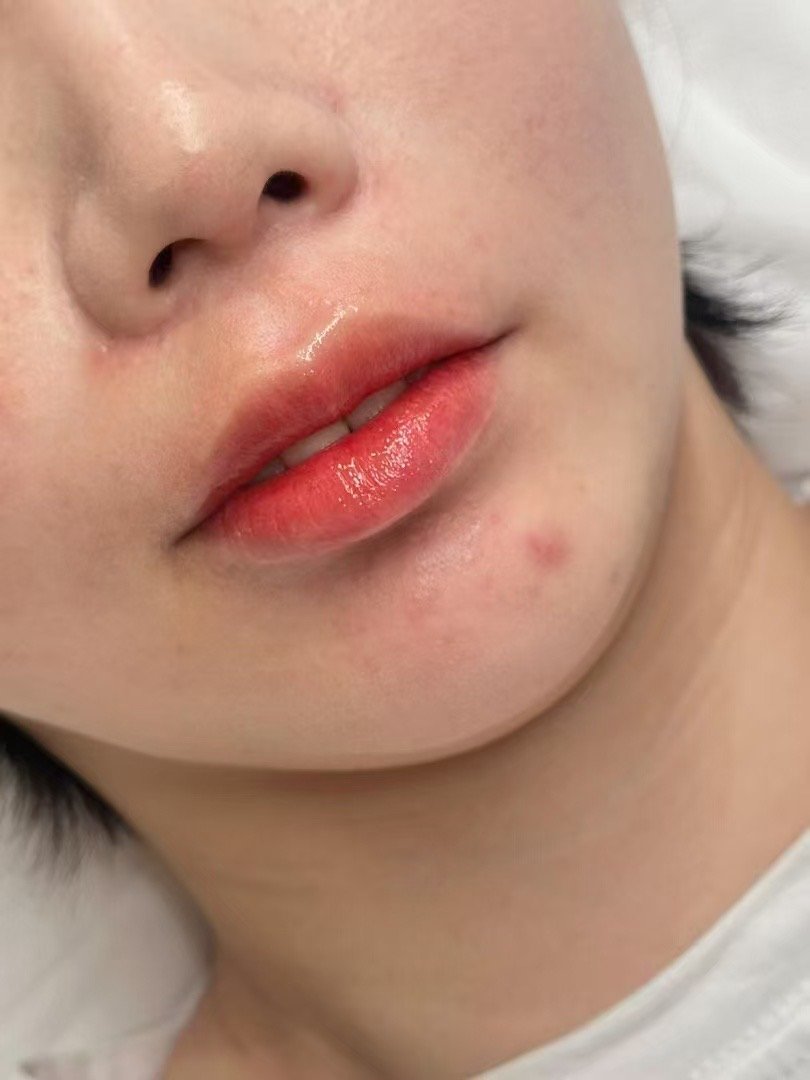

One of the most confusing experiences for clients is this: a lip blush treatment heals well, there are no complications, the aftercare was followed precisely—and yet, months later, the colour feels wrong. It may appear uneven, muted, greyed, purple-toned, or simply inconsistent with what was expected. This phenomenon is known as chromatic instability, and it is far more common than most people realise.
At The Brow & Beauty Boutique, chromatic instability is not treated as a cosmetic disappointment. It is approached as a biological and structural pigment issue that requires proper assessment, correction-first sequencing, and a carefully planned pathway forward.
What “Clinically Healed” Really Means
When a lip blush is described as clinically healed, it simply means the tissue has completed its healing cascade. There is no open skin, no inflammation, and no active trauma. However, clinical healing does not automatically guarantee colour stability.
Lip tissue is uniquely complex. The vermilion zone sits at the intersection of mucosal and cutaneous tissue, with high vascular activity, constant movement, and rapid cellular turnover. Pigment that initially appears balanced can shift over time as it interacts with:
Dermal pigment depth
Undertone dominance
Oxidative colour change
Residual or legacy pigment beneath the surface
This is where chromatic instability emerges—not as an error in healing, but as a long-term colour behaviour issue rooted in pigment science and tissue response. Lip_Terminology_Medical_Profess…
Why Lip Colour Can Change After “Successful” Healing
Chromatic instability often presents gradually. The lips may look acceptable at first, then subtly shift weeks or months later. Common triggers include:
Pigment placed too deeply, leading to cooler or duller tones over time
Over-saturation or over-deposition, where pigment density overwhelms the tissue
Legacy pigment interference from previous treatments, even if they are years old
Undertone dominance, where natural lip tone overtakes surface pigment
Oxidative colour changes, especially with iron oxide or mixed pigment systems
Importantly, none of these issues necessarily indicate poor technique at the time of application. They indicate that the structure beneath the colour was not fully optimised before pigmentation.
Why Adding More Colour Rarely Solves the Problem
One of the most common mistakes in managing unstable lip colour is attempting to “correct” it by layering additional pigment. While this may temporarily mask the issue, it often worsens long-term outcomes.
Layering over unstable pigment increases cumulative tissue stress and can amplify colour distortion rather than resolve it. Over time, this leads to:
Increased pigment migration
Reduced colour predictability
Patchiness or uneven fade patterns
Limited future correction options
At The Brow & Beauty Boutique, lip correction is never approached as a single-step solution. Instead, unstable colour is treated as a foundation issue, not a surface one.
The Role of Lip Colour Removal in Stabilisation
In cases of chromatic instability, lip colour removal plays a crucial preparatory role. This does not mean full pigment erasure is always required. Often, the goal is controlled pigment reduction and clarification, allowing the tissue to reset before new colour is introduced.
Selective removal helps to:
Reduce residual pigment interference
Lighten overly dense or cool-toned areas
Improve predictability for future embroidery
Restore balance within the vermilion zone
This is why lip colour removal is positioned as a corrective tool, not an end treatment. It creates the conditions necessary for reliable, aesthetically stable results.
Explore how this process works in detail through our dedicated lip colour removal service.
Why Embroidery After Correction Is More Predictable
Once chromatic instability has been addressed at the structural level, lip embroidery becomes significantly more reliable. Corrected lips behave differently during healing, allowing pigment to settle more evenly and predictably.
At this stage, embroidery is no longer compensating for instability—it is enhancing a stable foundation. This is why clients often achieve their most natural and balanced results after a correction-first approach.
You can learn more about this completion phase through our lip embroidery blush and lip embroidery enhancement services.
Why Process Matters Just as Much as Pigment
In lip correction and embroidery, process and pigment are inseparable. Even the most advanced technique will underperform with unstable pigment, and even the finest pigment can behave unpredictably if the process is flawed. Long-term success depends on both working together in a controlled, intentional way.
At The Brow & Beauty Boutique, pigment selection is never an afterthought. We work exclusively with high-grade organic pigment manufactured in Germany, chosen specifically for its long-term chromatic stability and predictable fading behaviour.
Unlike lower-grade or mixed pigment systems that tend to:
shift green, grey, or purple over time
oxidise unpredictably
surface uneven undertones months after healing
our pigments are engineered to fade elegantly and gradually, maintaining harmony with the natural lip tone rather than fighting against it. When they fade, they do so softly — not abruptly, not murkily, and not into unwanted hues.
Equally important, these pigments are designed to remain stable for up to two and a half years, reducing the need for excessive touch-ups and minimising cumulative tissue stress. This stability is especially critical in corrected lips, where predictability matters more than intensity.
However, premium pigment alone is not enough.
Our process ensures that pigment is:
placed at the correct dermal depth
calibrated to the lip’s undertone and vascular behaviour
introduced only after structural instability has been addressed
layered in a way that supports long-term colour behaviour, not short-term saturation
This is why lips treated at The Brow & Beauty Boutique do not develop delayed colour distortion, unexpected greying, or uneven fade patterns commonly seen elsewhere. The pigment and the process are aligned from the start.
In lip correction, success is not about choosing between process or pigment. It is about using the right pigment, within the right process, at the right stage — so results remain stable, natural, and visually balanced long after healing is complete.
A Stable Outcome Is Always the Goal
Chromatic instability does not mean failure. It means the lips are signalling that something beneath the surface needs attention. With the right assessment, controlled correction, and thoughtful embroidery, even long-standing colour issues can be resolved safely and predictably.
If you are experiencing lip colour changes despite proper healing, the next step is not more pigment—it is better process. You may begin that conversation by booking an appointment with The Brow & Beauty Boutique, where correction is approached with judgement, care, and long-term stability in mind.