When Eyeliner Loses Its Shape: Solving Edge Instability With Medical-Guided Periocular Correction
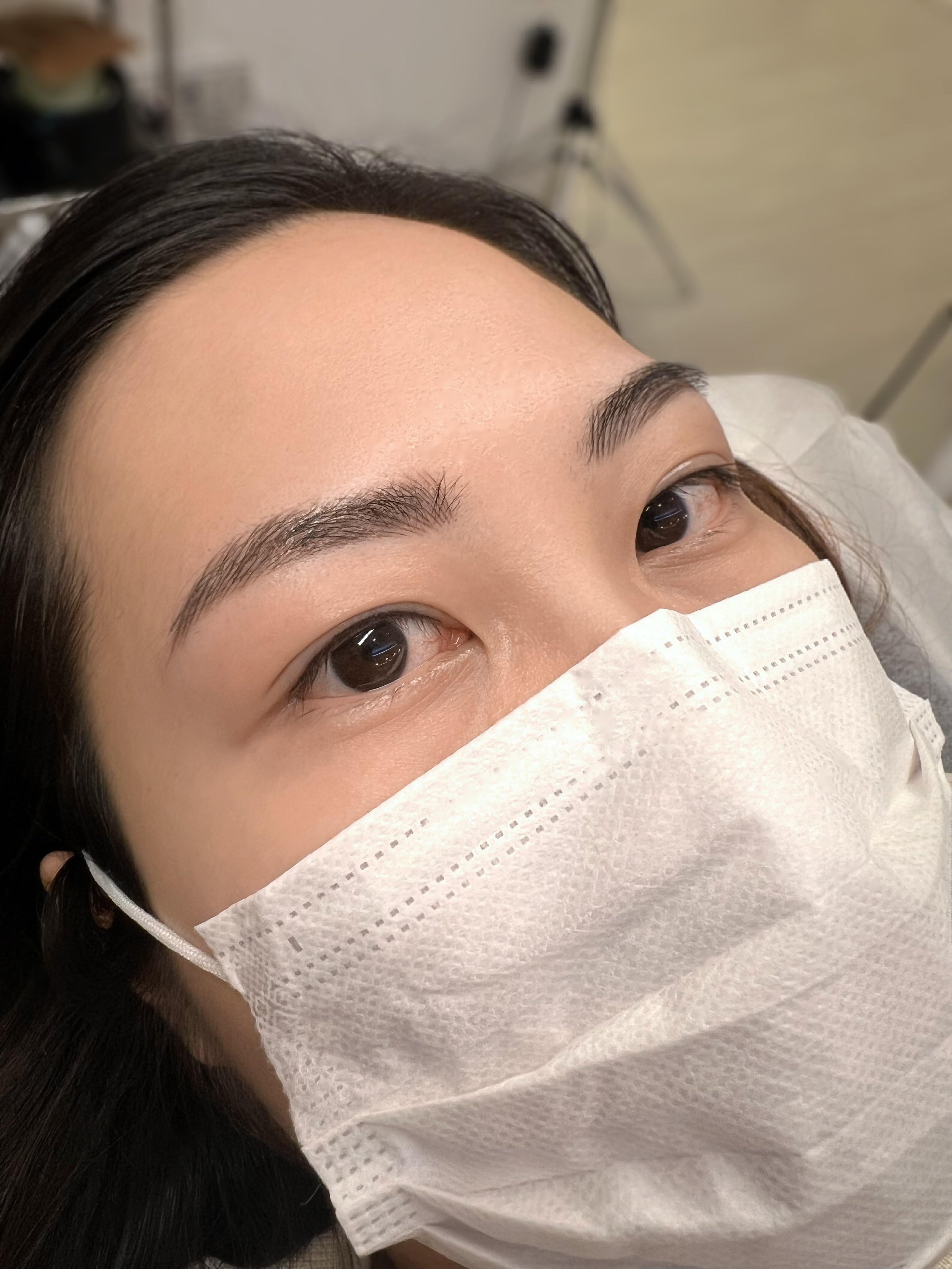


When eyeliner begins to lose its shape, the issue is rarely about taste or changing trends. What clients often describe as “blurred edges,” “uneven borders,” or eyeliner that no longer looks crisp is clinically understood as edge instability. In periocular permanent makeup, edge instability reflects changes in how pigment behaves within the eyelid tissue over time, rather than a simple cosmetic flaw.
At The Brow & Beauty Boutique, edge instability is addressed through a medical-guided periocular correction framework. This approach focuses on identifying why the eyeliner edge has softened or spread and resolving the underlying pigment behaviour before any redesign is considered.
What Edge Instability Really Means in Periocular Micropigmentation
Edge instability refers to the loss of a clearly defined pigment boundary along the eyelid margin. Instead of a clean, controlled line, the eyeliner appears fuzzy, uneven, or shadowed. This often develops gradually and may not be immediately noticeable in the early years following implantation.
The periocular region is uniquely susceptible to this issue. Eyelid skin is thin, highly vascularised, and in constant motion due to the orbicularis oculi muscle. When pigment is placed too deeply, with excessive density, or without adequate control, it may disperse laterally within the dermis. Over time, this results in diffusion artefacts, mild pigment migration, and gradual loss of structural definition.
Edge instability is therefore a technical and biological response, not a sign that the eyeliner has “failed.” It indicates that pigment stability has changed and requires professional correction rather than concealment.
Why Edge Instability Develops Over Time
Several interrelated factors contribute to the loss of eyeliner shape. Variations in implantation depth can cause pigment to settle inconsistently within the dermis. Excessive saturation may overwhelm the tissue’s ability to hold a crisp edge, while natural ageing of the eyelid skin can further soften borders.
Additionally, repetitive eyelid movement and subtle asymmetries in muscle activity can influence how pigment spreads. Over years, these forces compound, causing eyeliner that once appeared sharp to gradually lose clarity. In some cases, chromatic shift accompanies this process, making blurred edges appear darker or more shadowed than intended.
Importantly, these changes are predictable in poorly controlled periocular pigment placement. Recognising this allows correction to be planned conservatively and safely.
Why Adding More Pigment Is Not the Solution
A common response to blurred eyeliner edges is to attempt refinement by adding more pigment to “sharpen” the line. In the periocular region, this approach often worsens instability. Additional pigment increases density, deepens saturation, and may push existing pigment further into unstable tissue layers.
Medical-guided periocular correction takes a different approach. Rather than adding pigment, specialists focus on controlled pigment reduction and edge refinement. By selectively lightening areas that contribute to blurring, the visual boundary of the eyeliner can be clarified without increasing risk.
This philosophy underpins the clinic’s approach to professional eyeliner colour correction in Singapore, where correction strategies are based on pigment behaviour analysis, depth assessment, and long-term periocular safety.
Medical-Guided Correction as a Structured Process
Correcting edge instability is not a single-session procedure. It follows a structured, staged protocol designed to respect periocular anatomy and healing timelines. The process begins with a detailed evaluation of pigment depth, spread pattern, and edge behaviour.
Areas contributing most to instability are addressed first through incremental pigment lightening. Between sessions, the tissue is allowed to stabilise so that changes can be accurately assessed. This staged approach minimises post-inflammatory response and reduces the likelihood of overcorrection or new imbalance.
By working progressively, specialists can restore a cleaner eyeliner edge while preserving eyelid integrity and ocular safety.
Begin With a Professional Periocular Assessment
(Mid-Article CTA)
Because edge instability can arise from multiple factors, correction must always begin with a consultation. This allows your specialist to determine whether controlled pigment reduction, staged correction, or a period of stabilisation is the most appropriate first step.
Book a professional eyeliner correction consultation to receive an assessment guided by anatomy and pigment science rather than assumptions.
When Precision Re-Definition Becomes Appropriate
Once edge stability has been restored and residual pigment no longer compromises the eyelid margin, some clients choose to proceed with precision re-definition. This step is never rushed and is only considered when the tissue environment is stable.
Modern eyeliner embroidery techniques differ significantly from older methods. They prioritise superficial dermal placement, controlled density, and alignment with the natural lash line. The aim is not to recreate bold eyeliner, but to restore a refined shape that remains stable over time.
Clients exploring this option can review the clinic’s overview of eyeliner embroidery services in Singapore. Depending on anatomy and aesthetic preference, refinement options may include baby eyeliner for subtle enhancement or classic eyeliner for clean, structured definition.
Supporting Eyelid Skin During Correction
Edge stability is influenced not only by pigment placement, but also by how well the periocular skin recovers between sessions. Supporting hydration, circulation, and barrier function helps maintain comfort and predictability throughout the correction journey.
Many clients incorporate supportive care such as the La Dermalogique Eye Spa – Iris Clarity to promote periocular comfort and skin resilience. This treatment complements correction by supporting tissue calmness without interfering with pigment protocols.
Restoring Shape Through Medical-Guided Care
(Ending CTA)
When eyeliner loses its shape, the solution is not concealment or immediate re-tattooing. It is a medical-guided periocular correction strategy that resolves edge instability first and considers refinement only when appropriate.
Through careful assessment, controlled pigment reduction, and precision re-definition, clean eyeliner edges can be restored while protecting long-term eye health.
Schedule your eyeliner correction consultation to begin a structured, safety-first path toward stable, refined eyeliner & lasting confidence.