Addressing Residual Pigment Retention Before Eyeliner Embroidery for Clean, Stable Results

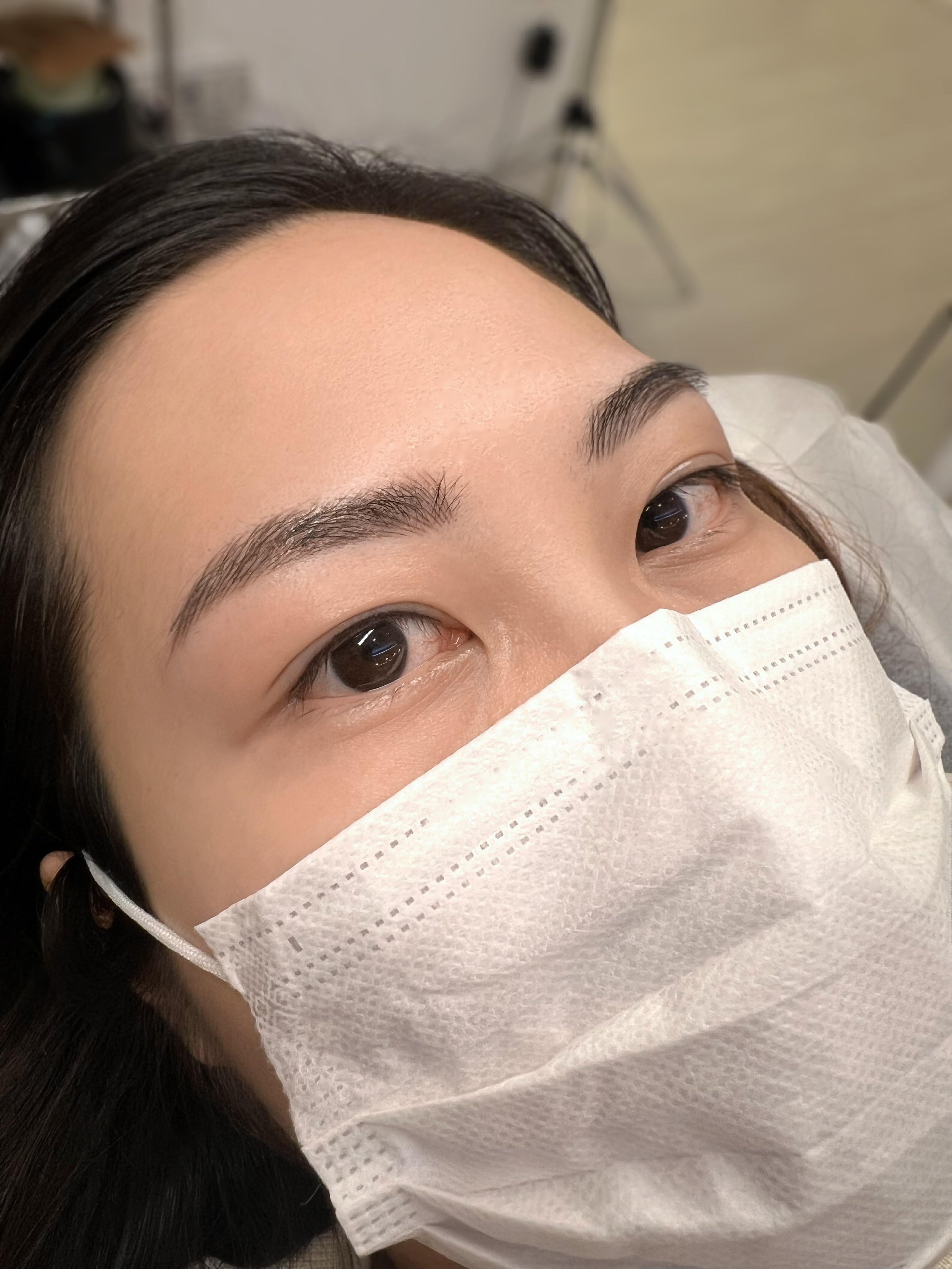


Residual pigment retention is one of the most underestimated factors affecting eyeliner outcomes. Many clients assume that once eyeliner has been “lightened” or partially corrected, it is ready for redesign. Clinically, this assumption is what causes otherwise well-planned embroidery to heal darker, blur faster, or lose edge clarity over time.
At The Brow & Beauty Boutique, residual pigment retention is treated as a biological condition, not a cosmetic inconvenience. Addressing it properly is the difference between eyeliner that looks refined for years and eyeliner that destabilises within months.
What Residual Pigment Retention Actually Means
Residual pigment retention refers to pigment that remains embedded in the dermal layers after prior eyeliner work or correction. This pigment may be lighter than before, but it is still biologically active. It continues to interact with tissue movement, inflammation, and any new pigment introduced later.
In the periocular region, even small amounts of retained pigment can influence outcomes because eyelid skin is thin and highly mobile. Retained pigment often presents as faint shadowing, uneven undertones, or subtle density that becomes more visible once new eyeliner is added.
Crucially, residual pigment is not always obvious at first glance. Under certain lighting or during healing, it may appear insignificant. However, once embroidery is performed, that retained pigment can combine with new pigment, increasing density and accelerating diffusion.
Why Residual Pigment Must Be Addressed Before Embroidery
Redoing eyeliner without resolving residual pigment is one of the most common causes of unstable results. When new pigment is implanted over retained pigment, several predictable issues can arise.
First, density overload occurs more quickly. The combined pigment layers reduce light reflection, making eyeliner appear darker than intended. Second, pigment stability is compromised. New pigment may migrate along pathways created by older pigment, leading to blurred edges. Third, chromatic behaviour becomes less predictable, especially if the original pigment formulation is unknown.
Medical-led correction does not treat residual pigment as something to “work around.” It treats it as a condition that must be stabilised before any redesign is considered. This principle is central to the clinic’s approach to professional eyeliner colour correction in Singapore, where assessment and sequencing take precedence over speed.
Identifying Residual Pigment Retention During Assessment
A proper periocular assessment goes beyond surface appearance. Specialists evaluate pigment depth, spread pattern, undertones, and how the tissue responds to movement and pressure. Residual pigment often becomes apparent when eyelids are assessed dynamically rather than statically.
This assessment determines whether the appropriate next step is further controlled lightening, a period of stabilisation, or readiness for embroidery. Importantly, it prevents premature redesign that would otherwise compound existing pigment behaviour.
Controlled Reduction Versus Overcorrection
Addressing residual pigment does not mean aggressive removal. In the periocular region, forceful intervention increases inflammation and destabilises tissue. Instead, correction follows an incremental reduction protocol, allowing pigment to soften and tissue to recover between sessions.
This approach preserves barrier integrity and reduces the risk of post-inflammatory distortion. It also allows the specialist to reassess after each stage, ensuring that pigment behaviour is genuinely stabilising rather than temporarily suppressed.
Begin With a Residual Pigment Assessment
If you are planning eyeliner embroidery after previous work or correction, the most important step is confirming whether residual pigment is still influencing the tissue.
A structured consultation allows your specialist to explain whether additional correction is required before embroidery and what timelines will support the most stable outcome.
Book a professional eyeliner correction consultation to receive an assessment grounded in periocular anatomy and pigment science rather than visual assumptions.
Why Embroidery Performs Better on a Clean, Stabilised Base
Once residual pigment retention has been properly addressed, eyeliner embroidery behaves very differently. Pigment placement becomes more predictable, edges heal cleaner, and density can be controlled precisely.
Modern embroidery techniques are designed for superficial dermal placement and controlled saturation. When applied to stabilised tissue, these techniques integrate smoothly with eyelid anatomy rather than fighting against underlying pigment remnants.
Clients considering redesign after correction can explore eyeliner embroidery services in Singapore, including refined options such as baby eyeliner for subtle lash enhancement or classic eyeliner for balanced, structural definition. These options are only introduced once residual pigment no longer compromises stability.
Supporting Periocular Recovery During the Clearance Phase
Residual pigment correction is as much about tissue recovery as pigment management. Supporting hydration, circulation, and barrier function improves comfort and allows pigment to settle more predictably between stages.
Many clients incorporate supportive care such as the La Dermalogique Eye Spa – Iris Clarity treatment to maintain periocular calmness during correction. This complements medical-led pigment work by supporting tissue resilience without interfering with protocols.
Clean Results Come From Preparation, Not Covering
Eyeliner embroidery achieves its best results when it is built on a clean, stabilised foundation. Residual pigment retention is not a minor detail. It is a deciding factor in whether eyeliner heals refined or problematic.
By addressing residual pigment before embroidery, outcomes become clearer, lighter, and far more predictable.
Schedule your eyeliner correction consultation to begin a process focused on preparation, stability & long-term periocular health.