Why Eyeliner Migrates Near the Lash Line and How Correction and Embroidery Restore Definition


Eyeliner migration near the lash line is one of the most misunderstood outcomes of periocular permanent makeup. Clients often describe it as colour that has “spread,” “dropped,” or “bled” beyond its original shape. Clinically, this is not random movement and not a sign that eyeliner inevitably fails over time. It is a predictable response to pigment placement, tissue mechanics, and long-term periocular behaviour.
At The Brow & Beauty Boutique, eyeliner migration is addressed through a medical-guided correction pathway that resolves pigment instability first, then restores definition only when the eyelid margin is ready. Understanding why migration occurs is essential to correcting it safely.
Why the Lash Line Is Especially Prone to Migration
The lash line sits within one of the most complex anatomical zones of the face. The eyelid margin is thin, highly vascularised, and in constant motion due to the orbicularis oculi muscle. Unlike brows or lips, there is very little structural tolerance for excess pigment or depth error.
Migration typically occurs when pigment is implanted too deeply, too densely, or too close to unstable tissue planes. Over time, microscopic lateral movement occurs within the dermis. This results in softened edges, downward shadowing, or a widened appearance beneath the lash line. In some cases, colour shift accompanies migration, making the area appear darker or greyer than originally intended.
Importantly, this process is gradual. Many clients only notice migration years after their original procedure, often assuming it is due to ageing alone. In reality, ageing simply reveals pigment behaviour that was already programmed by placement and density.
Why Lash-Line Migration Is Not a Candidate for Cover-Ups
A common reaction to migrated eyeliner is to attempt to redefine the lash line by adding more pigment above it. In periocular correction, this is one of the fastest ways to worsen the problem.
Adding pigment increases density overload, pushes existing pigment deeper, and expands the unstable zone. Instead of restoring definition, the visual footprint of the eyeliner grows larger and heavier. This is why medical-led correction never begins with re-tattooing.
Instead, specialists focus on controlled pigment reduction to address the migrated portion of the eyeliner first. This restores a clearer boundary at the eyelid margin and reduces the visual noise caused by shadowing.
This conservative approach is central to professional eyeliner colour correction in Singapore, where correction decisions are guided by anatomy and pigment science rather than cosmetic urgency.
How Medical-Guided Correction Addresses Migration
Correction for lash-line migration is not about erasing all pigment. It is about re-establishing stability.
Medical-guided periocular correction begins with assessing where pigment has migrated, how deeply it sits, and how it interacts with eyelid movement. From there, targeted pigment adjustment is performed incrementally to reduce the migrated component without destabilising healthy tissue.
Working in stages allows the eyelid margin to recover and declare its response before further correction is considered. This approach minimises post-inflammatory response and protects ocular safety while progressively improving definition.
Start With a Proper Lash-Line Assessment
Because no two cases of eyeliner migration behave identically, correction must always begin with a consultation. This allows your specialist to determine whether targeted pigment adjustment alone is sufficient or whether staged correction is required.
Book a professional eyeliner correction consultation to receive an assessment grounded in periocular anatomy and pigment behaviour rather than assumptions.
When Eyeliner Embroidery Restores Definition Safely
Only after migrated pigment has been stabilised does embroidery become an option. This sequencing is critical. Re-implanting pigment into an unstable lash line increases the likelihood of repeat migration.
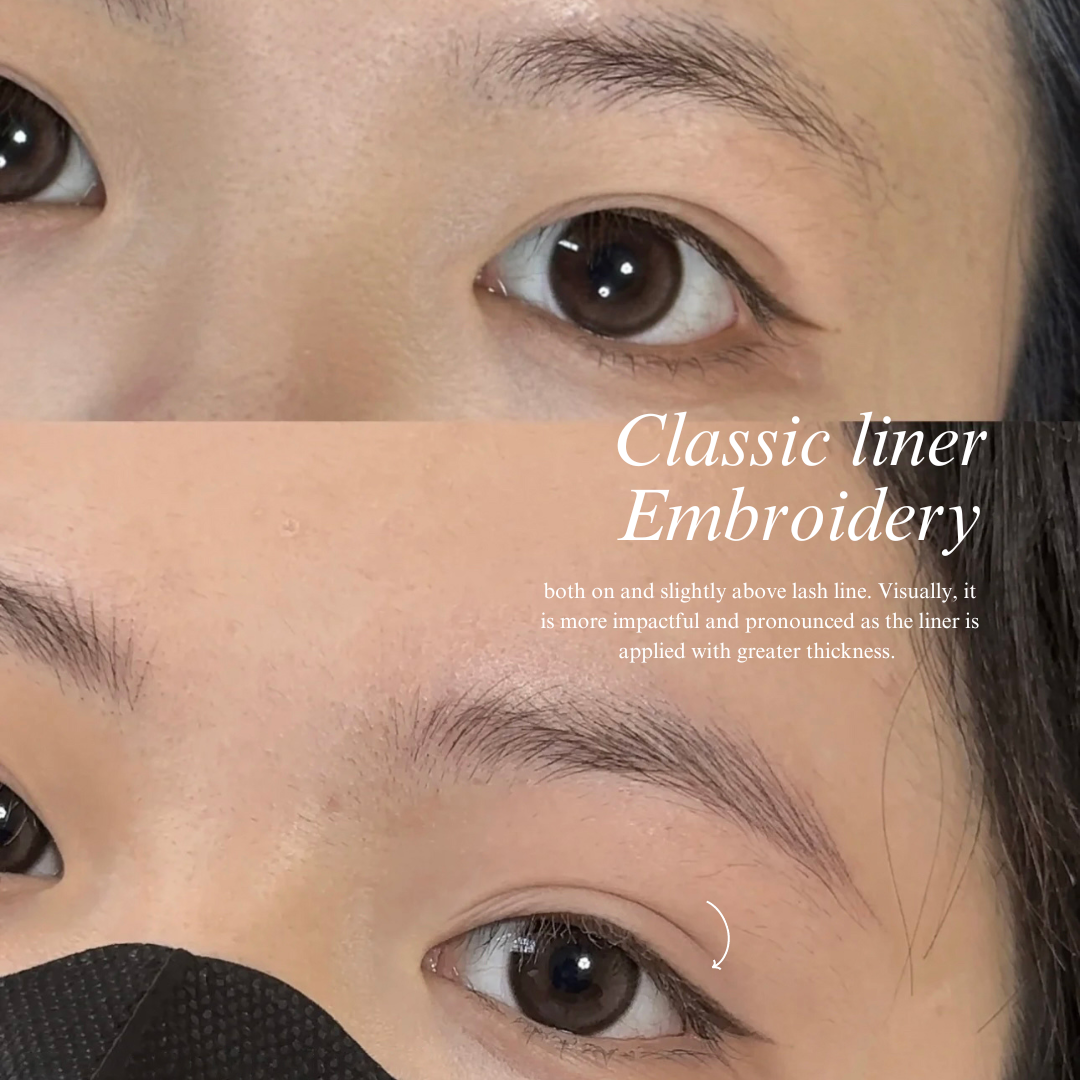
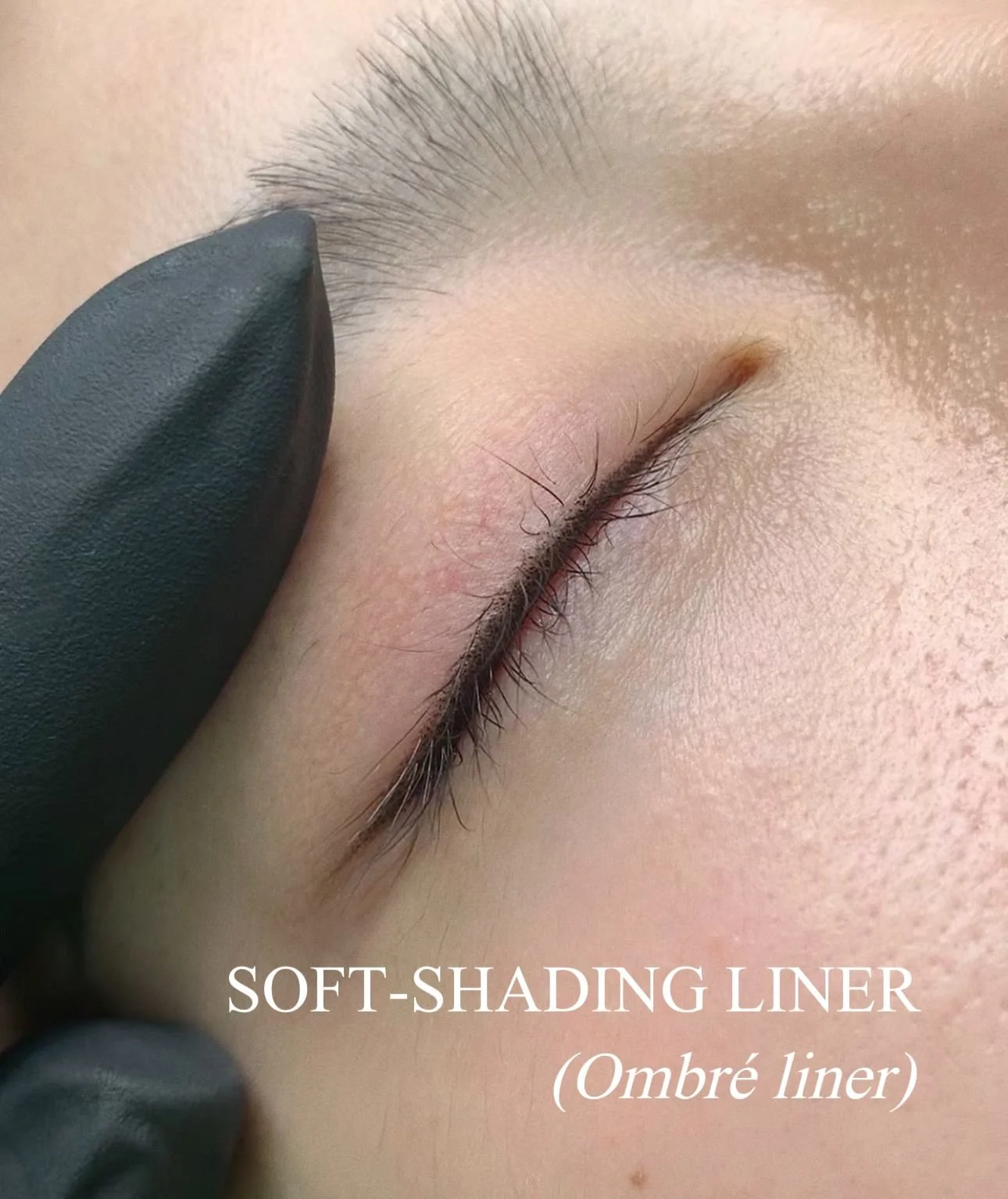
Modern eyeliner embroidery techniques are fundamentally different from older approaches. They prioritise superficial dermal placement, controlled saturation, and anatomical alignment with the natural lash line. The goal is not thickness, but optical clarity.
Clients considering refinement can explore eyeliner embroidery services in Singapore, which outlines how contemporary methods restore definition without recreating past issues. Depending on eyelid anatomy and aesthetic goals, options may include baby eyeliner for subtle enhancement or classic eyeliner for clean, structured definition.
Embroidery is never used to hide migration. It is used only after correction has restored a stable foundation.
Supporting Eyelid Skin During the Correction Journey
Correction outcomes are influenced not only by pigment management, but also by tissue recovery. Supporting hydration, circulation, and barrier integrity improves comfort and predictability between sessions.
Many clients incorporate adjunctive care such as the La Dermalogique Eye Spa – Iris Clarity to support periocular calmness and resilience during correction. This treatment complements correction work without interfering with pigment protocols.
Migration Has a Cause, and It Has a Solution
Eyeliner migration near the lash line is not random and not irreversible. It is the result of placement, density, and tissue mechanics, and it can be corrected safely through a medical-guided approach.
With targeted pigment adjustment, careful staging, and embroidery only when appropriate, definition can be restored while protecting long-term eye health.
Schedule your eyeliner correction consultation to begin a structured, safety-first journey toward stable, refined eyeliner & lasting confidence.