
When Eyeliner Turns Grey or Blue: Solving Chromatic Shift Before Eyeliner Re-Embroidery


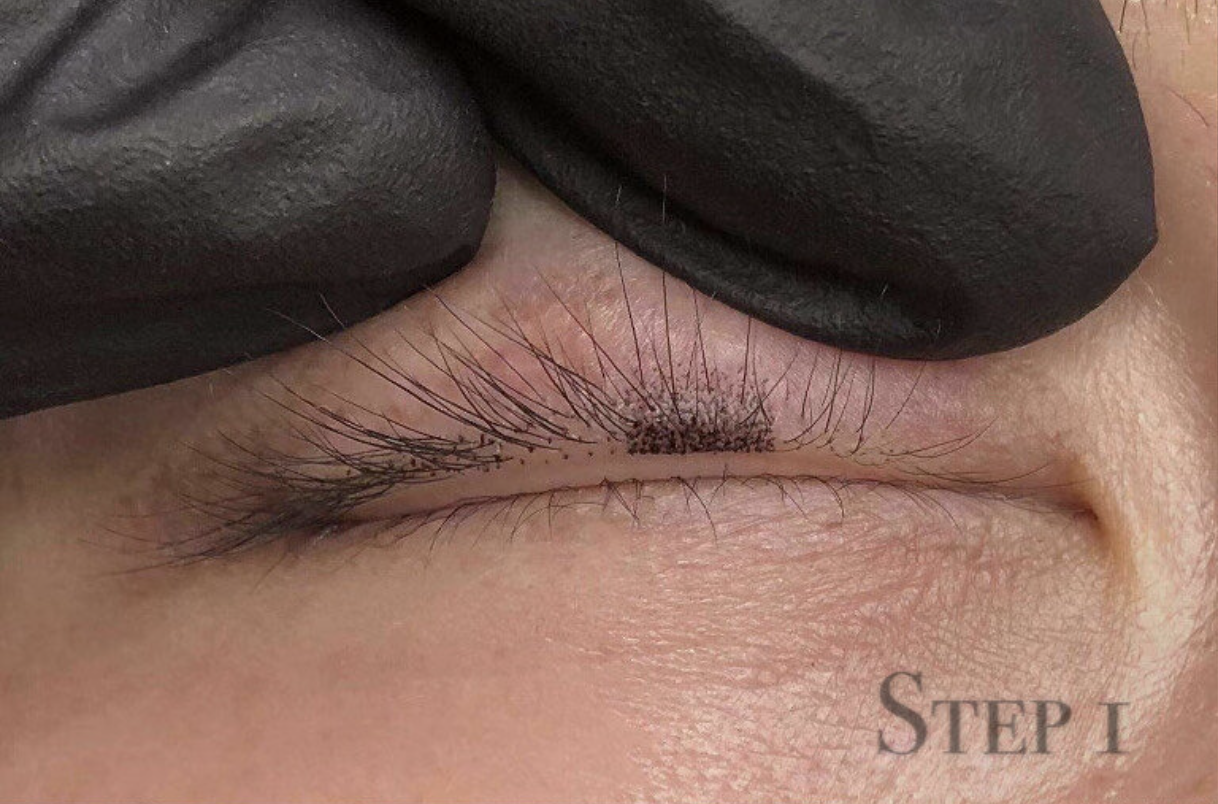
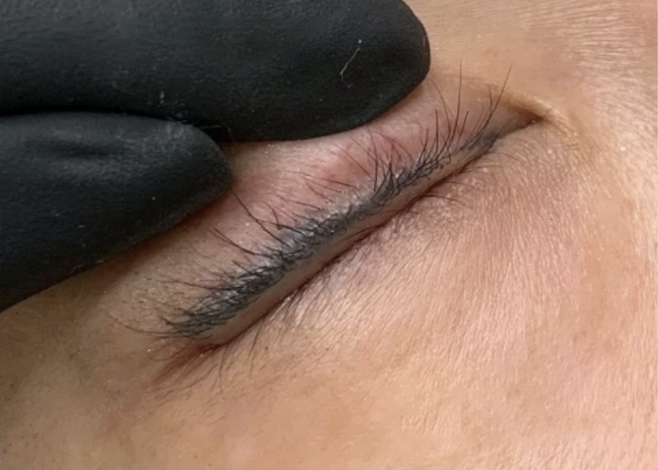
One of the most unsettling changes clients notice with long-standing eyeliner tattooing is a gradual shift in colour. What was once a clean black line may take on a grey, blue, or dull steel tone, altering the expression of the eyes and making eyeliner appear heavier or shadowed. This phenomenon is not uncommon, and it is not a sign that the eyeliner was “done wrong” in a simplistic sense. Clinically, it is known as chromatic shift, a predictable interaction between pigment composition, implantation depth, and periocular tissue behaviour over time.
At The Brow & Beauty Boutique, chromatic shift is addressed as a pigment-behaviour issue first, not an aesthetic one. Before any thought of eyeliner re-embroidery, the underlying colour distortion must be corrected to restore clarity and long-term stability.
Why Eyeliner Develops Grey or Blue Tones Over Time
Black cosmetic pigments are rarely pure black. They are typically composed of multiple colour components, often with a strong carbon base. When pigment is implanted too deeply into the dermis, the way light interacts with those particles changes over time. As the skin heals and remodels, deeper pigment can scatter light differently, revealing cooler undertones that appear grey or blue at the surface.
In the periocular region, this effect is amplified by several factors. The eyelid skin is thin and highly vascularised, allowing even subtle depth errors to become visible as colour shift. Constant movement from the orbicularis oculi muscle further contributes to pigment diffusion, softening edges and dulling colour intensity. Over years, these processes combine to produce eyeliner that looks flat, ashy, or shadowed rather than crisp.
Importantly, chromatic shift is not corrected by adding more black pigment. Doing so often worsens the issue by increasing density and pushing pigment deeper, reinforcing the blue-grey cast rather than neutralising it.
Chromatic Shift Is a Pigment Physics Issue, Not a Skin Flaw
Clients often worry that their skin type or age caused their eyeliner to turn grey or blue. In reality, chromatic shift is primarily driven by pigment depth and optical behaviour, not personal failure or poor aftercare. Even well-healed skin can display colour distortion if pigment resides in the wrong dermal plane.
This distinction matters because it changes the solution. Treating chromatic shift requires reducing or neutralising unstable pigment before any redesign is considered. Attempting to re-embroider over shifted colour without correction usually results in muddier tones and increased long-term instability.
A professional overview of how colour distortion is assessed and corrected can be found in the clinic’s resource on professional eyeliner colour correction in Singapore, which explains why addressing chromatic shift first is essential for safe, predictable outcomes.
Why Eyeliner Re-Embroidery Must Wait Until Colour Is Stabilised
Re-embroidering eyeliner over grey or blue pigment is one of the most common causes of heavy, opaque periocular tattoos. When new pigment is layered over unstable colour, light absorption becomes uneven, often producing darker shadows rather than clean definition.
Medical-led eyeliner correction prioritises targeted pigment lightening to reduce chromatically shifted tones before any new pigment is introduced. This staged approach allows the periocular tissue to regain a neutral baseline, making subsequent embroidery cleaner, lighter, and more stable.
By separating correction from redesign, specialists can control both colour outcome and long-term ageing behaviour of the eyeliner. This sequencing is especially important near the eyelid margin, where over-saturation carries higher risk.
Begin With a Chromatic Assessment, Not a Redesign
Before deciding whether eyeliner can be re-embroidered, a structured assessment is required. This evaluation examines pigment depth, colour undertone, spread pattern, and tissue response to determine whether chromatic shift can be safely corrected.
A consultation allows your specialist to explain whether partial lightening, staged correction, or stabilisation is needed before moving forward.
Book a professional eyeliner correction consultation to receive an assessment based on pigment science and periocular safety, not guesswork.
Solving Chromatic Shift Through Targeted Pigment Lightening
Targeted pigment lightening is not aggressive removal. It is a controlled process designed to reduce excess pigment gradually while preserving barrier integrity and minimising inflammation. In the periocular region, this approach allows specialists to address blue or grey tones without compromising eyelid structure or ocular safety.
Correction typically proceeds in stages, with sufficient healing time between sessions. This incremental protocol ensures that pigment behaviour can be reassessed as colour stabilises, preventing over-correction and supporting predictable outcomes.
Because every case of chromatic shift presents differently, timelines vary. Honest expectation-setting is a core part of responsible correction, ensuring clients understand both the process and its limitations.
Re-Introducing Definition With Modern Eyeliner Embroidery
Only after chromatic shift has been resolved does eyeliner re-embroidery become an option. When performed on stabilised tissue, modern embroidery techniques can restore definition without recreating the conditions that caused colour distortion.
Contemporary approaches focus on superficial dermal placement, lighter pigment saturation, and anatomical alignment with the eyelid margin. The intention is clarity and longevity, not density.
Clients who wish to explore this phase can review eyeliner embroidery services in Singapore, where current techniques are explained in detail. Depending on preference and anatomy, options may include baby eyeliner for subtle enhancement or classic eyeliner for more structured definition.
Supporting Periocular Skin Health During Colour Correction
Successful correction depends not only on pigment management but also on how well the periocular skin recovers between sessions. Supporting hydration, circulation, and barrier function can improve comfort and healing quality.
Many clients incorporate the La Dermalogique Eye Spa – Iris Clarity treatment as adjunctive care. This treatment supports periocular comfort and tissue resilience without interfering with correction protocols, making it a useful complement during staged correction.
Correct the Colour Before You Redesign
When eyeliner turns grey or blue, the solution is not to tattoo over it. It is to resolve chromatic shift first, restoring a neutral foundation before any re-embroidery is considered.
With targeted pigment lightening, careful assessment, and disciplined sequencing, eyeliner clarity can be safely restored while protecting long-term eye health.
Schedule your eyeliner correction consultation to begin with clarity, safety & confidence.
