Eyeliner Correction Near the Eyes Can Be Done Safely With a Periocular Safety-Zone Protocol
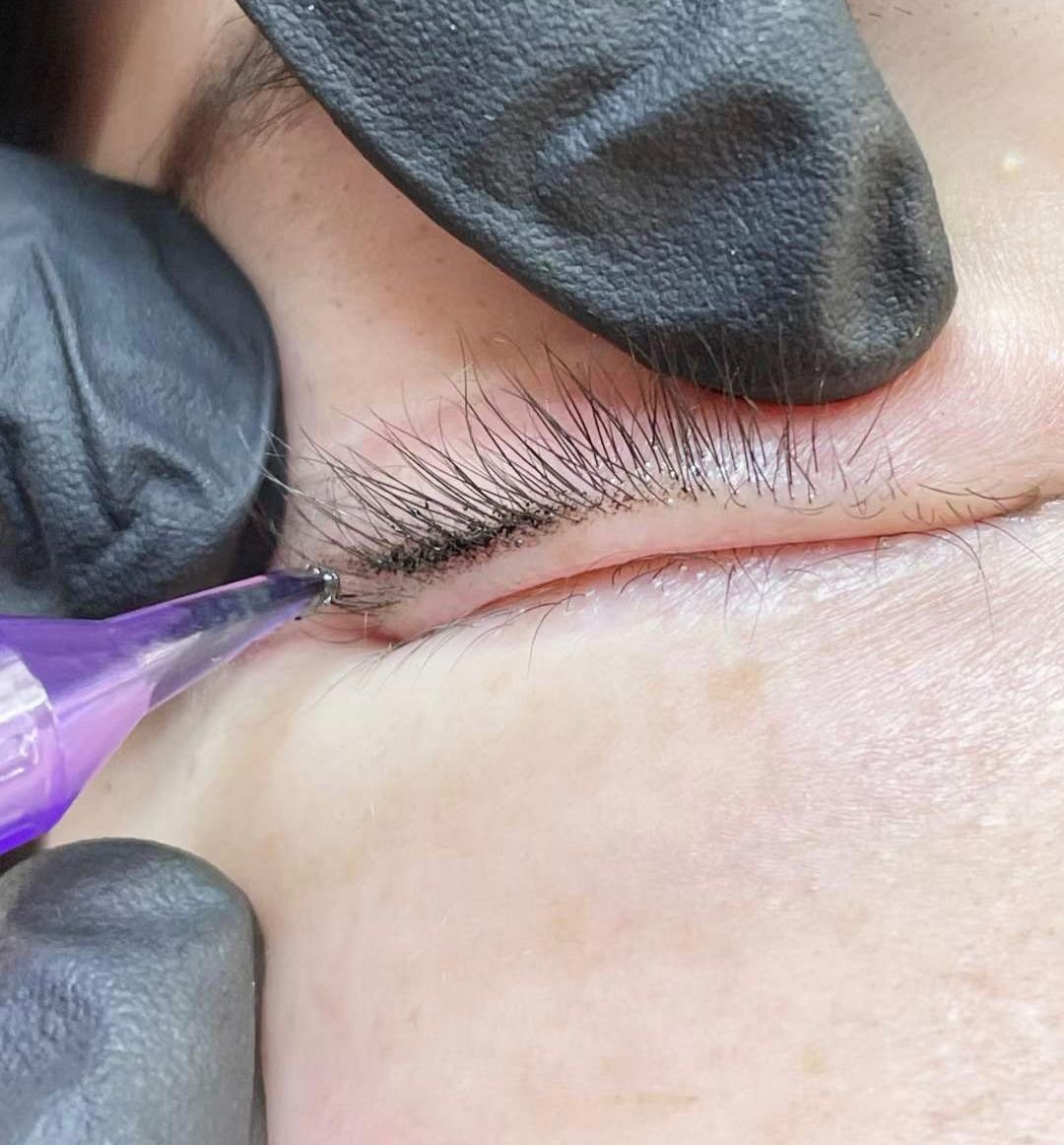


Eyeliner correction is often misunderstood as inherently risky simply because of its proximity to the eyes. While caution is absolutely required, proximity alone does not make correction unsafe. What determines safety is protocol, anatomical awareness, and method selection. When eyeliner correction is performed within a clearly defined periocular safety-zone protocol, migrated or distorted pigment can be addressed methodically without compromising ocular health.
At The Brow & Beauty Boutique, periocular eyeliner correction is approached as a medical-led procedure rather than a cosmetic adjustment. This distinction is critical. Safety near the eyes is not achieved by avoidance, but by controlled, evidence-informed practice.
Why the Periocular Area Requires a Safety-Zone Protocol
The periocular region includes the eyelid skin, eyelid margin, lash line, and surrounding soft tissue structures. This area is characterised by thin epidermal layers, high vascularity, constant muscular movement, and close proximity to the ocular surface. These factors make it uniquely sensitive to improper technique.
When eyeliner pigment migrates or diffuses, it does so within this complex environment. Attempting correction without a safety-zone framework increases the risk of excessive inflammation, barrier disruption, or prolonged healing. A periocular safety-zone protocol exists specifically to prevent these outcomes by defining where, how, and to what extent correction can occur.
What a Periocular Safety-Zone Protocol Actually Means
A safety-zone protocol is not a single technique. It is a structured system that governs decision-making throughout the correction process.
It begins with depth and spread assessment, identifying whether pigment resides superficially, mid-dermally, or has migrated laterally beyond the eyelid margin. This assessment determines whether correction should involve partial lightening, staged reduction, or stabilisation without immediate intervention.
The protocol also accounts for ocular proximity risk, ensuring that correction methods do not compromise the natural barrier between the eyelid tissue and the eye itself. This is why medical-led correction avoids aggressive or ablative approaches in favour of controlled periocular pigment lightening.
A detailed explanation of how this approach is applied in practice can be found in the clinic’s guide to professional eyeliner colour correction in Singapore, which outlines how safety and predictability are prioritised over speed.
Why “Cover-Ups” Are Not a Safe Solution Near the Eyes
One of the most common misconceptions is that migrated or blurred eyeliner can be corrected by simply adding more pigment to sharpen the line. In the periocular region, this approach often worsens the problem.
Adding pigment increases density in already unstable tissue, pushing colour deeper and accelerating diffusion. From a safety perspective, it also increases inflammatory load in an area with limited tolerance for trauma. A periocular safety-zone protocol explicitly excludes immediate re-tattooing as a corrective measure.
Instead, correction focuses on reducing pigment instability first, restoring clarity at the eyelid margin before any redesign is considered.
Start With a Safety-Focused Assessment
Safe eyeliner correction always begins with assessment, not action. A consultation allows your specialist to evaluate pigment behaviour, tissue response, and proximity considerations before recommending any intervention.
This step is essential for determining whether correction can proceed immediately or whether stabilisation is required first.
Book a professional eyeliner correction consultation to receive a periocular assessment grounded in anatomy, pigment science, and safety-zone planning.
How Correction Proceeds Within the Safety Zone
Once assessment confirms that correction is appropriate, the process follows an incremental protocol. Pigment is lightened in stages, allowing tissue to recover between sessions. This reduces post-inflammatory response and preserves eyelid structure.
Because the goal is stability rather than speed, timelines vary. Clients are guided through realistic expectations so that outcomes remain predictable and tissue health is protected throughout the process.
This conservative sequencing is what allows eyeliner correction to be performed safely near the eyes when done by trained specialists.
Re-Design Comes Only After Safety and Stability
Only after pigment behaviour has been stabilised within the periocular safety zone does redesign become an option. Even then, re-implantation is approached with restraint.
Modern eyeliner embroidery prioritises superficial dermal placement, controlled density, and anatomical alignment with the eyelid margin. The intention is to restore definition without recreating the conditions that caused migration in the first place.
Clients who wish to explore this step can review eyeliner embroidery services in Singapore, where contemporary techniques are explained in the context of longevity and tissue compatibility. Depending on anatomy and preference, refinement options may include baby eyeliner for subtle enhancement or classic eyeliner for structured definition.
Supporting Periocular Tissue During Correction
Even with correct technique, periocular tissue benefits from supportive care during the correction process. Maintaining hydration, circulation, and barrier integrity helps ensure comfortable healing and consistent outcomes.
Many clients incorporate the La Dermalogique Eye Spa – Iris Clarity treatment as adjunctive care. This supports periocular comfort and skin resilience without interfering with correction protocols.
Safety Near the Eyes Is a Matter of Method, Not Avoidance
Eyeliner correction near the eyes can be performed safely when guided by a periocular safety-zone protocol. With proper assessment, controlled pigment lightening, and disciplined sequencing, correction becomes a structured medical-aesthetic process rather than a risk.
If your eyeliner has migrated, blurred, or lost definition, the first step is not concealment. It is professional evaluation.
Schedule your eyeliner correction consultation to begin with clarity, safety & confidence.