Lip Shape Irregularities Caused by Loss of Lip Contour Integrity


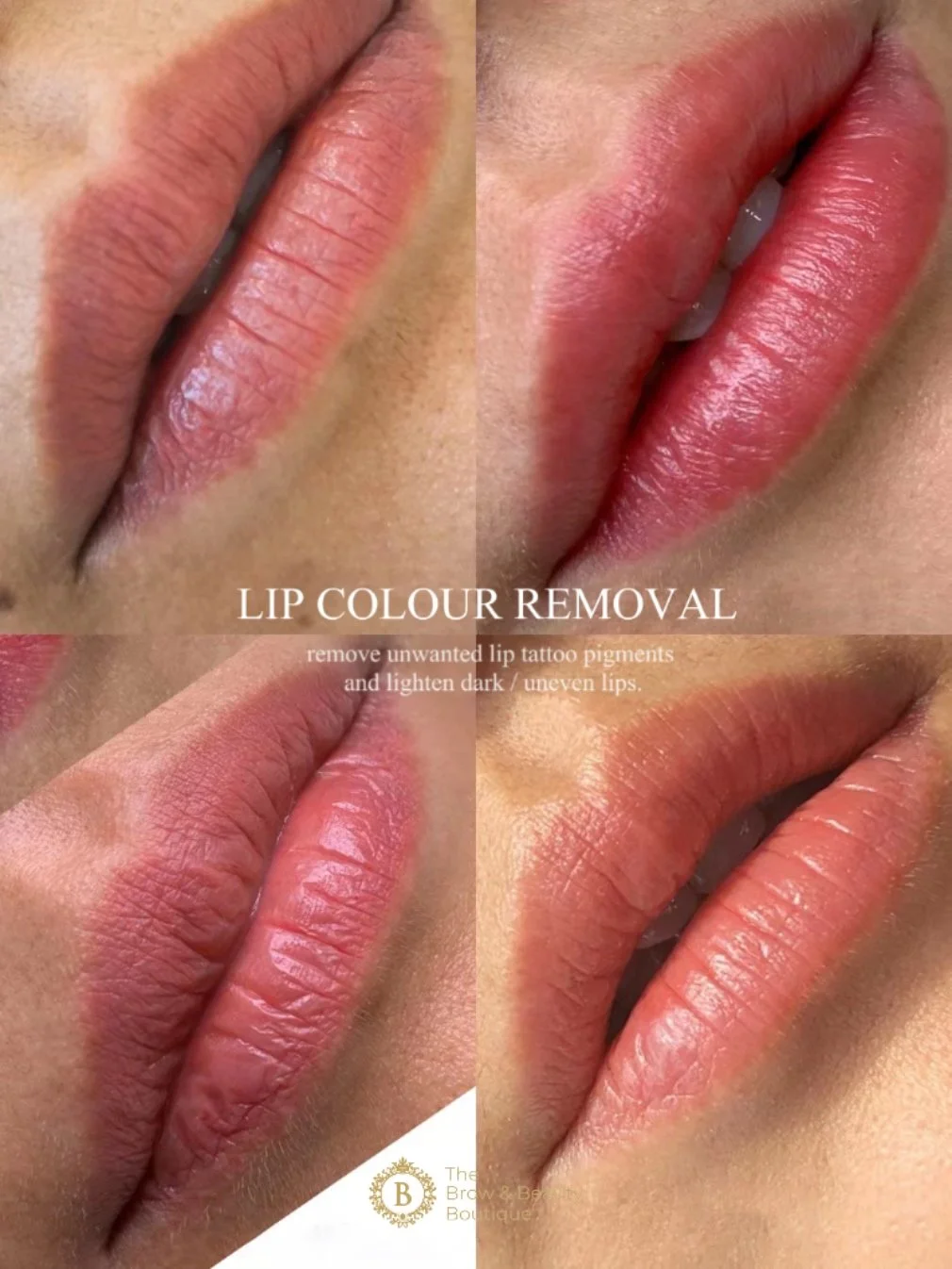
Lip shape irregularities are often described by clients as blurred borders, uneven outlines, distorted cupid’s bows, or lips that no longer look symmetrical despite having healed well. In many of these cases, colour may appear acceptable, and there may be no obvious scarring or trauma. Yet the lips lack definition, balance, or structural clarity. This outcome is most commonly linked to loss of lip contour integrity, not poor healing.
At The Brow & Beauty Boutique, shape irregularities are treated as a structural issue involving pigment placement, tissue response, and contour stability rather than a purely aesthetic concern. Understanding how contour integrity is lost explains why shape problems often persist unless corrected at the foundation level.
What Lip Contour Integrity Actually Means
Lip contour integrity refers to the clarity, stability, and definition of the vermilion border and surrounding structures, including the cupid’s bow and philtral columns. When contour integrity is intact, the lip outline appears crisp, symmetrical, and naturally proportioned.
Loss of contour integrity occurs when this border becomes visually unstable. Common manifestations include:
Blurred or feathered lip edges
Uneven symmetry between left and right sides
A flattened or distorted cupid’s bow
Lip colour extending beyond the natural outline
Lips appearing swollen or undefined even after healing
These issues are rarely caused by swelling alone. They are typically the result of pigment behaviour at the dermal level.
How Pigment Placement Affects Lip Shape
Lip shape is not created by colour alone. It is defined by where pigment sits in relation to anatomical boundaries. When pigment migrates beyond the vermilion border or is placed inconsistently around the contour, shape distortion becomes inevitable.
Common contributors include:
Pigment placed too deeply near the lip edge
Over-saturation along the vermilion border
Uneven pigment density around the outline
Legacy pigment spreading beyond the original contour
Once pigment crosses structural boundaries, light reflects differently across the lips, causing the outline to appear soft, uneven, or expanded.
Why Shape Issues Often Appear Over Time
One of the most confusing aspects of contour loss is delayed onset. Lips may look acceptable immediately after healing, only to lose definition weeks or months later.
This happens because:
Pigment continues to settle after surface healing
Migration becomes more visible as inflammation resolves
Deeper pigment influences outline clarity over time
In these cases, shape irregularity is not a failure of healing. It is the long-term expression of pigment behaviour within the tissue.
Why Adding More Colour Does Not Restore Shape
When contour clarity is lost, adding more pigment often feels like a logical solution. Unfortunately, this approach frequently worsens the problem.
Additional pigment near compromised borders can:
Increase blur rather than sharpen edges
Amplify asymmetry
Raise pigment load beyond tissue tolerance
Reduce future correction options
Shape is a structural outcome. Without restoring contour integrity, added colour only increases visual noise.
The Role of Lip Colour Removal in Restoring Contour
When lip shape irregularities are caused by pigment spread, migration, or over-deposition, lip colour removal becomes a critical corrective step. The objective is not to remove all pigment, but to redefine anatomical boundaries.
Targeted pigment reduction can help to:
Clear pigment from outside the natural lip contour
Reduce edge blur and migration
Restore clarity at the vermilion border
Re-establish symmetry before refinement
By stabilising the contour zone, removal creates the structural conditions necessary for reliable reshaping. This corrective approach is explored further through our lip colour removal service.
Why Embroidery Is More Predictable After Contour Reset
Once contour integrity has been restored, lip embroidery behaves very differently. Pigment can be placed with precision, boundaries remain stable, and shape enhancement becomes predictable rather than risky.
This is why embroidery is positioned as a completion phase, not a corrective shortcut. When applied to a stable contour, embroidery enhances:
Lip symmetry
Cupid’s bow definition
Outline clarity
Overall balance
Clients ready for refinement after correction may explore:
Both services are designed to work with corrected structure, not against unresolved contour instability.
Why Shape Correction Requires Sequencing
At The Brow & Beauty Boutique, lip shape issues are never rushed. Restoring contour integrity requires correct sequencing rather than aggressive intervention.
This includes:
Assessing pigment spread and boundary interference
Identifying whether removal must precede refinement
Respecting tissue tolerance and healing capacity
Setting realistic expectations for staged correction
Clients are encouraged to ask questions and understand why certain steps are recommended before proceeding. This ensures clarity and confidence throughout the correction process.
To see how contour-related issues have been resolved in real cases, our customer stories offer insight into correction-led outcomes.
When Shape Issues Are a Structural Signal
Lip shape irregularities are not cosmetic flaws to be covered over. They are signals that contour integrity has been compromised and must be restored before enhancement can succeed.
With proper assessment, controlled pigment reduction, and intentional embroidery, natural, balanced lip shape can be achieved even after complex prior work.
If your lips feel undefined or asymmetrical despite healing well, the next step is not more colour. It is restoring the structure first.
You may begin the appropriate phase directly by scheduling:
For a deeper understanding of our standards and philosophy, you may also visit The Brow & Beauty Boutique.